Sean Williams, The Motley Fool
For the better part of the six years President Donald Trump has been in the White House, stocks have thrived. The annualized return of the timeless Dow Jones Industrial Average (DJINDICES:^DJI), benchmark S&P 500 (SNPINDEX:^GSPC), and tech-powered Nasdaq Composite (NASDAQINDEX:^IXIC) is higher under Trump than under most other presidents over the last 130 years.
But from a historical standpoint, stock market returns can accelerate or fall off a cliff based on the makeup of Congress. Though not every bill passed by Congress and signed into law by the president impacts Wall Street, our elected officials are ultimately responsible for fiscal policy, which does impact corporate America.
Missed AI’s “Act 1”? Act 2 Could Be 14x Bigger. Most investors think they missed the AI boat because they didn’t buy Nvidia in 2005. But according to our analysts, we’re only at the end of “Act 1″—the R&D phase. “Act 2” is the global rollout. Continue »
Exactly one month from today, on Nov. 3, Americans across the country will go to the polls or mail in their ballots for Election Day. Based on what history says, there’s one very clear scenario that would be the best outcome for stocks on Nov. 3. But according to prediction markets, the worst-case scenario may unfold.
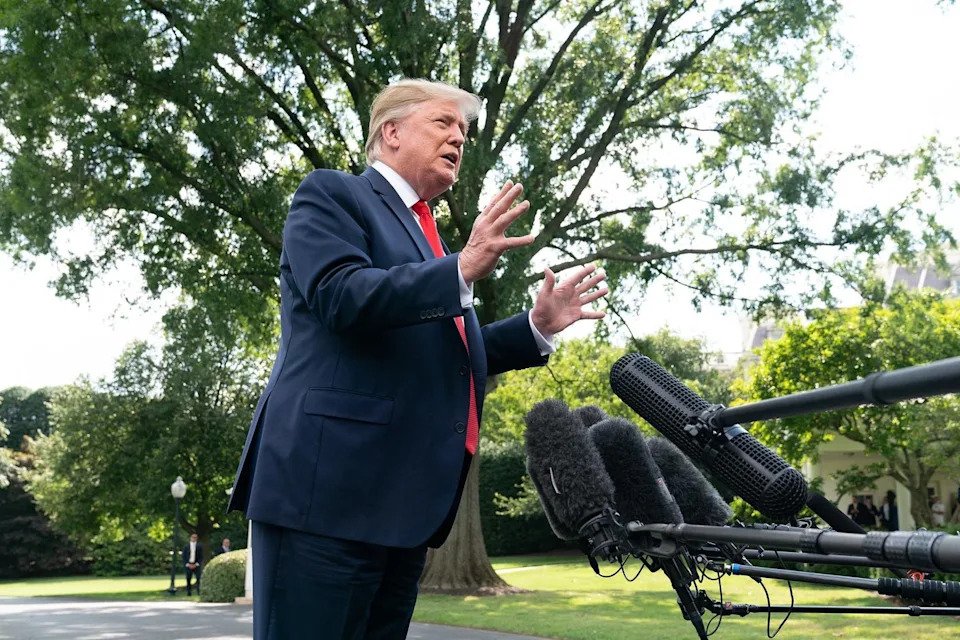
Election Day is one month from today. Image source: Official White House Photo by Joyce N. Boghosian, courtesy of the National Archives.
Midterm elections may yield a worst-case scenario for stocks
In the first two years of President Trump’s non-consecutive terms, he’s overseen a unified government, with the U.S. Senate and House of Representatives controlled by Republicans. The GOP currently holds 53 of 100 Senate seats and 218 of 435 seats in the House.
Unified governments are favored by sitting presidents because it’s a lot easier to pass major legislation and keep campaign promises.
For instance, Republican control of both houses of Congress proved instrumental to the passage of the Tax Cuts and Jobs Act (TCJA) in December 2017. This tax and spending law permanently lowered the peak marginal corporate income tax rate from 35% to 21% — the lowest level since 1939. With businesses retaining more of their income, stock buybacks skyrocketed, boosting earnings per share.
President Trump took advantage of a unified Congress last year to pass a second major tax overhaul, the “Big, Beautiful Bill.” This legislation made the TCJA’s personal tax brackets permanent and introduced a bevy of temporary tax breaks from calendar years 2025-2028.