Levin Stamm
2 min read
(Bloomberg) — US stocks could get an additional boost from a rotation into cyclical, economically-sensitive industries that have lagged in the Iran war, according to Morgan Stanley strategists.
Most Read from Bloomberg
-
Iran’s Deputy Foreign Minister Confirms Deal Reached With US
-
US and Iran Agree to Halt War, Restart Middle East Oil Shipments
-
Iran Signals No Deal Will Be Signed by Trump’s Sunday Timeline
-
Why Musk Raced to Take SpaceX Public in the World’s Biggest IPO
-
Iran Pushes Differing Deal Versions as US Sticks to Timeline
The team led by Michael Wilson pointed to reports of increased traffic through the Strait of Hormuz and evidence that the drag from rates, oil prices and the dollar on equities may be easing. That could help draw cheaper stocks into market leadership that’s been heavily concentrated in high-growth tech stocks, the strategists said in a note Monday.
Wilson reiterated his bullish stance on under-owned cyclical sectors such as consumer discretionary, transports and regional banks, noting that sentiment and positioning remained “bearish and muted,” despite recent outperformance versus the S&P 500.
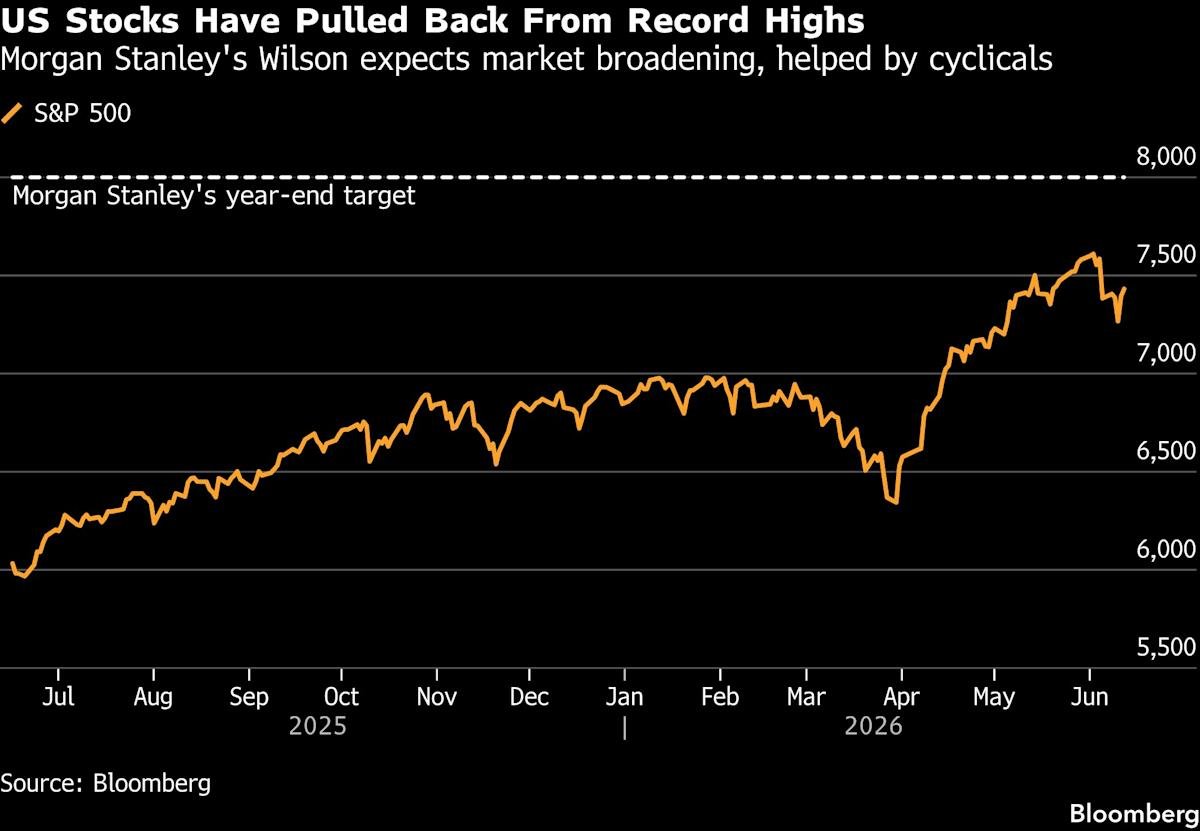
Hopes for a lasting US-Iran agreement have boosted risk sentiment in recent days, with the S&P 500 only about 2% below its record high. Strategists are broadly betting on fresh momentum for a global equity rally including in Europe, where cyclical industries are heavily represented. Lower energy prices would stem inflation risks — and the pressure on Federal Reserve policymakers to respond with an interest rate increase.
JPMorgan Chase & Co.’s global equity strategist Mislav Matejka echoed the bullish view, saying the rotation into cyclicals is “on track to remain a winning strategy” through year-end, provided geopolitical tensions ease and earnings and inflation remain stable.
And at Deutsche Bank AG, head of European equity strategy Maximilian Uleer closed a trade favoring US stocks over European equities, citing the risk that key drivers of US outperformance — including technology leadership and stronger earnings growth — may begin to fade.
Wilson said the recent decline in US equities, led by memory-chip stocks, stemmed from moderating earnings momentum rather than weakening fundamentals. He added that such pullbacks are common during earnings-led bull markets following periods of strong performance.
“While we might see some more choppiness in coming weeks, our conviction in the current bull market is intact,” Wilson said.
Most Read from Bloomberg Businessweek
©2026 Bloomberg L.P.