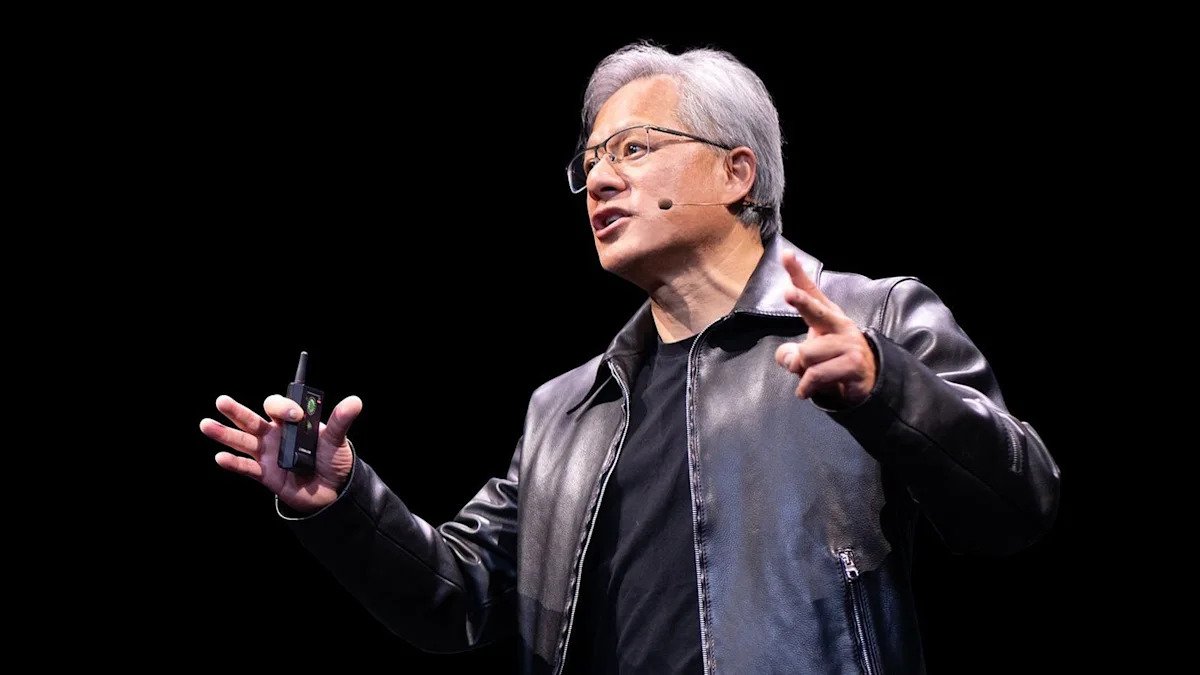
In just a few days, Nvidia (NASDAQ:NVDA) CEO Jensen Huang has gone from AI’s rock star to a Greek tragedy.
Over the weekend, Huang admitted to an affair with a suspected Chinese spy, sparking an investigation by the company and multiple calls for inquiries across the federal government due to Nvidia’s possible violation of chip export restrictions.
Missed AI’s “Act 1”? Act 2 Could Be 16x Bigger. Most investors think they missed the AI boat because they didn’t buy Nvidia in 2005. But according to our analysts, we’re only at the end of “Act 1″—the R&D phase. “Act 2” is the global rollout. Continue »
Just three days later, on Wednesday, The New York Times reported that Huang had had a relationship with an Nvidia executive, Kimberly Powell, Nvidia’s vice president of healthcare, who reports directly to him. Their relationship would appear to be in violation of the company’s code of conduct, and on Wednesday, Nvidia’s leadership met to discuss Huang’s future with the company. The Wall Street Journal reported that Nvidia’s board is preparing to remove Huang.
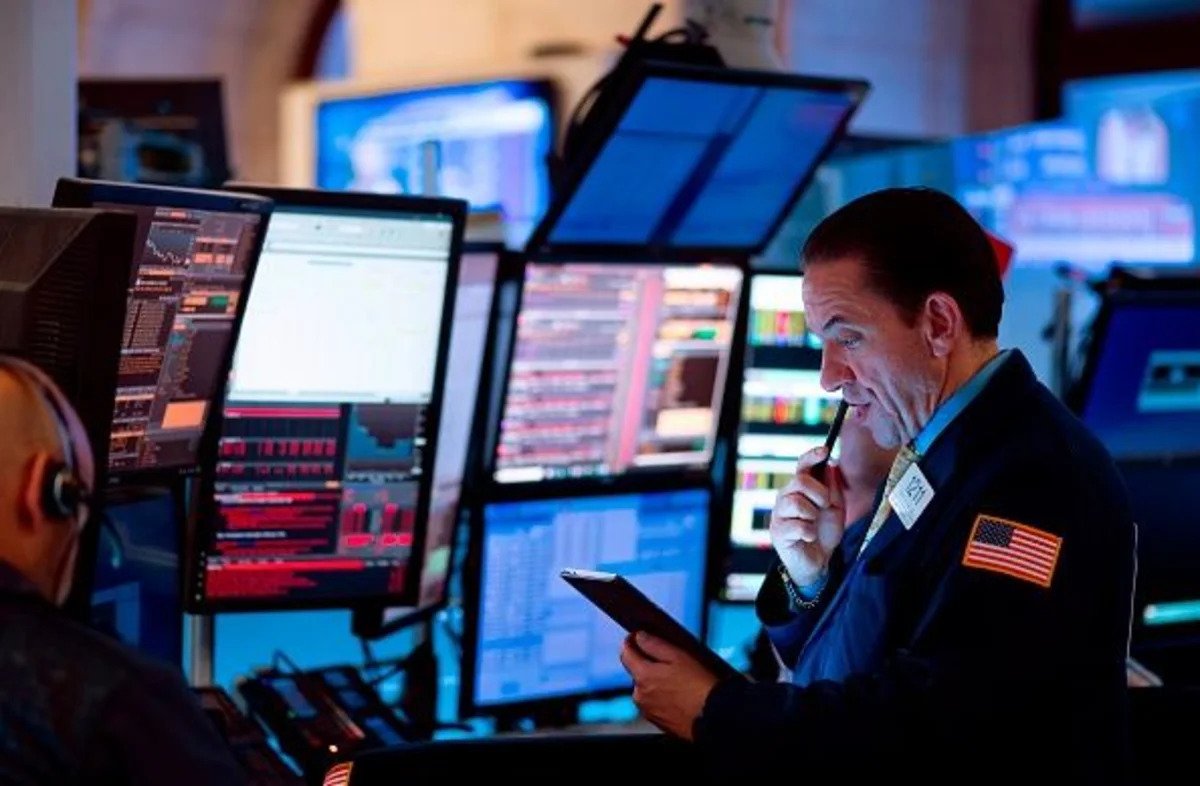
Nvidia stock tumbled on Monday and Tuesday in response to the admission of the relationship with the purported Chinese agent. After a partial recovery on Wednesday, the stock dropped 7% in after-hours trading on news of the second affair.
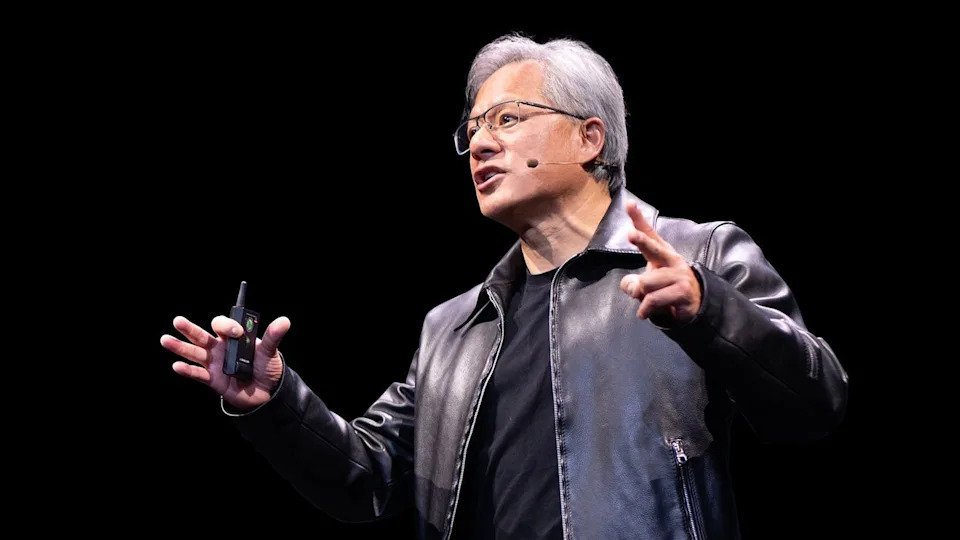
Image source: Nvidia.
Nvidia’s future hangs in the balance
Nvidia and its investors are in uncharted territory here. Over the last few years, Huang has become the face of not just Nvidia, but AI itself. His company, until recently, was the most valuable in the world, and its chips are at the heart of the AI boom, in demand from virtually every company working in AI, from labs to hyperscalers to physical AI.
With that success, Huang has reached a status that few CEOs before him have, on par with Elon Musk and Steve Jobs, recognized as both visionaries and celebrities. Now, Huang’s painstakingly built empire could come crumbling down.
Huang is 63, but the company has no clear succession in place. Nvidia’s board has a history of deferring to Huang, and he has imposed an unusually flat organizational structure on the company, giving him roughly 50 direct reports.
Nvidia has no Chief Operating Officer or Chief Marketing Officer, choosing to designate those positions with the lesser EVP title. In other words, Huang has enormous shoes to fill if he were to be let go, and finding a suitable replacement won’t be easy.
What I’m doing with my Nvidia stock
Predicting what comes next here is a fool’s errand. If Huang is dismissed as CEO, we don’t know who will take his place, and we don’t know how the market will react to whomever that person might be. We also don’t know what the fallout will be from any federal investigations against the company, which could lead to fines, increased oversight, or stricter bans on its exports.