Nvidia (NASDAQ:NVDA) today sits at the top of the artificial intelligence (AI) space. The success story started about a decade ago: The tech giant entered AI early, well before the boom began, with an ambitious bet. Chief Jensen Huang saw the opportunity for Nvidia’s graphics processing units (GPUs), once used mainly for gaming, to suit AI, and he shifted the company’s focus to this area.
This proved to be a game-changing move because AI took off — and to power its use and development, the GPU became a crucial tool. Though rivals have emerged, Nvidia holds onto the lead, as strong relationships with customers and its innovation have kept it ahead. All of this has resulted in spectacular earnings growth and stock price performance.
Missed Nvidia in 2009? This Rare Signal Is Flashing Again. In 2009, a “Double Down” signal flashed for a little-known chipmaker called Nvidia. For the first time in years, that same “Total Conviction” signal is flashing for a company 1/100th the size of Nvidia. Continue »
Nvidia may function like a well-oiled machine today. But something that happened recently revealed a significant flaw, and one that represents a risk over the long run. To address it, Huang should do one thing right now.
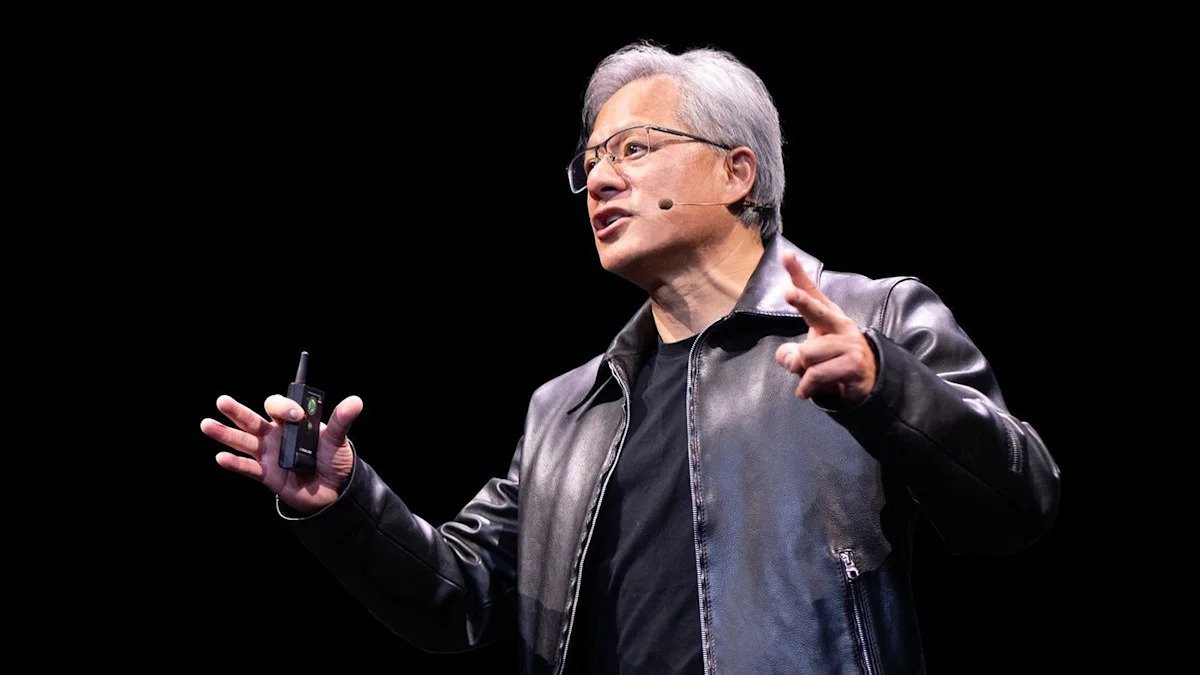
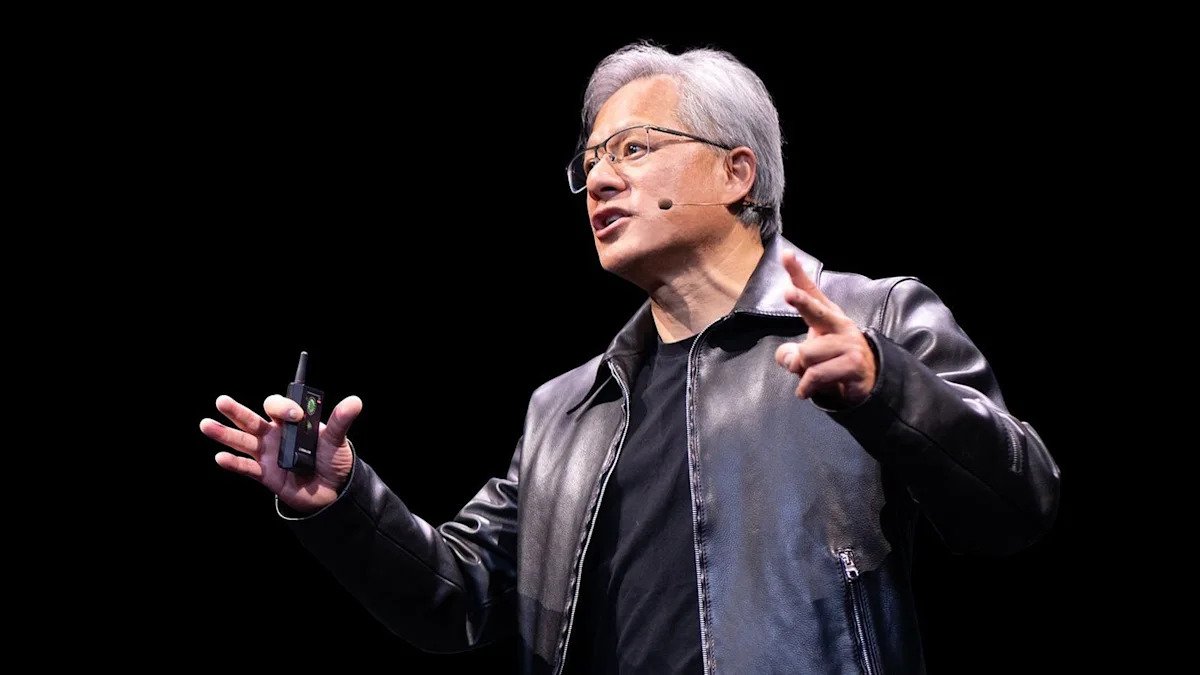
Jensen Huang. Image source: Getty Images.
Nvidia’s position in the AI chip market
First, though, we’ll take a quick look at Nvidia’s position in the AI chip market and the recent event that brought attention to the risk I just mentioned. Nvidia’s chips are the most powerful around, and with each new release, performance improves — as a result, customers continue to rush to Nvidia for compute.
The tech giant recently said that the ramp of its latest platform, Vera Rubin, was its fastest ever. That platform brought in nearly $20 billion in the third quarter, its first period of commercialization. And the company’s total revenue soared more than 100% to $115 billion, while net income also climbed in the triple digits to $65 billion.
News regarding Nvidia has generally been positive throughout the AI boom, but earlier this month, one particular thing interrupted this cadence. Huang stepped down from his position as chief executive officer. This followed allegations of affairs — one with a person that U.S. intelligence calls a Chinese spy and the other with an Nvidia executive. Without a succession plan, the board named current finance chief Colette Kress as interim CEO and began a search for a permanent replacement. Huang returned 11 days later following a massive wave of public support. The board decided to reinstate Huang after extensive interviews with him and input from senior U.S. government officials.