Moneywise and Yahoo Finance LLC may earn commission or revenue through links in the content below.
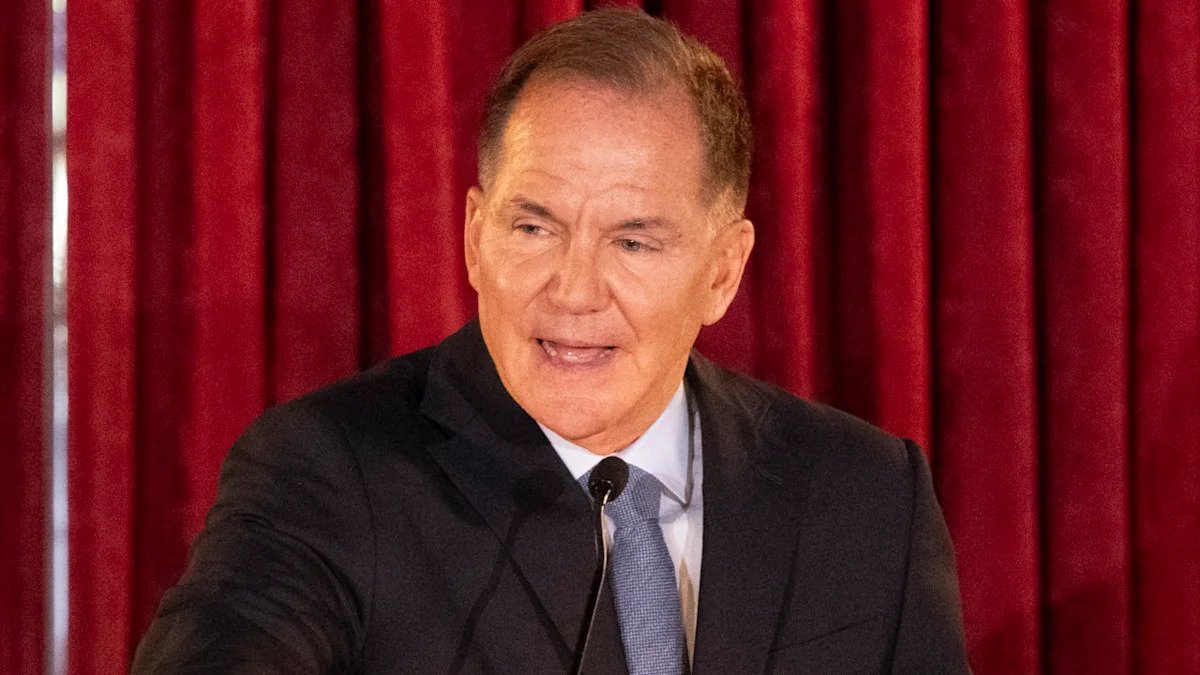
Billionaire hedge fund manager Paul Tudor Jones has a blunt message for investors: next year could be rough.
“2027 is going to be really, really challenging for the stock market,” Jones told CNBC’s Squawk Box on Oct. 13 (1). When asked how he plans to invest in 2027, his answer was short and simple: “I’ll be short the whole year. There just — there’s little value.”
Top Picks
-
Jeff Bezos backs a platform that lets anyone invest in rental homes for as little as $100 — 6 ways to build wealth like a landlord without actually being one
-
A single line on your car insurance policy could be inflating your premium by up to 30% — here’s what to change
-
Gold has overtaken U.S. Treasuries as central banks’ top reserve asset. Get Priority Gold’s 2026 Precious Metals IRA Playbook for free
Being “short” means betting that the stock market will fall. Put another way, he’s betting against the house.
Jones is the founder of Tudor Investment Corp. He made his name in the world of finance during the stock market crash of 1987 (2). That crash became known as Black Monday, when the Dow Jones Industrial Average plunged over 22% in a single day.
Why is Jones worried about the stock market in 2027?
Jones’ whole bet against the stock market comes down to basic economics: supply and demand.
He pointed out that corporate buybacks and mergers and acquisitions have acted as a tailwind for the stock market over the past four years. This essentially shrank the number of shares available. But this trend could be flipping.
Some massive stock sales could be coming from the AI space, including possible sales from Anthropic and OpenAI. SpaceX also went public not long ago, and has been releasing shares since its IPO in waves.
Jones argued there’s a good chance more shares from these companies will hit the market eventually.
Insiders at newly public companies generally have to wait before they can sell their shares. Once the wait ends, this could flood the market. For SpaceX, the standard lockup is set to expire fully on Dec. 9, while executives and significant stakeholders will be able to sell their shares on June 14, 2027 (3).
Jones sees all of this as similar to what happened in 1999, just before the dot-com bubble burst in 2000.
“You had all this issuance, all these IPOs in ’98 and ’99, and really 2000, 2001, 2002. Those were the easiest years to be short because you kept having these unlocks that just kept adding supply to the market,” he said.