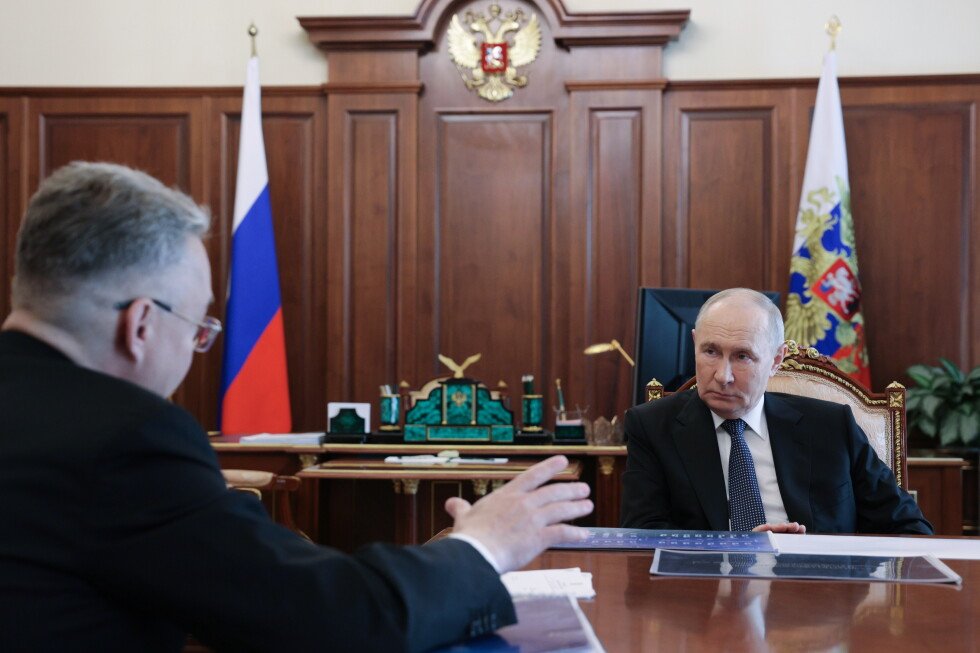
Russian President Vladimir Putin has decreed that the state can temporarily seize control of critical infrastructure facilities if private owners fail to protect them from Ukrainian drone attacks or rebuild them after the strikes.
The move came Monday amid growing economic pressure and public frustration being felt in Russia after months of escalating Ukrainian attacks on oil refineries and e-commerce hubs that have caused nationwide disruptions.
Ukraine also is reeling from relentless aerial attacks that have smashed its power grid ahead of winter and heavily damaged homes as Russia’s invasion stretches into its fifth year.
The decree may pressure owners to undertake repairs
The Kremlin’s exact intentions with the decree are unclear. However, it applies to various sectors, including energy infrastructure, as well as industrial, communications, transportation and logistics facilities.
Kremlin spokesman Dmitry Peskov said Tuesday that “often business owners do not pay enough attention to taking measures to ensure safety, anti-drone safety.”
Given the threat to vital economic infrastructure, “we must take measures, we must ensure our own safety,” he said.
Deputy Prime Minister Denis Manturov said in a statement the decree doesn’t imply the nationalization of companies or a change of ownership — only “involvement of the state in the management of an enterprise to solve specific security problems.”
He added that the decree “doesn’t imply widespread use,” and that “targeted, carefully considered decisions will be made at the highest level.”
Analysts say Putin wants companies to boost defenses
Russian political analyst Abbas Gallyamov said the measure might be a “tactical” step designed to force the owners of repeatedly damaged oil refineries into making repairs.
“Given the fact that the same refinery has already been hit three to five times, it’s safe to assume that the owners are now reluctant to invest in restoring what’s been destroyed,” he said on the Telegram messaging app.
“Why spend billions if they’re going to get hit again tomorrow?” said Gallyamov, a former speechwriter for Putin.
He said the government is giving companies an ultimatum: “If you don’t finance the restoration of the refineries, we’ll take them away from you.”
Sign up for Morning Wire: Our flagship newsletter breaks down the biggest headlines of the day.
Chris Weafer, the CEO of Macro-Advisory Ltd. Consultancy, said the Kremlin is trying to compel companies to spend more on drone protection and reduce the number of successful, high-profile Ukrainian attacks.
“This is an effort to force companies to look at their own security, to take measures and to spend their own money on security measures and not just be relying on the state,” Weafer told The Associated Press.
The war is increasing costs for businesses, he noted, but added: “The state doesn’t want any additional budget burdens and having to repair businesses or having to provide security. They want the companies to do it themselves.”
Ukraine says it hit more Russian refineries
In the latest attacks, Ukraine’s General Staff said Tuesday its forces struck facilities at Russia’s Afipsky oil refinery in the Krasnodar region overnight, causing a fire. Krasnodar Gov. Veniamin Kondratyev said a fire broke out at an oil refinery in the town of Afipsky.
A Ukrainian attack also damaged the Novoshakhtinsk oil refinery in southern Russia’s Rostov region overnight and halted operations, Rostov Gov. Yuri Slyusar said, without elaborating.
It was the eighth time in a year that Ukrainian drones have targeted the Afipsky refinery and the fourth time in the past year they have aimed at Novoshakhtinsk, according to data from Ukraine’s General Staff.
Russian businesses face fundamental economic challenges as the costly war drags on. The government has raised taxes and increased domestic borrowing to keep its budget deficit under control, and taking over major companies could potentially bring in revenue.
At the same time, seizing damaged assets could bring another financial burden. The Kremlin may intend the measure as a way to pressure companies to shoulder more responsibility for air defense, as Russia’s vast territory is hard to protect.
Russia also is offering more help for its biggest online retailer, Wildberries, and businesses selling goods through it. The company and thousands of sellers working with it have been hit hard by repeated Ukrainian strikes on warehouses. The Finance Ministry proposed Monday extending deadlines for tax and insurance payments to give Wildberries and its sellers some financial breathing space.
On Saturday, Putin told state television that Russia “must and will improve the air defense system and enhance its capabilities.”
“We need to streamline coordination between defense, law enforcement and civilian agencies at all levels, and to leverage the capabilities of state‑run enterprises and private businesses,” he said.
In May, following deep strikes that unsettled Moscow, Russian lawmakers approved a bill that allowed the Central Bank, state-controlled Sberbank and other financial services to fend off drone attacks by installing air defenses on their premises.
News outlet RBC, citing anonymous sources in and close to the Defense Ministry, reported that month that a mechanism had been established for businesses to procure weapons and equipment to protect themselves from drone attacks, something Russian officials and lawmakers have said companies should do.
___
Follow the AP’s coverage of the war in Ukraine at https://apnews.com/hub/russia-ukraine