Win McNamee/Getty Images
Markets see the result of this week’s Federal Reserve meeting as nearly a foregone conclusion, but the implications for markets are more up in the air.
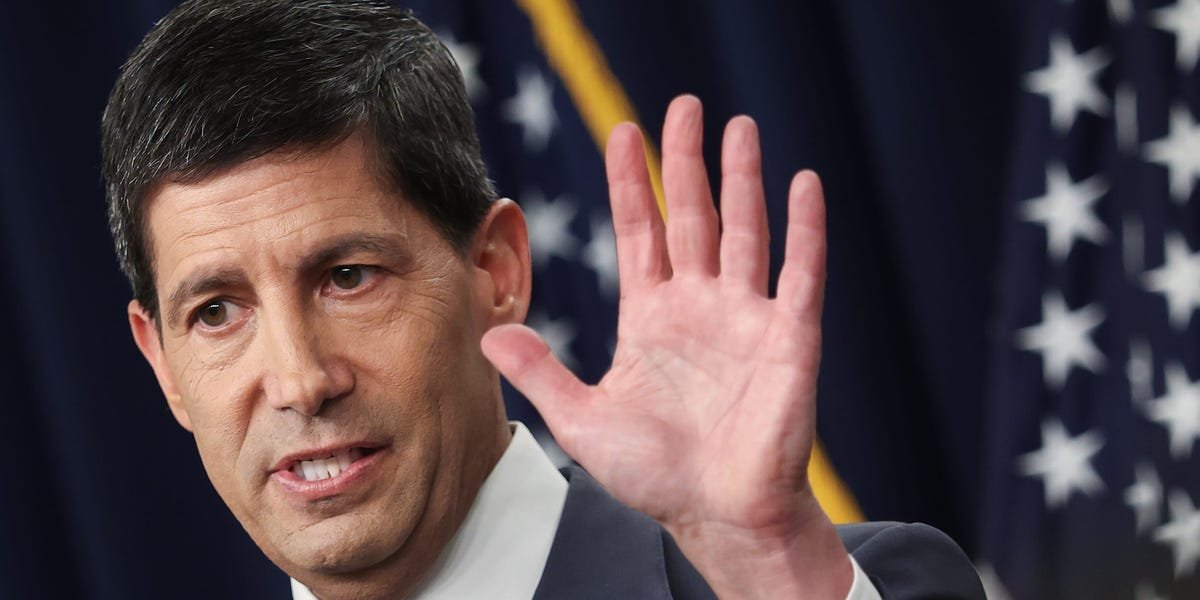
Markets are pricing about 93% odds of a rate hike at the end of the Fed’s policy meeting on Wednesday. With inflation at 3.4%, long-term Treasury yields spiking, and a hawkish speech from Fed chair Kevin Warsh at Jackson Hole, investors feel confident that the next move for rates is up.
But there are still questions around how Warsh and other Fed officials might signal next steps, given Warsh’s disdain for “forward guidance.” Warsh has repeatedly talked tough about fighting inflation, but with the midterm elections just weeks away and President Donald Trump already putting pressure on Warsh to lower interest rates, it remains unclear just how hawkish he’s willing to be.
As for markets, investors tend to dislike rate hikes, but they may actually cheer one on this time as it would establish Warsh’s credibility and his commitment to fighting inflation. If the Fed leaves rates unchanged, stocks could sell-off as investors might worry about inflation running too hot. Conversely, they might cheer the status quo, as rate hikes can weigh on earnings growth, the lifeblood of stocks.
With such high odds of a rate hike priced in, Goldman Sachs, in a client note on Friday, looked at how stocks have historically behaved after the start of a Fed hiking cycle.
On average going back to 1988, the S&P 500 has sold off after the first rate hike. The index’s median return almost three months after the hike has been roughly -4%, while the average return has bottomed around -4% about two months after the initial hike.
That suggests the two-to-three-month mark after the first hike would be the optimal time to buy any dip in the market. By six months after the hike, both the median and average returns have been back in positive territory.

Goldman Sachs
By the 12-month mark, the median return for the S&P 500 has been 9%.
Goldman said stocks tend to bottom out and recover once investors see an end to the policy-tightening cycle ahead. Since the market is already pricing in a few hikes, stocks shouldn’t suffer a major sell-off, the bank said.
“Equities typically struggle when the Fed starts to hike rates, but we expect the bull market to continue,” Ben Snider, the bank’s chief US equity strategist, wrote in the note.
He continued: “Today, the rates market is already pricing more than three 25 bp hikes by the middle of 2027, lifting the bar for policy to surprise in a hawkish direction.”
Sector performance within stocks after the first hike has historically been mixed. But on average, the energy and tech sectors have been the strongest performers, Goldman said, with each rising 4% in the first three months after an initial hike going back to 1988.
William Edwards is a senior investing reporter at Business Insider primarily covering the US stock market and the broader economy.He’s interviewed some of the most influential voices in the market, including Joseph Stiglitz, Jeremy Grantham, Rick Rieder, Rob Arnott, Savita Subramanian, Nouriel Roubini, Ken Rogoff, Mike Wilson, Claudia Sahm, Albert Edwards, Andrew Ross Sorkin, Ben Snider, and more.William launched BI’s annual Oracles of Wall Street list (2023, 2024, 2025), highlighting top calls from strategists, economists, and analysts. He also writes BI’s Where to Invest $10,000 column, and contributes to the First Trade newsletter.Prior to Business Insider, William covered the US economy for Bloomberg News in Washington, DC and contributed to TV tech coverage for CNBC in San Francisco. He has also spent time studying or reporting in France, Germany, and Tunisia.He is based in New York.