
With a market cap of $1.91 trillion, SpaceX is among the most valuable companies in the world.
SpaceX (SPCX) listed on the Nasdaq in June 2026, raising over $75 billion in its initial public offering.
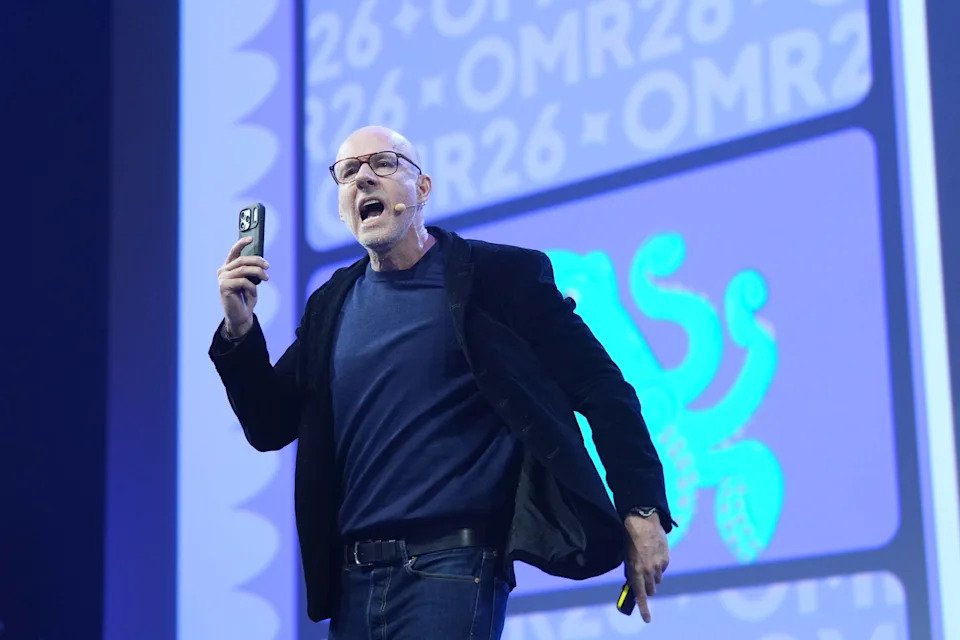
Last month, New York University marketing professor Scott Galloway said Wall Street has gotten the math badly wrong on SpaceX, and he is not shy about putting a number on just how wrong.
SpaceX stock price target sits far below market
In a recent podcast, Galloway said that SpaceX shares are worth somewhere between $10 and $30.
At the time of writing, SPCX stock trades at $148, which means Galloway believes the stock could fall 80% from current levels without undervaluing the company.
According to Business Insider, Galloway said:
“It’s still crazy overvalued. I think this is a $10 to $30 stock.”
Here is what makes his call notable.
SpaceX priced its initial public offering at $135 a share in the summer, giving Musk’s rocket company a valuation near $1.8 trillion.
The stock then climbed as high as $225 before tumbling over 50% to $105. It has since recovered and has traded above its IPO price in the last two weeks.
Galloway argues that price action has little to do with the underlying business. He pointed to a few mechanical quirks in how the stock trades:
-
Only about 4-5% of SpaceX shares were available for public trading right after the IPO, which limited supply.
-
The stock’s inclusion in the Nasdaq 100 forced index funds to buy shares regardless of price.
-
SpaceX priced a $25 billion bond offering less than two weeks after going public, even though it was sitting on more than $100 billion in cash.
-
The debt sale, Galloway said, tells investors this is really an AI infrastructure bet wearing a rocket company’s uniform.
“Musk will go down as the greatest engineer of our time, but as a financial engineer,” Galloway said in the episode, according to Business Insider.
What the SpaceX financials show
Galloway’s skepticism aligns with SpaceX’s financials.
Given data from Fiscal.ai, SpaceX sales have grown from $10.4 billion in 2023 to $23 billion in the last 12 months.
It reported a net loss of $4.6 billion in 2023 and $4.9 billion in 2025. Over the last 12-months, its net losses have totaled $8.2 billion.
In the trailing 12-month period, SpaceX reported an operating margin of -16.2%.
SpaceX burned through $31.2 billion in free cash flow on a trailing basis, driven partly by $41.1 billion in capital expenditures, largely tied to AI compute buildout.