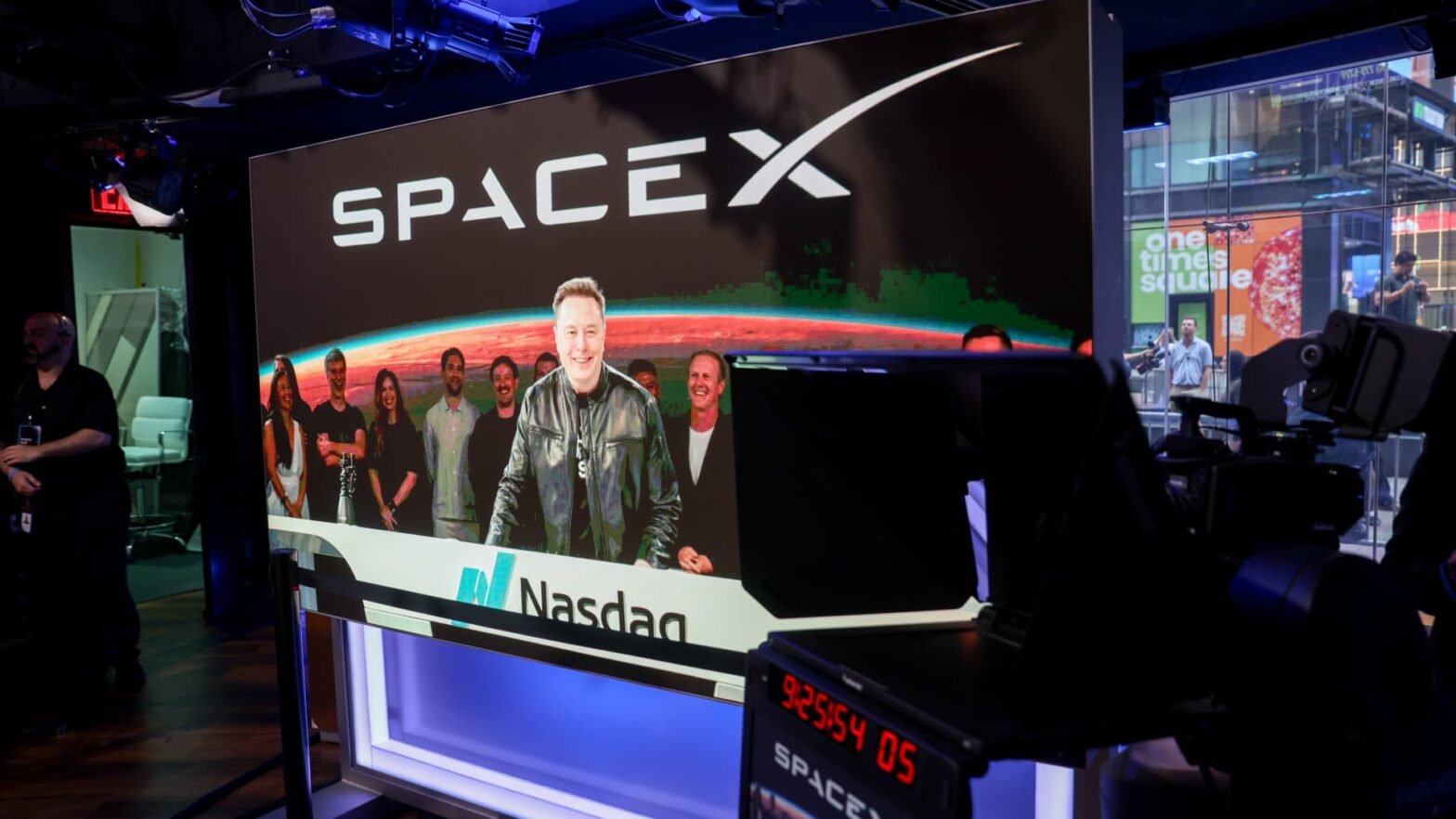

SpaceX reports fiscal second-quarter results after the bell on Tuesday, the company’s debut earnings report following its record IPO in June.
Here’s what analysts are expecting, according to LSEG.
- Revenue: $6.93 billion
- Loss per share: Loss of 26 cents
The company’s reported earnings — or loss — per share may not be comparable to the consensus of analysts’ estimates, as initial reports often contain unpredictable adjustments.
It’s the first time for Elon Musk’s reusable rocket maker to face Wall Street in this capacity, and investors are jittery. Since opening at $150 on June 12, SpaceX’s stock has dropped by 24%, wiping out close to $500 billion in market cap. The shares are almost 50% blow their intraday peak reached on June 16.
SpaceX lost $4.9 billion last year, largely due to hefty investments in artificial intelligence infrastructure. The company merged with Musk’s xAI in February, saying at the time that the vision was to build data centers in space. But even the launch business, which counts on large contracts from NASA, is losing money.
Most of SpaceX’s revenue for the year, and its only source of profit, came from its connectivity segment, which consists of its Starlink satellite internet service. Starlink is sold directly to consumers, as well as to government and military agencies.
Here’s what analysts expect in terms of revenue from SpaceX’s three segments, according to StreetAccount:
- Space: $835 million
- Connectivity: $3.83 billion
- AI: $2.18 billion
SpaceX’s conference call to discuss results is scheduled to begin at 4:30 p.m. ET.
What you need to know:
- Starship and the potential for commercial space tourism
- Short sellers are raking it in ahead of share lockup expiration
- Capex spending and the SpaceXAI buildout
- Starlink profitability and subscription levels
CNBC’s reporters are covering SpaceX earnings from bureaus in San Francisco and Englewood Cliffs, New Jersey.
Big-money call buying precedes SpaceX Q2 call
SpaceX traded billions of dollars in options immediately after its IPO in June, and far out-of-the-money calls have been a popular play from the start.
But a Friday $330 call was purchased about 90,000 times Monday across hundreds of transactions of different sizes, totaling about $2.2 million, SpotGamma data show. At an average price of around 30 cents per contract, or $30 per trade, the total open interest in the contract is nearing $20 million.
This type of big-money buying of a strike that’s almost three times higher than current levels would be considered odd for most stocks, but SpaceX isn’t most stocks. With an implied volatility of 133, it’s more volatile than anything in the S&P 500 with the exception of Sandisk, according to ThinkOrSwim data, and it’s only getting wilder this week.
For some traders, fat-chance contracts represent a way to hedge the risk that SpaceX will suddenly return to glory after the post-IPO selloff.
— Oliver Renick
What’s the cash burn relative to debt?
Prior to its mammoth IPO, SpaceX’s debt dwarfed its cash.
The company had debt and finance leases of $28.7 billion at the end of the first quarter and total liabilities of $60.5 billion, according to the prospectus. That compared to cash and equivalents of $15.9 billion.
Following the IPO, SpaceX’s cash pile swelled past $90 billion.
But analysts at Phillip Capital project cash and equivalents will remain relatively flat over the next four years as capex soars, while debt and finance leases will swell by almost 150%.
“The group returns to a net debt position” of $3.3 billion by fiscal 2030, they wrote.
— Ari Levy
Will SpaceX launches make room for more customers?
The Starlink logo appears on a smartphone screen with a starry night sky in the background.
Nurphoto | Nurphoto | Getty Images
SpaceX has historically used most of its commercial launches to deploy its own Starlink satellites into orbit. But it’s also provided a reliable, and relatively affordable, means for smaller players to get their satellites into space.
SpaceX reportedly stopped taking reservations beyond late 2028 or early 2029. Industry observers will be interested in hearing about the company’s plans.
One key question is whether the Starship rocket will be delayed beyond the expected timeline. If so, how much will SpaceX be able to make room for customers on older launch vehicles?
— Lora Kolodny
Cloud deals could be a boost

Days before the IPO, SpaceX announced an agreement with Google to provide the search giant with AI capacity in a deal expected to bring in $920 million a month.
The prior month, Anthropic agreed to use all of SpaceX’s compute capacity at its Colossus 1 data center in Memphis, Tennessee.
And over a week after the IPO, SpaceX signed a deal with Reflection AI to provide the startup with Nvidia’s top-of-the-line AI chips for $150 million a month.
Added up, SpaceX is showing that it can monetize its heft data center investment as it struggles to keep pace with AI leaders OpenAI, Anthropic and Google in developing models and services. But investors want to know if this is just a short-term fix or if Musk sees cloud infrastructure as a longer-term opportunity in a competitive market dominated by Amazon, Microsoft and Google.
— Ari Levy
Musk was briefly a trillionaire
Elon Musk is photographed at SpaceX in Brownsville, Texas.
Marvin Joseph | The Washington Post | Getty Images
As the stock started trading on the Nasdaq, Musk became the world’s first trillionaire based on his combined stakes in SpaceX and Tesla.
He’s still the world’s richest person, but as Musk acknowledged in a post on X last month, he’s now a “(Former) Trillionaire.”
In addition to SpaceX’s market slide, Tesla shares are down by about 20% since the rocket maker’s IPO. That’s brought Musk’s net worth to about $750 billion, according to Forbes.
— Ari Levy
New Street’s Ratzer: Three parts to the Starlink success story

New Street Research partner and senior analyst James Ratzer told CNBC’s “Squawk on the Street” that there are three parts to the success story for Starlink.
Ratzner said the first element is in broadband, and he expects capacity to grow 20 times what the company has today.
“Secondly, we think there’s a path over the medium term to developing a direct-to-sell business with a slightly separate constellation that will be complementary, we think, to existing wireless offerings,” he said.
The final piece, which is “potentially the biggest opportunity,” is the development of orbital data centers with a separate set of AI constellation satellites, though Ratzner noted that is “going to take time to develop.”
“We’re maybe a little bit more conservative there than, I think, some of the more bullish analysts on the stock,” he said. “We still think it’s a huge opportunity, but that’s something looking into the next decade.”
—Chris Eudaily
Starship is the ‘key enabler’
A general view of a SpaceX building and Starship rocket ahead of the SpaceX initial public offering (IPO), in Starbase, Texas, U.S., June 11, 2026.
Gabriel V. Cardenas | Reuters
SpaceX calls Starship the “key enabler” of its long-term growth strategy and says the rocket could unlock “entirely new categories of missions,” including commercial space tourism.
During a 13th test flight of Starship in July, SpaceX had trouble reigniting the Raptor engines in the rocket’s first stage.
“Any similar failure during landing at the launch site would no doubt cause severe damage to the launch pad,” TMF’s Farrar told CNBC at the time.
Ex-NASA engineers and aerospace researchers have also expressed concern about the Starship thermal protection systems.
The space segment generated revenue of $619 million in the first quarter of 2026, after pulling in sales for all of last year of $4.09 billion. That was mostly from established Falcon 9 rockets delivering customers’ payloads, including from SpaceX, into orbit.
SpaceX spent $3 billion on research and development last year, specifically on its Starship launch vehicle program.
— Lora Kolodny
Tesla’s Q2 results got hammered by Wall Street
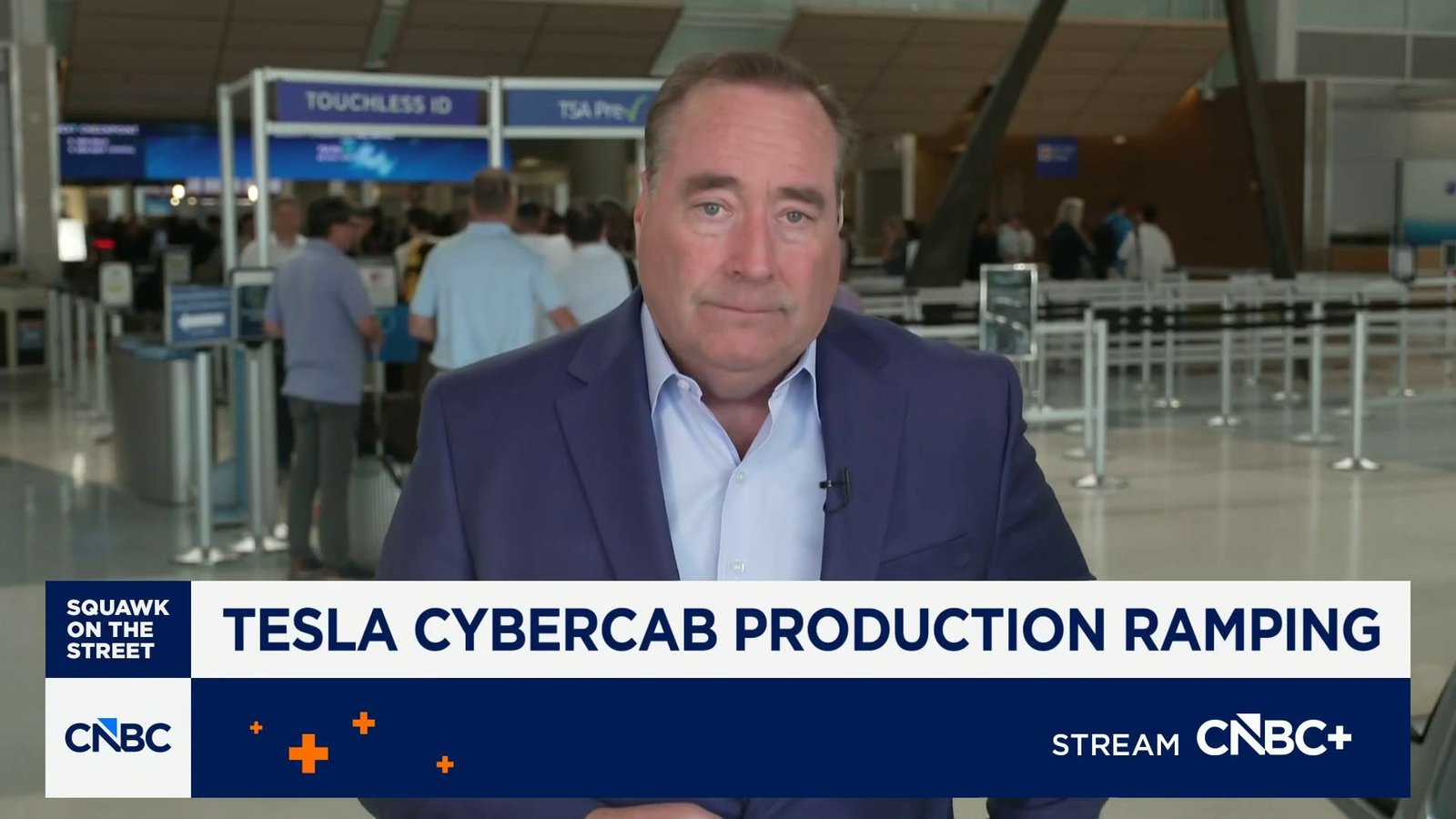
SpaceX’s first earnings report comes about two weeks after Tesla, Musk’s other public company, failed to impress Wall Street with its second-quarter numbers.
While revenue beat estimates, free cash flow turned negative, expenses soared and Musk struck a cautious tone in discussing the company’s Robotaxi efforts. The stock plunged 15% following the report and is now down 28% for the year, trailing all of its megacap peers.
— Ari Levy
Short sellers cleaned up with lock-up expiration looming
The first four NASA commercial crew astronauts address employees at the SpaceX factory under the first Dragon Capsule that went into space and returned to Earth, Aug. 13, 2018.
The Washington Post | The Washington Post | Getty Images
SpaceX’s slump has been a boon for short sellers betting against the stock. They were up up about $8.3 billion in paper profits as of Friday’s close, according to data from S3 Partners.
One catalyst for a potentially deepening slide is the possibility that a flood of new shares will hit the market once lock-up restrictions start expiring this week.
Musk takes personal umbrage with short sellers, whether they’re wagering against SpaceX or Tesla. He wrote in a post on X last month that, “The survival probability of firms who maintain a significant short position in SpaceX over time is very low.”
— Lora Kolodny
SPCX stock starts trading day with a 6% pop
SpaceX shares climbed about 6% higher at the start of trade, looking to build momentum after a rough stretch of losses.
After an initial surge when it began trading at $150 on June 12, the stock has slipped and is about 10% below its IPO price of $135.
—Chris Eudaily
Bank of America’s Epstein: Most important thing to keep an eye on is Starship

Ron Epstein, senior aerospace & defense analyst at Bank of America, told CNBC’s “Squawk Box” that he’ll primarily be watching for progress on rocket science with Starship and the path to resusability.
“They had a public release, but they’ll get some questions on it,” he said. “You know, what, what do they think went well? What do they think went better than they thought? What didn’t go as well as they thought?”
Epstein also noted that since this is the company’s first earnings call as a public company, it will be interesting to see how it is structured and how CEO Elon Musk and/or COO and President Gwynne Shotwell are featured.
—Chris Eudaily
Hefty spending on AI
SpaceX told investors in its IPO prospectus that it would “prioritize growth and investment to capture significant opportunities in AI applications and compute infrastructure,” for its relatively new AI business.
In merging with xAI, SpaceX brought in the company’s data centers, Grok AI models and chatbot, and social network X, formerly known as Twitter. In June, SpaceX struck a deal to acquire Cursor AI for about $60 billion in a transaction expected to close in the third quarter.
SpaceX reported capital expenditures of $10.1 billion in the first three months of the year, with AI expenses counting for $7.7 billion of the total. Analysts on average expect capex of $13.2 billion for the second quarter, according to FactSet.
— Lora Kolodny
The rare ‘sell’ rating
Analysts at Phillip Capital took the rare step of recommending investors sell SpaceX shares.
In a report on Friday, the firm set its price target for the stock at $75, which would be a drop of about 35% from Monday’s closing price.
Of the more than three dozen analyst estimates on SpaceX tracked by FactSet, Phillip becomes just the second firm to rate the stock a sell. The other such rating was from Morningstar.
Phillip analysts cited the company’s big losses and negative cash flows expected until at least 2030.
— Ari Levy
Starlink profitability and subscriber adds in focus

The slice of the SpaceX investor base most focused on fundamentals will be paying close attention to Starlink, which provides global high-speed internet coverage using a constellation of more than 10,200 satellites in low Earth orbit.
In its prospectus in June, SpaceX said the connectivity unit generated $11.39 billion in revenue in 2025, accounting for 61% of total sales. It was SpaceX’s only profitable business last year, generating income of $4.42 billion.
Also in June, the company raised prices for Starlink subscribers, initiating a $10 “monthly kit fee” to rent its terminals after also increasing rates for different subscription levels. SpaceX said in a post on X early that month that its Starlink subscriber count had surpassed 12 million.
Tim Farrar, a satellite services industry expert and president of TMF Associates, told CNBC that investors should watch for Starlink subscriber net adds and changes in average revenue per user.
— Lora Kolodny