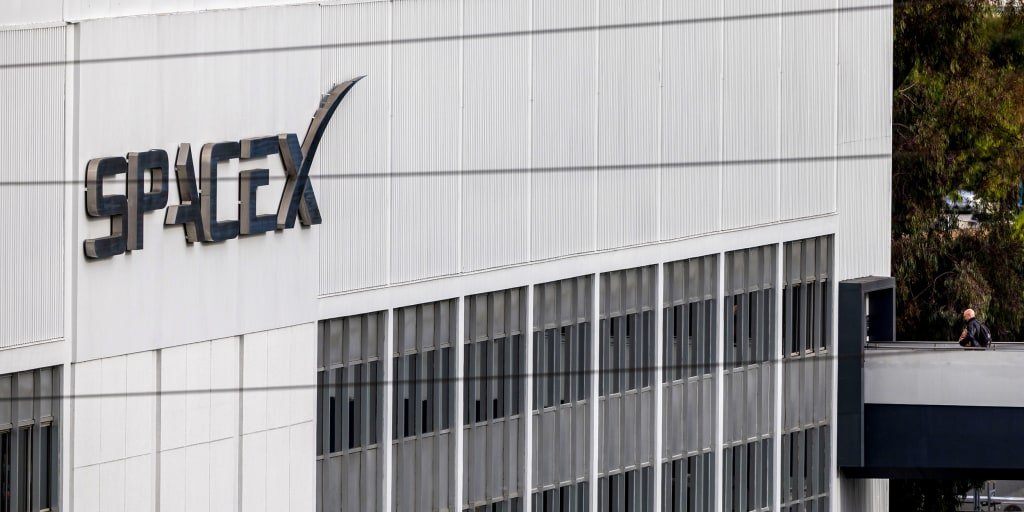
SpaceX set its final IPO price at $135 on Thursday, the last stage in a long-running process to bring Elon Musk’s space and AI conglomerate public.
The company, which also owns the X social media network, will begin trading Friday at a valuation of $1.77 trillion. The initial public offering, which could be a referendum on Musk himself, is also going to be the latest major test of red-hot demand for the artificial intelligence boom.
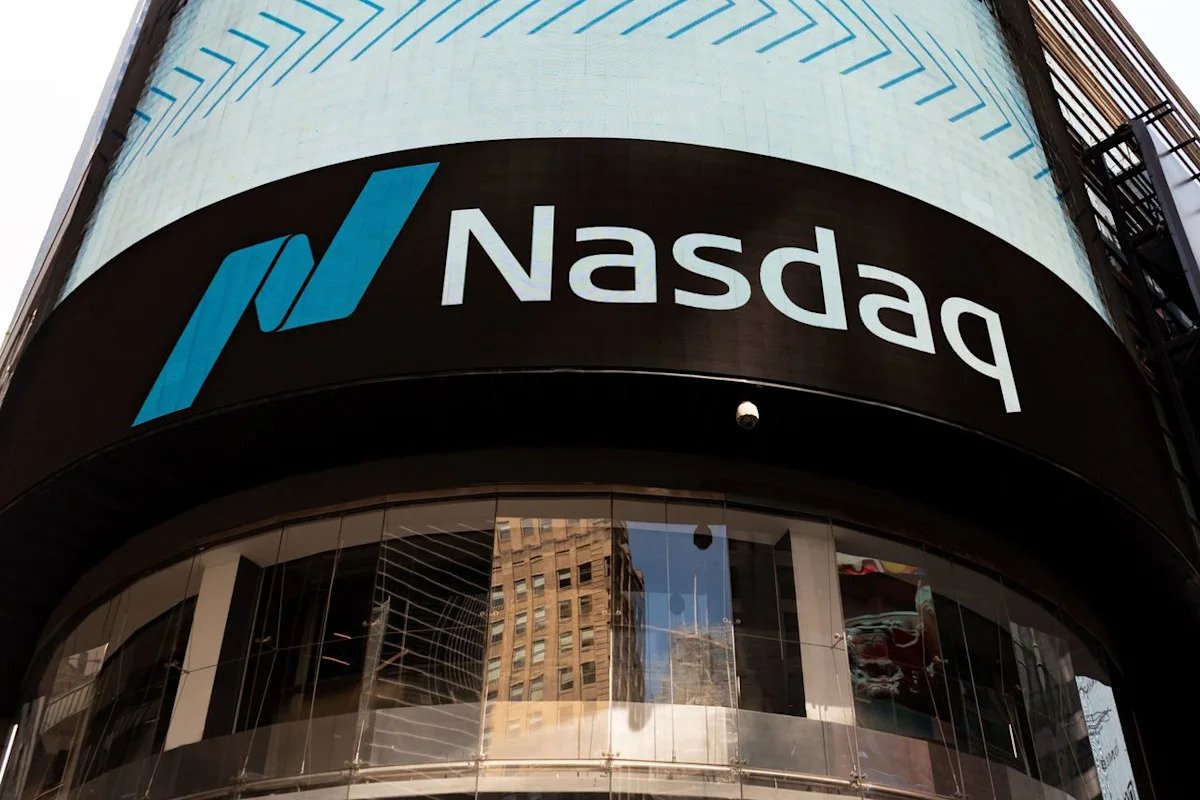
It could also test the mechanics of the market itself. When Facebook’s massive IPO debuted on the Nasdaq exchange in 2012, technical glitches delayed its opening. SpaceX will also trade on the Nasdaq and is set to be three times larger than the prior largest IPO on record.
But the implications of this IPO stretch far beyond the opening trade.
For years, SpaceX was largely accessible only to venture capital firms, institutional investors and a small group of private shareholders. Now, ordinary investors will have their first chance to buy into one of the most closely watched companies in the world.
Yet buying SpaceX stock also means investing by proxy in Musk, the company’s controlling shareholder and the world’s richest person,
Musk is a deeply divisive figure both in the U.S. and abroad who uses his social media network to promote a nativist, far-right political agenda.
As SpaceX was preparing to go public Thursday in New York, Musk was using X to encourage violent, anti-immigrant rioters in Northern Ireland to keep up a campaign of burning cars and houses in response to a knife attack on a local man for which a Sudanese immigrant has been charged.
Stateside, Musk is best known for his alliance with President Donald Trump. After pouring millions of dollars into Trump’s 2024 campaign, Musk was given carte blanche by the Trump administration to oversee the firing of hundreds of thousands of federal government employees through his ad hoc Department of Government Efficiency.
To what degree Musk’s social controversies could impact SpaceX as it transitions to a public company remains to be seen.
For now, investors appear eager to overlook Musk’s politics and focus on his company.
Dan Hanson, a senior portfolio manager at Neuberger Berman, which invested in SpaceX while it was still private said investors should think of SpaceX not just as a rocket company, but as a combination of its launch business, Starlink satellite internet network and artificial intelligence ambitions.
“This team is just getting started,” he said. “There’s a significant opportunity for them to create value as they execute.”
Not everyone agrees. Even before its debut, some have doubted whether the offering is pushing the bounds of reality.
Analysts at Morningstar wrote last week that they believe the company is “overvalued” given its financials.
SpaceX had been aiming to go public at a value of more than $2 trillion; however, that has since been trimmed to about $1.7 trillion. For context, the company has yet to generate a profit and produced roughly $19 billion in revenue last year.
“We value SpaceX at $780 billion,” the analysts wrote.
“With a small initial float boosted by almost every investment bank on the planet, buoyant investor appetite for AI infrastructure bids, and an unprecedented path to inclusion in the Nasdaq 100 Index just 15 trading days after the IPO, we expect SpaceX’s share price will likely survive separation and even ascent toward orbit, at least for a time,” the authors continued.
A company’s “float” is how many of its shares are made available to buy by the public.
And unlike most major IPOs, SpaceX is expected to reserve an unusually large portion of those shares for individual retail investors.
The company is targeting roughly 30% retail participation, compared with closer to 10% in a typical IPO.
“Thirty percent is actually quite high,” said Edward Best, co-chair of the capital markets practice at Willkie Farr & Gallagher.
“I imagine [part] of this was Elon Musk,” Best said. “A lot of individuals just believe in the aura or the mystique of Elon Musk and want to participate.”
Not everyone who wants shares will get them. Demand for the offering is expected to far exceed the number of shares available, meaning many investors could receive only a fraction of the stock they request — or none at all. That’s a common feature of highly anticipated IPOs.
But most investors might not even need to actively participate. Recent changes made by major stock exchanges like the New York Stock Exchange and the Nasdaq mean newly public companies can soon be added to passive index funds such as the Nasdaq 100.
That means trillions of dollars of retirement savings and pensions could end up buying into these companies despite the overarching questions around their financials.
“It’s been a little bit of a manufactured drama around this idea of index inclusion,” Hanson said, arguing that any company valued as much as SpaceX “should rightfully be in public market indexes.”
“It may be volatile,” he said. “[But] that’s the beauty of an index, where it’s very highly diversified,” meaning lots of different companies exist within the fund and can therefore offset those more volatile names.
Still, others have criticized the fast-tracked timelines, especially since it’s not just SpaceX. Fellow AI giants Anthropic — the maker of the Claude chatbot — and OpenAI, the parent company of ChatGPT, will also go public this year.
Keith Snyder, senior equity analyst at CFRA research, said companies once needed to be “very stable” and “a bellwether” to be included in the major indexes.
“And these companies are about as far from stable as you can get,” he said of the upcoming IPOs. “They’re bleeding cash at ridiculous rates.”
But that hasn’t stopped the demand. Taken together, the public debuts could help define the next chapter of the IPO market, which has yet to fully recover from the slowdown that followed the Federal Reserve’s aggressive interest rate hiking campaign beginning in 2022.
“This will be a ‘top-heavy’ IPO boom,” Matt Kennedy, senior strategist at Renaissance Capital, wrote in an email response to NBC News. “Just one of these mega-IPOs — SpaceX, OpenAI, or Anthropic — could raise more money than every other deal, combined.”
He estimates SpaceX alone is expected to raise more money than all U.S. IPOs in 2024 and 2025 combined.
That could push 2026 into the record books, though Kennedy cautions the strength is concentrated among a small group of companies.
“A few sectors are on fire, but the IPO recovery is still fairly narrow,” he said.
The distinction is important. While investor enthusiasm for AI has fueled demand for a handful of marquee offerings, many startups are still struggling to bridge the gap between the valuations they want and what public investors are willing to pay.