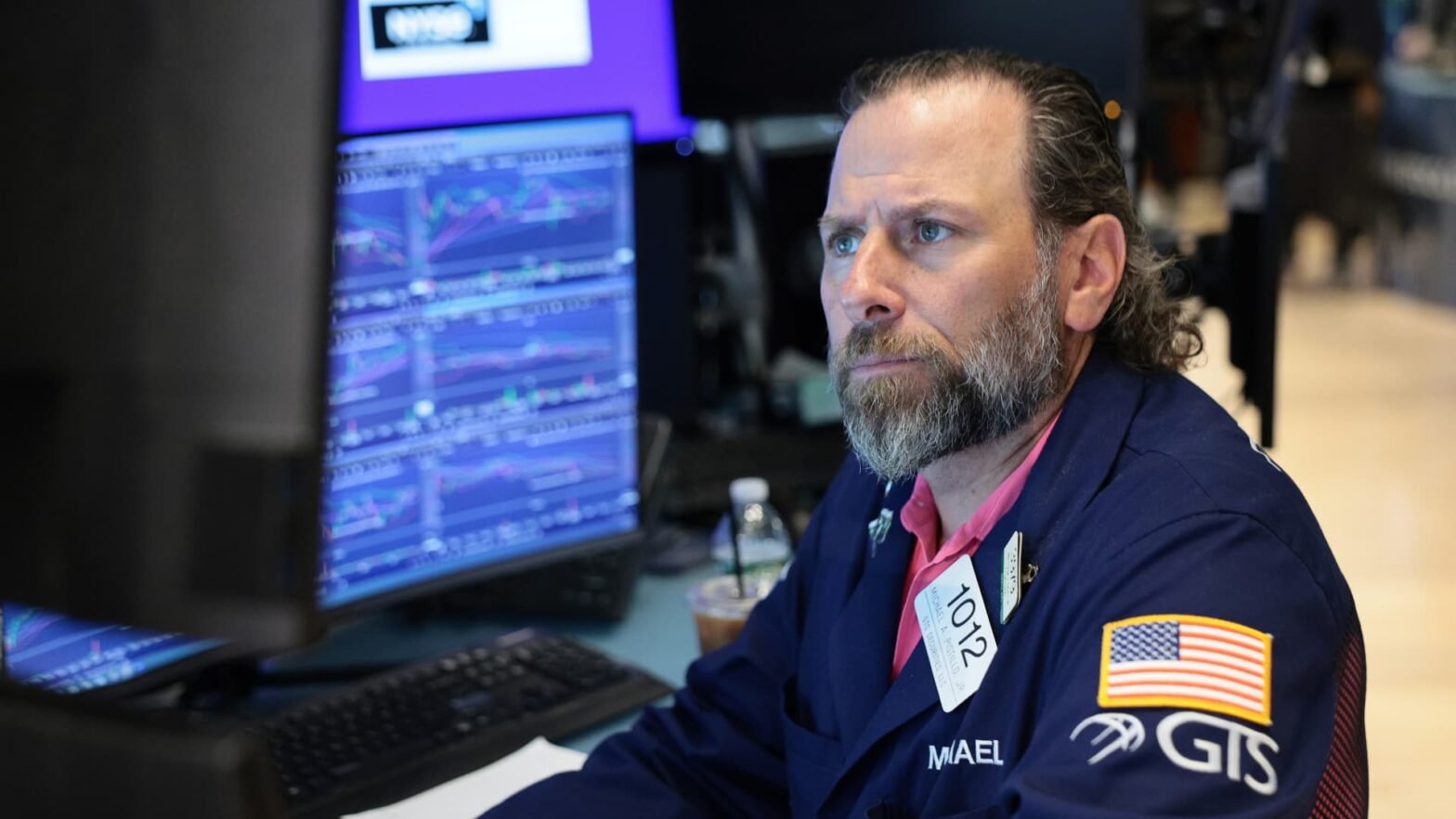
Traders work on the floor of the New York Stock Exchange during morning trading on June 26, 2026 in New York City.
Michael M. Santiago | Getty Images
Stock futures were little changed on Sunday night, with Wall Street about to wrap up a month of gains, led by the tech sector.
Dow Jones Industrial Average futures traded 66 points lower, or 0.1%. S&P 500 futures also slipped 0.1% along with Nasdaq-100 futures.
The Dow is up 2.1% in August, on pace for its fifth consecutive monthly advance. The S&P 500 and Nasdaq Composite were headed for their first one-month increases since May, up 3% and 4%, respectively. Both the S&P 500 and Dow also reached all-time highs earlier in August.
Tech led the charge this month, with artificial intelligence-linked stocks outperforming. The S&P 500 tech sector is up nearly 6% for the month. Nvidia has climbed more than 8%, while Microsoft and Micron Technology advanced 11% and 13%, respectively.
To be sure, August has still been a turbulent month, as inflation fears sent Treasury yields to multiyear highs. The Treasury Department tried to stem the rout by saying it would increase debt repurchases, but yields along the long end of the curve remain elevated. Federal Reserve Chairman Kevin Warsh also said Friday he’s worried about inflation, noting that, “while this summer’s [inflation] readings were better than expected, they do not tell me that underlying trends have meaningfully improved.”
“Although we doubt this was intended to foreshadow September’s tightening given his distaste for signaling, his hawkish discussion makes a 25bp September hike more likely than not. Given his inflation metrics, our baseline calls for another in December,” wrote Barclays economist Jonathan Millar in a note.
Heightened tensions in the Middle East also led to choppy trading in August. On Sunday, U.S. Central Command confirmed to MS NOW that the U.S. struck two rocket launchers on Iran’s Larak Island.
Crude prices popped in early trading following the attack. U.S. oil traded 2.1% higher at $85.14 per barrel. Brent futures were up 2% at $89.90.
Investors will get more insight into the state of the economy this week, with the August jobs report due Friday morning. Monthly manufacturing and services sector data is also on deck.
Jefferies ‘constructive’ on bond and stocks
Yields are near multiyear highs, and stock volatility has picked up. But Jefferies chief market strategist David Zervos isn’t worries.
“I believe the Treasury has become the dominant policy actor in shaping financial conditions, leading me to remain constructive on bonds and equities as buybacks and potential curve-twisting operations provide a powerful market backstop,” he wrote. “Treasury intervention can help offset bond market disruptions, support a weaker dollar, and drive lower long-end yields, creating a favorable backdrop for risk assets.”
— Fred Imbert