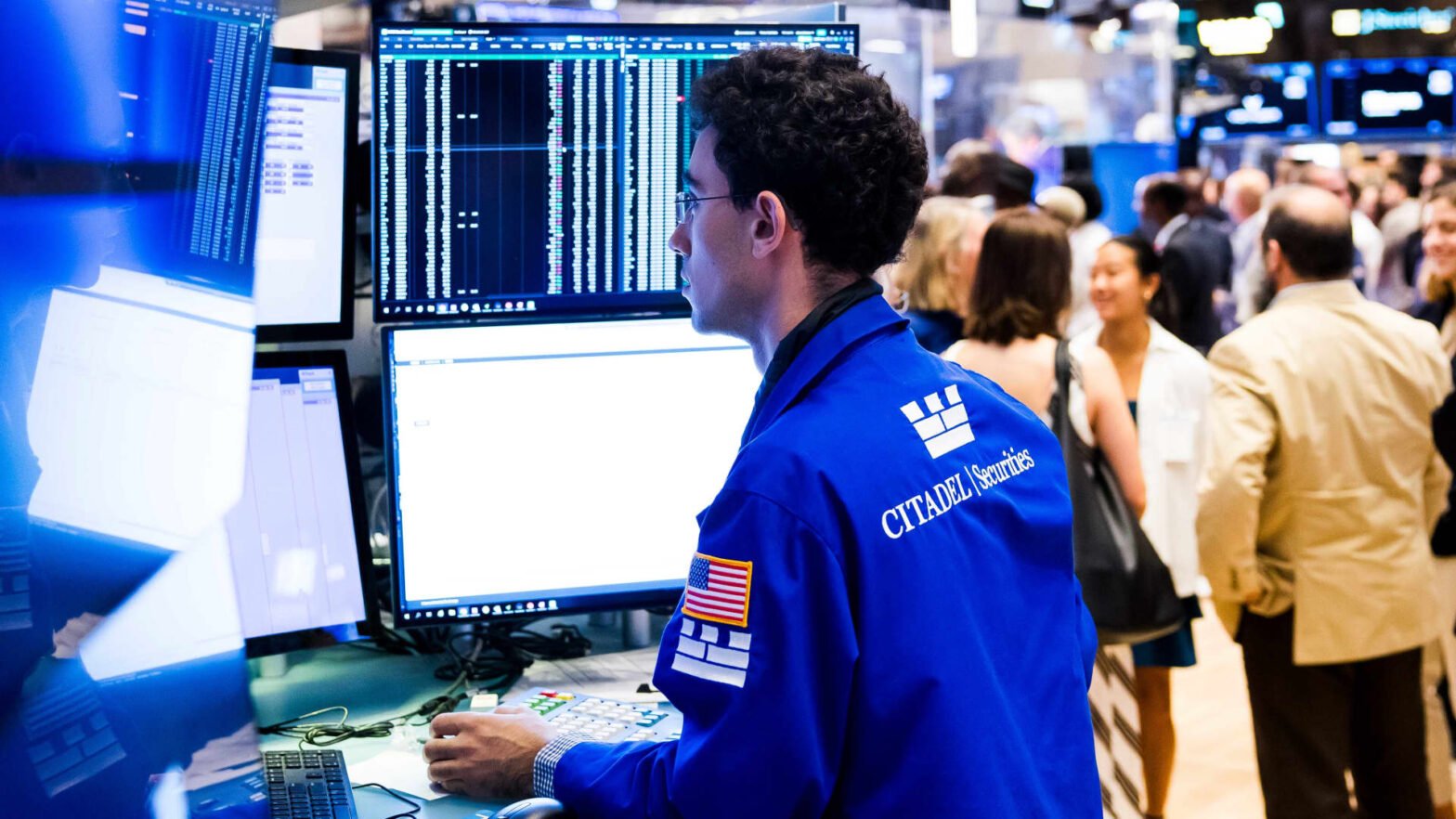
Traders work at the New York Stock Exchange on Aug. 29, 2025.
NYSE
Stock futures edged higher Tuesday night after a federal court decision in an Alphabet antitrust case fueled optimism that the tech giants will be able to weather regulatory threats.
S&P 500 futures rose 0.2%, while Nasdaq-100 futures jumped by 0.3%. Futures tied to the Dow Jones Industrial Average opened lower by 57 points, or about 0.1%.
Shares of the Google parent jumped more than 7% in after-hours trading after a federal judge ruled Tuesday that Google can keep its Chrome browser but it won’t be allowed to strike exclusive search deals and must share its search data. The decision avoided the worst-case outcome for the tech giant, and largely drew from the idea that artificial intelligence has provided more choice to consumers.
The decision also means that Apple can continue to preload Google Search onto its iPhones, which is a lucrative arrangement for Apple. The company, which also is facing its own antitrust case, saw its stock rise more than 3%.
September trading began on a negative note, with stocks losing momentum during Tuesday’s trading session. Each of the three major U.S. indexes ended the session in the red as investors raked in profits from the summer rally. The Dow Jones Industrial Average lost about 249 points, or 0.55%, while the S&P 500 shed nearly 0.7%. The Nasdaq Composite dropped about 0.8% as tech giants posted losses, with Nvidia ending the day down about 2%.
Tuesday also saw a spike in bond yields. The 10-year Treasury yield jumped to 4.27%, while the 30-year yield topped 4.97%. Yields rose as traders weighed the consequences of a federal appeals court’s ruling Friday that many of President Donald Trump’s global tariffs are illegal. The decision could force the U.S. to refund the billions brought in from trade duties.
September is a typically weak month for U.S. equity performance. Scott Wren, senior global market strategist at Wells Fargo Investment Institute, said that September has been the worst month for the S&P 500 since 1950, with the average return of -0.7%.
“Stocks are entering September with a time out from the recent calm,” Wren said. “Market volatility should increase, especially equities and short- & long-term fixed income, while economy slows, tariff impacts arrive piecemeal, and political uncertainties continue.”
Investors are eyeing the August jobs report due Friday as the next major test for stocks.
Stocks moving in after-hours trading Tuesday
Shares of a couple companies made moves after the bell on their earnings releases. Take a look:
- Zscaler shares rose about 3% after the cloud security company solidly beat expectations on top and bottom lines. Zscaler reported fourth-quarter adjusted earnings of 89 cents per share on revenue of $719 million, exceeding analysts’ profit forecast of 80 cents per share on $707 million in revenue, per LSEG. The company also gave better-than-expected guidance for its upcoming quarter.
- Shares of HealthEquity jumped 4% on strong second-quarter results. The company earned $1.08 per share, excluding items, on revenue of $326 million for the period, while analysts polled by LSEG expected earnings of 92 cents per share on revenue of $321 million.
— Pia Singh
Bessent to start interviews for potential Fed chairs on Friday, WSJ reports
Treasury Secretary Scott Bessent is planning to start interviews on Friday to determine the next Federal Reserve chair, the Wall Street Journal reported, citing people familiar with the matter.
According to the WSJ report, the interview process — which is being conducted in an effort to replace current chair Jerome Powell — will continue next week and be done either in person or by video conference. Bessent earlier confirmed to CNBC in mid-August that there are 11 potential candidates for the job. He plans to recommend a final list of candidates to President Donald Trump after the interviews.
— Pia Singh
Alphabet, Apple shares pop after judge rules that Google gets to keep Chrome
Shares of Google parent Alphabet jumped about 8% in after-hours trading after a federal judge ruled Tuesday that Google can keep its Chrome browser, but will be barred from exclusive search deals and must share search data.
The ruling from U.S. District Judge Amit Mehta comes nearly one year after he ruled that Google illegally held a monopoly in internet search. In a landmark case filed in 2020, the U.S. Department of Justice alleged that Google kept its share of the general search market by creating strong barriers to entry and a feedback loop that sustained its dominance.
Apple shares also rose 3% on the news, as the iPhone maker also faces antitrust scrutiny around its alleged smartphone monopoly. Google pays Apple billions of dollars per year to be the default search engine on iPhones.
Dan Ives, Wedbush Securities global head of tech research, said in a note that Mehta’s ruling is a “massive win” for both Google and Apple.
“This was a black cloud [of] worry over Apple’s stock as investors worried a Google Chrome breakup and/or forced to extinguish the search deal with Apple was potentially on the docket,” Ives wrote. “While in theory Google is barred from ‘exclusive deals’ for search this now lays the groundwork for Apple to continue its deal and ultimately likely double down on more AI-related partnership with Google Gemini down the road. We now see a green light for a bigger Gemini AI partnership between Apple and Google with this DOJ case now in the rear view mirror.”
— Pia Singh