3 min read
In this article:
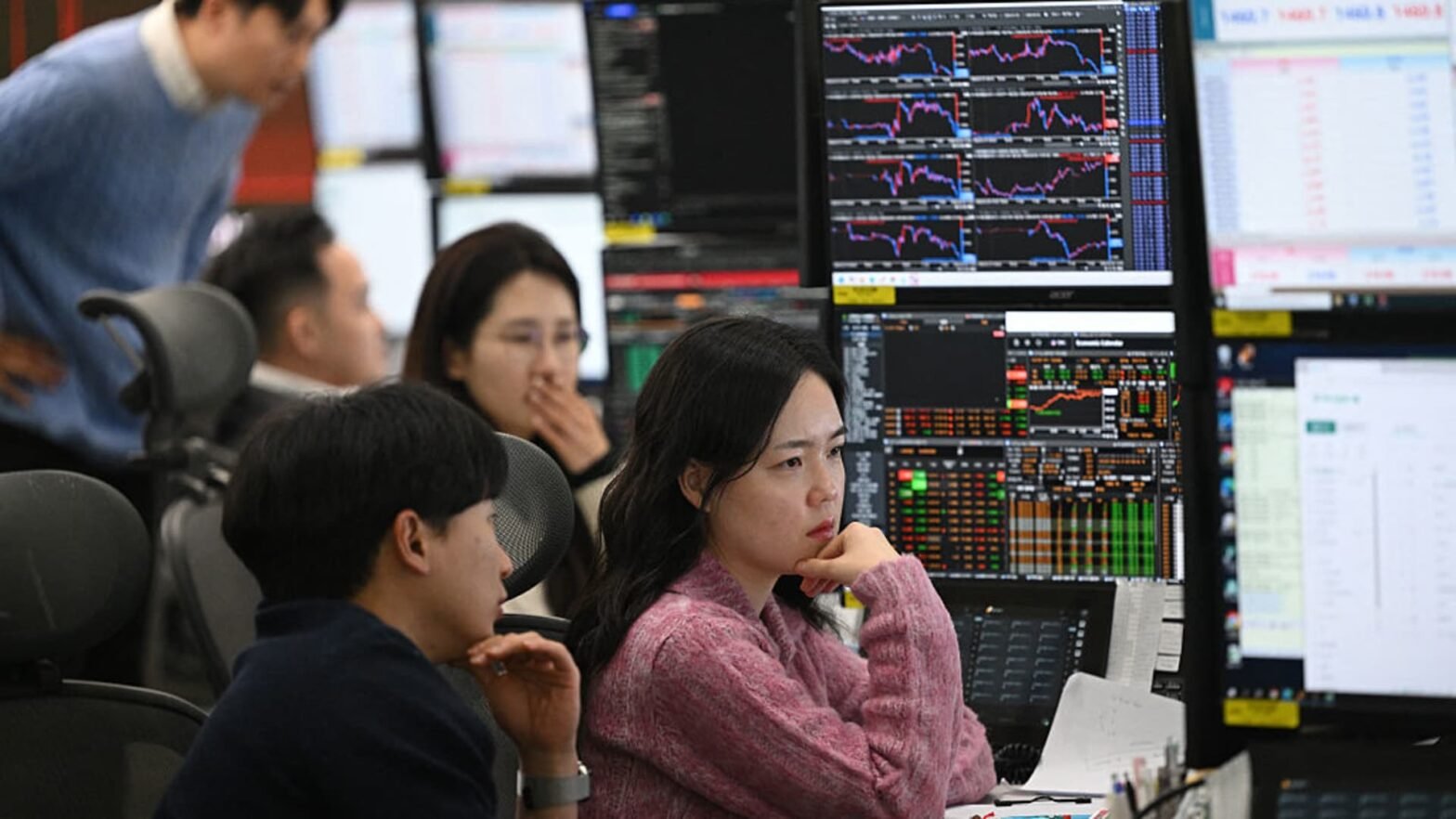
Wall Street closed lower on Wednesday, pulled down by tech and discretionary stocks. Investors kept cashing in gains from these stocks, raising worries about stretched valuations and the artificial intelligence (AI) bubble, as they eagerly await Jerome Powell’s comments at Jackson Hole. One of the three benchmark indexes closed virtually flat, while the other two closed in the red.
The Dow Jones Industrial Average (DJI) remained virtually unchanged, rising 16.04 points, to close at 44,938.31. Twenty components of the 30-stock index ended in positive territory, while 10 ended in negative.
The tech-heavy Nasdaq Composite tumbled 142.10 points, or 0.7%, to close at 21,172.86.
The S&P 500 lost 15.59 points, or 0.2%, to close at 6,395.78. Yet, seven of the 11 broad sectors of the benchmark index closed in the green. The Energy Select Sector SPDR (XLE), the Consumer Staples Select Sector SPDR (XLP) and the Health Care Select Sector SPDR (XLV) advanced 0.8%, 0.6% and 0.5%, respectively, while the Consumer Discretionary Select Sector SPDR (XLY) declined 1%.
The fear gauge CBOE Volatility Index (VIX) increased 0.8% to 15.69. Advancers outnumbered decliners by a 1.04-to-1 ratio on the NYSE.
Investor mood on Wall Street turned cautious on Wednesday as a combination of the Fed’s latest minutes and continued weakness in tech stocks weighed on sentiment. The minutes from the Fed’s July meeting showed most policymakers favoring a steady course on interest rates, with only a small minority advocating for a cut. While the central bank acknowledged progress in controlling inflation, concerns lingered over the uncertain impact of tariffs and the risk of inflationary pressures persisting. This tempered expectations for swift monetary easing, leaving investors more hesitant about the near-term policy outlook.
At the same time, another wave of selling hit heavyweight technology and discretionary stocks, dragging down the broader market. With valuations, especially in the tech sector, still stretched after months of enthusiasm for AI, investors grew increasingly uneasy about the sustainability of the trade.
This double dose of pressure, the Fed’s restrained tone and weakness in high-flying tech, prompted a shift in behavior among investors. Many chose to lock in profits from AI-driven winners and rotate into less expensive, more defensive sectors such as healthcare, energy and consumer staples. The resulting mood was one of cautious pragmatism. While the economy remains resilient and corporate earnings have offered support, the combination of sticky policy uncertainty and overvaluations in technology curbed risk appetite. The market is essentially recalibrating its optimism, with investors moving away from overvalued growth plays toward safer ground in anticipation of choppier conditions ahead.