The famous advice works, but only if you set yourself up to follow it.
By Matt Frankel, CFP® –
Key Points
-
Warren Buffett’s most famous advice is to be greedy when others are fearful.
-
His greed has always been backed by cash he didn’t need, and a willingness to see prices fall further.
-
Individual investors should be greedy only with money they won’t need for at least five years.
With the Nasdaq-100 down about 15% from its October high, you’re likely to see one Warren Buffett quote everywhere. In his 1986 letter to Berkshire Hathaway (BRKA -0.47%)(BRKB -0.36%) shareholders, he wrote that the company tries “to be fearful when others are greedy and to be greedy only when others are fearful.”
To be perfectly clear, this is great advice, but many people skip the conditions that made it work for Buffett, and that’s where investors can get into trouble.

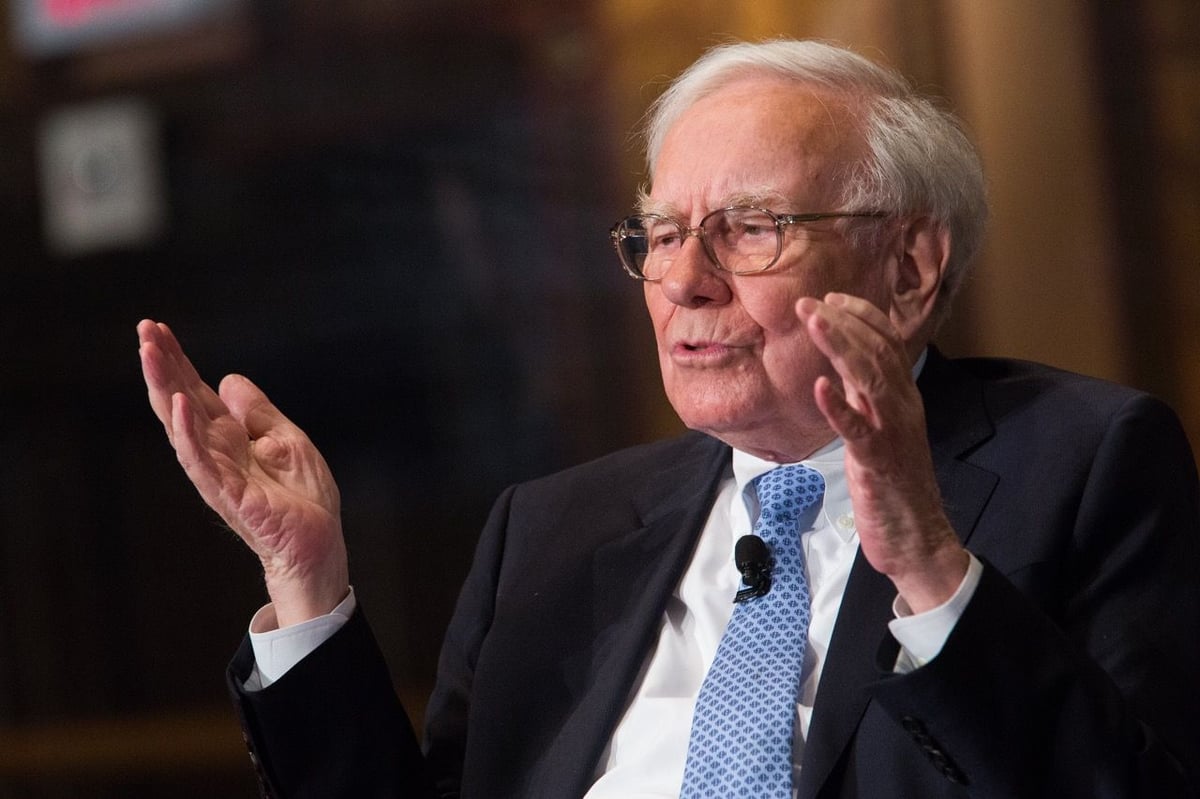
Image source: Getty Images.
Catch No. 1: Buffett was greedy with money he didn’t need
Here’s the most important caveat to Buffett’s “be greedy” rule. Berkshire never has to sell stocks to pay its bills. It entered this sell-off with more than $350 billion in cash and equivalents, and it has sold more stock than it bought in 14 of the past 15 quarters.
As an individual investor, this would be the equivalent of having a fully funded emergency fund and no stock exposure for money you’ll need in the next five years or so. If you’d have to sell during a downturn to cover a bill, you can’t afford to be greedy.
Catch No. 2: He expected prices to fall after he bought
In October 2008, Buffett wrote a New York Times op-ed explaining that he was buying American stocks in his personal account. In the same piece, he admitted he had no idea whether stocks would be higher or lower a month or a year later. The market kept falling for nearly five more months, and his purchases still worked out over time.
That’s why I prefer to buy in stages during sell-offs. Nobody rings a bell at the bottom, and trying to time it correctly is a losing battle.
Catch No. 3: He was greedy about businesses he understood
A 40% decline doesn’t turn a weak business into a bargain. Buffett’s investing approach has always focused on buying durable companies he understands and could hold for years, and that’s what Berkshire Hathaway’s portfolio reflects. There’s a big difference between a stock that’s on sale and one that’s on sale for a business-specific reason.
Getting the conditions right
Let’s be clear. I’m not trying to talk you out of buying stocks during this stock market correction. Quite the opposite. But it’s important to do it right. Check your cash cushion first, decide which money truly has a five-year time horizon, and then put that money to work gradually in businesses you’d be happy to own if the market closed for a few years.
The bottom line is that Buffett’s advice is just as valuable today as it was in 1986. But it works best for investors who set up their finances to follow it, so get the conditions right first and then be greedy.
Where to invest $1,000 right now
When our analyst team has a stock tip, it can pay to listen. After all, Stock Advisor’s total average return is 719%* — a market-crushing outperformance compared to 192% for the S&P 500.
They just revealed what they believe are the 10 best stocks for investors to buy right now, available when you join Stock Advisor.
*Stock Advisor returns as of November 23, 2026.