Updated 1 min read
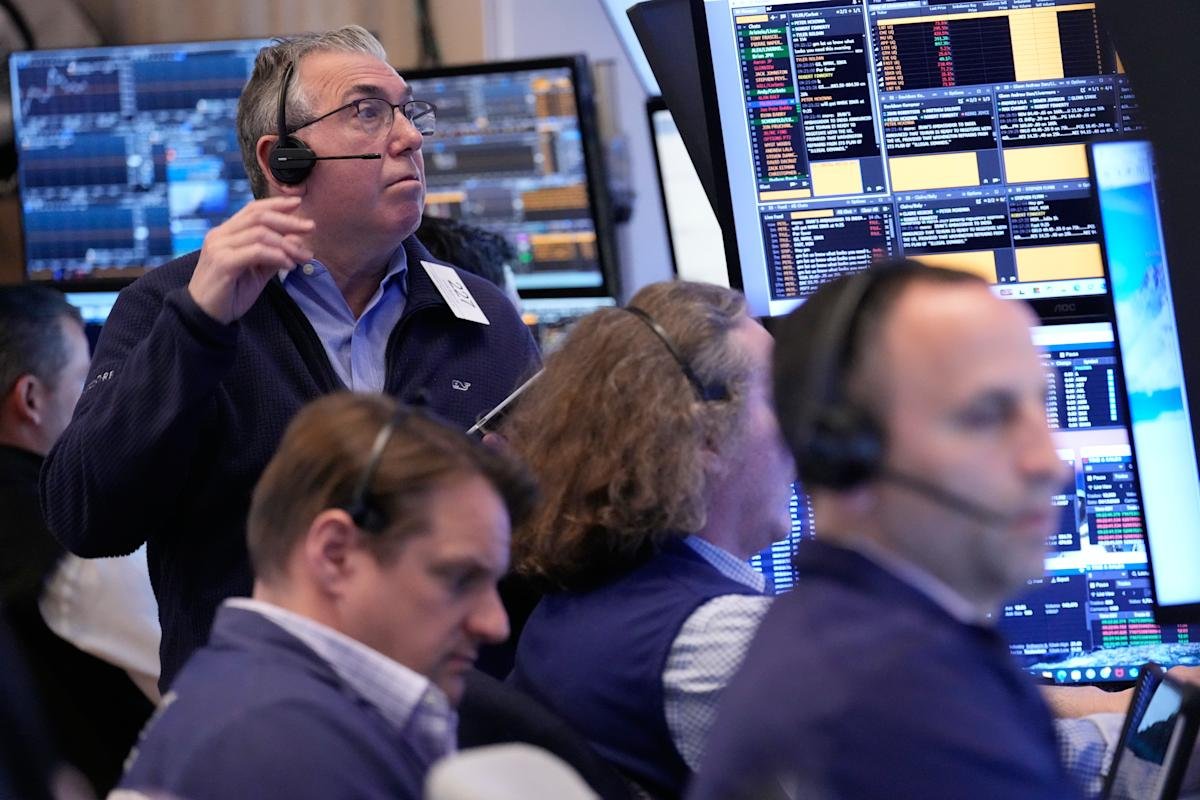
US stocks fell on Monday after a chaotic weekend of events reignited US-Iran tensions, putting peace talks at risk and leaving investors bracing for more uncertainty.
The tech-heavy Nasdaq Composite (^IXIC) led losses, shedding nearly 0.3%. The S&P 500 (^GSPC) dropped 0.2%, while the Dow Jones Industrial Average (^DJI) edged 0.1% lower.
The rapid escalation in tensions came after the US Navy seized an Iranian ship, blowing a hole in its engine room, according to President Trump. For its part, Iran fired at vessels and abruptly stopped traffic in the Strait of Hormuz on Saturday, abandoning its promise to allow some to pass through the critical passageway, as it said the US had broken a ceasefire deal.
Oil prices jumped on Monday, but remained well below the key $100 level. US benchmark West Texas Intermediate crude futures (CL=F) were last up 5.2% to trade above $86 per barrel, while global benchmark Brent crude (BZ=F) popped 5.1% to cross $95.
Looking ahead for the week, investors will parse another busy stretch of earnings, with major names including Tesla (TSLA), Intel (INTC), and United Airlines (UAL) set to report in the days ahead, offering the next test for markets navigating record stock rises and increasing geopolitical risk.
LIVE 19 updates
-
Dow, S&P 500, Nasdaq slip as oil rises amid Middle East uncertainty
US stocks slipped on Monday as Middle East tensions persisted and peace talks between the US and Iran were at risk.
The tech-heavy Nasdaq Composite (^IXIC) dropped 0.3% following three consecutive record closes last week. The S&P 500 (^GSPC) fell 0.3%, while the Dow Jones Industrial Average (^DJI) declined 0.1% lower.
The losses across the major averages were mild as the tech sector (XLK) still managed to eke out its 14th consecutive day of gains.
Tensions in the Middle East escalated this weekend as Iran said the Strait of Hormuz would not be open during the Israel-Lebanon ceasefire, and the US seized an Iranian vessel off the coast of Oman.
Oil jumped roughly 5% on Monday after declining nearly 10% on Friday.
-

Semiconductors ETF heading for 14-day streak — second-longest ever
The 13-day win streaks in the Nasdaq Composite (^IXIC) and Nasdaq 100 (^NDX) are about to end — unless both indexes climb into the green by the close.
But chip stocks, tracked by the iShares Semiconductor ETF (SOXX), are up about 0.5% and set to grow their streak to 14 trading sessions — the second-longest ever, behind only a June 2014 run. Large-cap tech, via the Technology Select Sector SPDR Fund (XLK), is trading around the unchanged line and could end its own 13-day streak right alongside the Nasdaq indexes.
Meanwhile, on the other side of tech, software stocks — via the iShares Expanded Tech-Software Sector ETF (IGV) — are up over 1% and set to extend their streak to six sessions. Software continues to outperform chip stocks since last Monday.
-
Gold, silver falls as oil prices rise, Iran war tensions persist
Gold (GC=F) fell 1% on Monday as oil prices climbed on continued tensions in the Middle East.
Futures contracts fell to around $4,820 per ounce but rose last week as stocks reached all-time highs. Silver (SI=F) also dropped roughly 2%.
The prospect of higher inflation due to elevated oil prices raises concerns that central banks may need to delay rate cuts. Higher interest rates typically put pressure on non-yielding precious metals.
-
Meta is leading the ‘Magnificent 7’ rebound — and running straight into a technical wall
Meta (META) is the top “Magnificent Seven” stock off March lows and the worst Magnificent Seven stock today — at the same time.
Since its March 27 low, Meta is up 25%, the best performance among the Magnificent Seven group. But today it’s down more than 2%, leading the Mag 7 to the downside. The stock is coming off an 11-day win streak that has carried it right back into its most important overhead zone.
That zone is $690 to $700, where the 200-day moving average sits, as well as a price shelf that was the stock’s prior support. And $690 marks the 61.8% Fibonacci retracement level from the August all-time high to the March 27 low — the last major technical barrier the bears need to defend before the bulls take control.
It’s not surprising Meta has stalled here. A vertical rally rarely powers through the highest level on the chart on the first try.
The question now is what kind of pause this is. The most bullish outcome would be a consolidation near the highs, gathering strength for a breakout. The bearish case sends the stock back to test support just under $600. Some version of chop in between is probably the base case.
The wall is the wall. Meta either clears it, or it doesn’t.
-
AST SpaceMobile stock tanks after flawed satellite launch by Blue Origin
Space-based Internet provider AST SpaceMobile’s (ASTS) stock plummeted as much as 9% on Monday.
The Midland, Texas-based company’s BlueBird 7 satellite, launched by Blue Origin’s flagship New Glenn rocket over the weekend, failed to align in proper orbit.
AST said in a statement during the mission that BlueBird 7 was placed into a “lower than planned” orbit at an altitude that was too low to sustain operations.
Read more here.
-
Tesla is last in the ‘Magnificent 7’ rally — and first to report
Tesla (TSLA) reports quarterly results on Wednesday after the close, and it’s walking in as the weakest link of the “Magnificent Seven.”
Since the March 30 low, Tesla is up only 11% — dead last in the group — and it’s down 12% year to date, ahead of only Microsoft (MSFT). Today, it’s also the second-worst Magnificent Seven performer, behind Apple (AAPL), which happens to be the only one in the green today.
The chart below tells the story over the last year: (1) A sideways consolidation around the 200-day moving average throughout most of Q2 and Q3 2025, (2) a clean uptrend channel into the fall, (3) a steep rally to new highs that turned into a false breakout, and (4) a long descending trendline that TSLA just broke above last week.
Friday’s close barely cleared the 200-day. Today, the stock has slipped back under it. I wouldn’t read too much into that yet. The average is pretty flattish right now, and flat moving averages are notoriously noisy. Price oscillated around it for months in phase (1).
The real test isn’t the moving average. It’s Wednesday night — and Tesla is the first Magnificent Seven company to report.
-
Cleveland-Cliffs says company not in a rush on POSCO deal, incurred $80 million energy cost
Cleveland-Cliffs is “no longer in a hurry” to close a long-planned deal with South Korea’s POSCO Holdings, Cleveland-Cliffs CEO Lourenco Goncalves said on an earnings call Monday.
Shares in Cleveland-Cliffs (CLF) shed more than 10% before paring back to a 2% loss after the company disclosed an $80 million quarterly cost driven by the extreme cold weather snap across the US in January.
Goncalves also said on the call that, due to a run-up in steel prices and healthy demand from the US automotive sector, the company is in no rush to close a deal with POSCO Holdings, which was expected to be finalized in the fourth quarter of 2025 or the first quarter of 2026.
“Our situation is getting better, and that’s changing our perception of how this deal should be taken care of,” Goncalves said on Monday. “We are no longer in a hurry.”
The companies have said only that the deal will eventually help POSCO expand its US operations.
The focus of the earnings call was primarily on the $80 million energy cost the company disclosed for the quarter. Goncalves said the company typically locks in natural gas prices for the upcoming month three days before that month begins, which, for February, happened to coincide with the peak of January pricing, Goncalves said.
Falling gas prices have been partially offset by expenses elsewhere, Goncalves said, citing the rising cost of fuel, which has jumped as the war in Iran has snarled global energy markets.
-
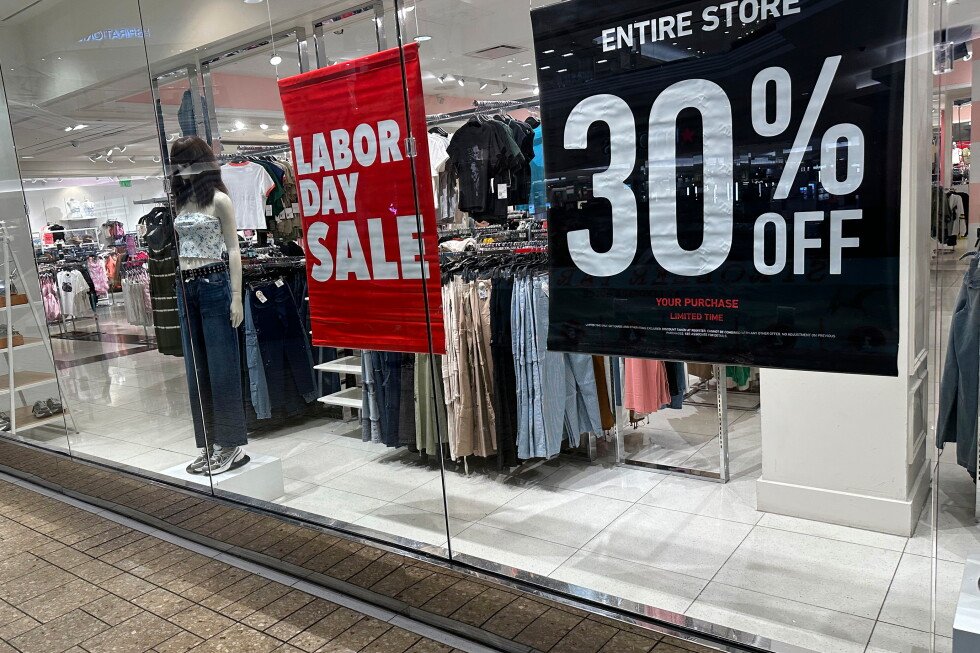
This chart reveals the divide between Wall Street and Main Street
There’s a major divide between how Wall Street investors and Main Street consumers feel about the US economy right now.
Yahoo Finance’s Brian Sozzi reports:
-
Eli Lilly set to acquire Kelonia Therapeutics for up to $7 billion
Eli Lilly (LLY) will acquire the biotechnology firm Kelonia Therapeutics for up to $7 billion, the firms announced on Monday, giving Eli Lilly access to Kelonia’s gene therapies and other forms of cancer treatments.
Eli Lilly shares lost roughly 0.4% on the news, after earlier gains on a report of a potential deal.
Under the terms of the deal, shareholders in the privately held Kelonia will receive an up-front cash payment of $3.25 billion, with additional payouts dependent on certain clinical and commercial milestones.
The acquisition will strengthen Eli Lilly’s existing cancer treatments portfolio, including its Jaypirca therapy and the breast cancer drug Verzenio, Reuters reported.
The announcement on Monday morning caps off speculation that an acquisition was imminent. The Wall Street Journal reported earlier Monday morning that Eli Lilly could acquire Kelonia for more than $2 billion.
-
Semis lead another wave of fresh highs
Semiconductors are on a roll.
The morning’s new-highs list is basically a chip map right now, with the semis index and a long lineup of semiconductor names pushing to fresh intraday records. Even high beta is riding shotgun as risk appetite stays pointed at tech.
The stats are getting historic. The iShares Semiconductor ETF (SOXX) is now tracking 14 straight days of gains, its longest win streak since a 15-day run in June 2014. It’s also on pace for its best month ever — up about 25%, the biggest monthly gain since inception in July 2001. Meanwhile, the Philadelphia Semiconductor Index (^SOX) is tracking its best month since February 2000 (when it rose about 50%, roughly double the current pace).
Here are this morning’s intraday record highs:
Dow Jones Sectors/Industries: Electronic Equipment, Computer Hardware, Electronic & Electrical, Heavy Construction
Industry/Style ETFs: Semiconductors (SOXX), S&P 500 High Beta (SPHB)
Consumer discretionary stocks: eBay (EBAY), Ross Stores (ROST)
Industrials stocks: Cummins (CMI), GE Vernova (GEV), Ichor (ICHR), Jabil (JBL), MKS Instruments (MKSI), Quanta Services (PWR)
Real estate stocks: Digital Realty (DLR), Equinix (EQIX)
Tech stocks: Analog Devices (ADI), Advanced Micro Devices (AMD), Arista Networks (ANET), ASE Technology (ASX), Cirrus Logic (CRUS), Dell (DELL), FormFactor (FORM), Hewlett Packard Enterprise (HPE), KLA (KLAC), Lattice Semiconductor (LSCC), Marvell (MRVL), MACOM (MTSI), Monolithic Power Systems (MPWR), Nova (NVMI), ONTO Innovation (ONTO), Photronics (PLAB), SiTime (SITM), Teradyne (TER), Texas Instruments (TXN), Ultra Clean (UCTT), Western Digital (WDC)
-
US stocks fall at the opening bell
The US stock market opened slightly lower on Monday after a bevy of weekend headlines from the Middle East threw hopes for peace into disarray.
The S&P 500 (^GSPC) and tech-heavy Nasdaq Composite (^IXIC) traded down by roughly 0.2% each. Meanwhile, the Dow Jones Industrial Average (^DJI) bounced around the flat line by less than 0.1% in each direction.
In the oil market, US benchmark West Texas Intermediate crude futures (CL=F) gained 4.8% to trade around $86.50, while contracts on the global pricing benchmark, Brent crude (BZ=F), rose 4.2% to near $94.
Tesla (TSLA), Intel (INTC), and United Airlines (UAL) will report earnings this week, among a basket of other names.
-
Treasurys fall on US-Iran tensions, ahead of Warsh hearing
Treasury yields inched higher on Monday as US-Iran tensions ratcheted back up again over the weekend and investors awaited Kevin Warsh’s confirmation hearing in the Senate, which could offer clues about the future of Federal Reserve leadership and central bank independence.
The 10-year yield (^TNX) drifted 2 basis points higher to 4.26%, while the longer-dated 30-year yield (^TYX) rose marginally to 4.89%.
Treasurys fell after traffic through the Strait of Hormuz returned to a standstill over the weekend, raising inflation concerns yet again. Bond prices trade inversely to bond yields, meaning yields rise when bonds are being sold.
Also weighing on bonds was the upcoming confirmation hearing for Kevin Warsh. Yahoo Finance’s Jennifer Schonberger previews what to expect:
-
Sandisk joins Nasdaq 100, but it looks exposed to a pullback
Sandisk (SNDK) stock joined the Nasdaq 100 (^NDX) after shares surged 287% year to date. The addition of Sandisk replaces software company Atlassian (TEAM) in the benchmark tech index.
But the stock fell slightly on Monday morning. As my colleague Brian Sozzi pointed out this morning, the rise in shares of Sandisk and peer memory chip maker Micron (MU) has started to look bubble-like and could be ripe for a pullback.
Sozzi writes:
-
Psychedelic drug makers rally as Trump orders FDA to expedite reviews
Shares of psychedelic drug developers rose in premarket trading after President Trump signed an executive order directing health regulators to speed up reviews of psychedelic drugs to treat serious mental illness.
Shares of AtaiBeckley (ATAI) jumped 30% before the bell, while Definium Therapeutics (DFTX) rose 14%, and Compass Pathways (CMPS) climbed 24%. GH Research (GHRS) gained 17%, Enveric BioSciences (ENVB) shot up roughly 80%, and US‑listed shares of Cybin (HELP) were up about 14%.
From Reuters:
-
How Charlie Ergen’s SpaceX windfall could net billions
Satellite cable pioneer Charlie Ergen made a big bet on spectrum and eventually found a buyer in SpaceX (SPAX.PVT). The stock portion of that deal could be huge.
Yahoo Finance’s Pras Subramanian reports:
-
Marvell stock rises on report of talks with Google
Google (GOOG, GOOGL) is in talks with Marvell (MRVL) to develop two new versions of its AI chips, The Information reported.
One will be a new tensor processing unit (TSU) tailored to running AI workloads, per the report. The other will be a memory processing unit designed to work with those TSUs, and the partners are aiming to finish its design as soon as next year.
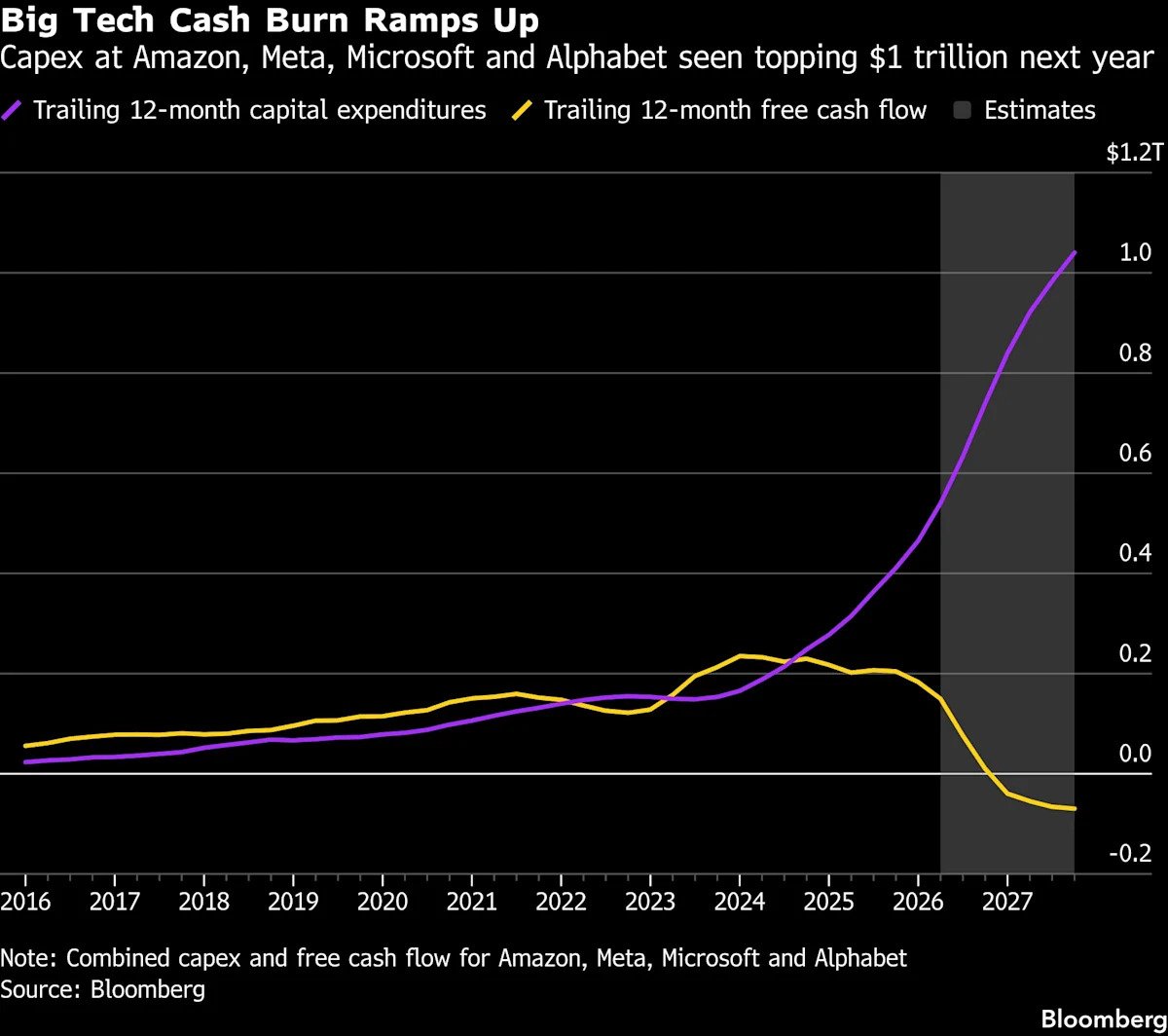
Google has been positioning its TPU as a rival to Nvidia’s (NVDA) dominant GPUs amid a Big Tech data center buildout.
Shares of Marvell jumped over 8% in premarket on the report.
-
Lilly nears $2 billion deal for cancer biotech Kelonia Therapeutics
Eli Lilly (LLY) is in advanced talks to acquire biotech firm Kelonia Therapeutics for more than $2 billion, The Wall Street Journal reported.
A deal could be agreed as soon as Monday, per WSJ sources, and could include additional payments if the blood-cancer biotech reaches key milestones, sources told the WSJ.
Shares of the US drugmaker rose over 2% in premarket following the report on Sunday.
Reuters reports:
-
Gold falls as Iran peace falters, approaches 10% loss since war began
Bloomberg reports:
-
Oil and natural gas rise as US navy intercepts Iranian tanker
Bloomberg reports: