Unlock stock picks and a broker-level newsfeed that powers Wall Street. Upgrade Now
Updated 1 min read
In This Article:
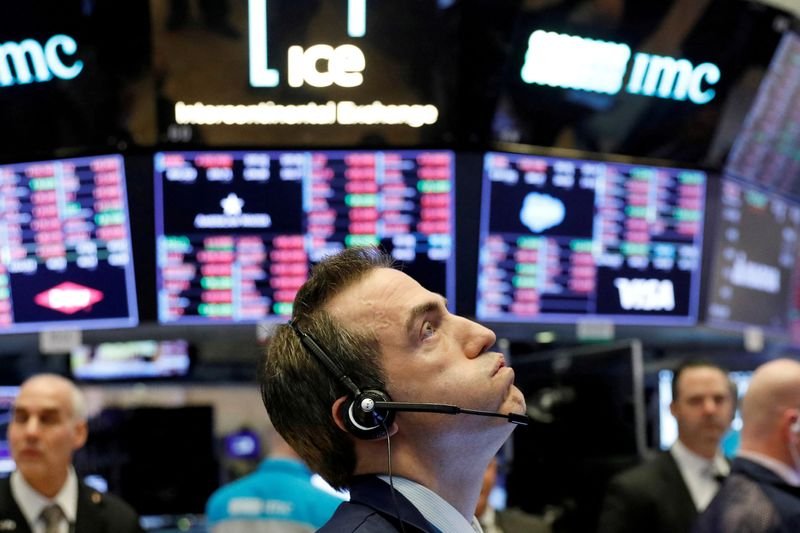
US stocks fluctuated on Wednesday, following a sharp sell-off the prior two sessions, amid ongoing discussion about President Trump’s tariff plans. Meanwhile, a soft print on labor market hiring revived worries about a slowdown.
The S&P 500 (^GSPC) rose 0.1%, while the Dow Jones Industrial Average (^DJI) rose 0.3%. The tech-heavy Nasdaq Composite (^IXIC) was up about 0.2%. Both the S&P 500 and Nasdaq entered Wednesday’s trading session near four-month lows.
A fresh look at the jobs market Wednesday provided another sign of potential cracks in the economy. Data from ADP showed that private-sector companies added just 77,000 jobs in February, a significant slump from January and also far below economist expectations. The ADP print is one in a series of jobs readings that tee up Friday’s all-important nonfarm-payrolls report.
SNP – Free Realtime Quote USD
As of 12:22:46 PM EST. Market Open.
^GSPC ^DJI ^IXIC
Commerce Secretary Howard Lutnick threw a wrench in tariff developments late Tuesday, saying an existing Trump trade deal could provide a pathway to relief on some imports for Canada and Mexico as soon as Wednesday.
Late Tuesday, the president sent a message to markets, saying in an address to Congress, “There’ll be a little disturbance, but we’re OK with that. It won’t be much.” Trump is widely believed to watch Wall Street’s performance closely as a measure of how well he’s doing.
A wave of selling hit stocks in recent days as investors fretted over potential harm to the economy from Trump’s escalating trade war. The S&P 500 hit its lowest level in four months on Tuesday, erasing all of its post-election gains, amid retaliation to Trump implementing 25% tariffs on Canada and Mexico and doubling duties on China.
LIVE 15 updates
-
Dollar hits lowest level since November
The US dollar index (DX-Y.NYB) continued its recent tumble on Wednesday as tariff threats and economic growth fears continued to ripple through the market.
The US dollar index fell to 104.50 on Wednesday, down about 1.2% on the day. The index has fallen for three straight days and is headed for its largest weekly drop since November 2023.
A strengthening dollar had been a hallmark of the so-called “Trump Trade.” Now it’s one of the many popular post-election trades that’s reversed.
Read more about the Trump trade floundering from Yahoo Finance’s Alexandra Canal here.
-
CrowdStrike slides nearly 10% after weak forecast
CrowdStrike (CRWD) stock tumbled nearly 10% as the cybersecurity operator forecast weaker-than-expected first quarter revenue.
CrowdStrike said it anticipates first quarter revenue in a range of $1.10 billion to $1.11 billion, slightly below analysts expectations of $1.11 billion. The company also anticipates another $73 million in expenses for the first quarter from its July outage that grounded flights and disrupted businesses.
-
Activity in the services sector grows more than expected
Data released Wednesday showed activity in the services sector increased in February.
The Institute for Supply Management’s services index registered at 53.5 in February, up from January’s 52.8 reading and above the 52.5 economists had expected. Readings above 50 indicate an expansion in activity, while those below 50 reflect a contraction.
Meanwhile, the ISM’s prices paid index rose to 62.6 from 60.4 the month prior, as company costs continued to increase. The employment index also ticked higher, coming in at 53.9, compared with 52.3 in January.
The data didn’t come without signs of caution, though.
“February was the third month in a row with all four subindexes that directly factor into the Services PMI — Business Activity, New Orders, Employment and Supplier Deliveries — in expansion territory, the first time this has happened since May 2022,” ISM’s business survey committee chair Steve Miller said in the release. “Slightly slower growth in the Business Activity Index was more than offset by growth in the other three subindexes.”
He added: “Anxiety continues, however, over the potential impact of tariffs. Some respondents indicated that federal spending cuts are having negative impacts on their business forecasts.”
The services data follows a weaker-than-expected reading on activity in the manufacturing sector on Monday, which was weighed down by tariff-related impacts.
-
S&P 500, Nasdaq inch off four-month lows at the open
Stocks were modestly higher at the open on Wednesday after several down sessions.
The S&P 500 (^GSPC) rose about 0.1% while the Dow Jones Industrial Average (^DJI) was roughly flat. The Nasdaq Composite (^IXIC) was up about 0.2%. Both the S&P 500 and Nasdaq entered Wednesday’s trading session near four-month lows.
SNP – Free Realtime Quote USD
As of 12:22:46 PM EST. Market Open.
^GSPC ^IXIC ^DJI
-
Private sector adds fewer jobs than expected in February
Fresh data from ADP showed the private sector added 77,000 jobs in February, far fewer than economists’ estimates of 140,000 — and significantly lower than the 186,000 jobs added in January. January’s number of job additions was revised up from a prior reading of 183,000.
Other data from ADP released Wednesday showed that the median year-over-year pay increase for job switchers fell to 6.7% in February, well off its pandemic recovery peak of 16.4%. Wage gains for job stayers grew at a 4.7% pace in February, in line with the growth seen last week.
-
Abercrombie stock falls premarket on subdued sales growth forecast
Abercrombie & Fitch (ANF) stock fell nearly 6% in premarket trading after the retailer forecast slower sales growth for the rest of the year.
Abercrombie expects net sales to grow by 3% to 5% as consumer spending weakens, compared with the 6.77% growth the Street expected.
For the year, the company sees operating margins of 14% to 15%, an outlook that includes the estimated impact of tariffs on imports from China, Mexico, and Canada.
-
Investors aren’t cheering for Fed rate cuts anymore
The market is now pricing in three rate cuts from the Federal Reserve this year as traders increase their bets on Fed easing amid concerns about US economic growth.
Yahoo Finance’s Josh Schafer reports:
-
Copper surges as Trump signals 25% tariff on imports
Copper prices jumped over 5% in New York, outpacing global benchmarks, after President Donald Trump floated a 25% tariff on imports of the metal.
Bloomberg reports:
-
Good morning. Here’s what’s happening today.
Economic data: ADP Private Payrolls (February); S&P Global Services PMI (February); ISM Services PMI (February); Factory orders (January); Federal Reserve Beige Book
Earnings: Abercrombie & Fitch (ANF), Foot Locker (FL), Campbell Soup (CPB), Thor Industries (THO), Dine Brands (DIN), Marvell (MRVL), MongoDB (MDB), Rigetti Computing (RGTI), Victoria’s Secret (VSCO), Veeva Systems (VEEV)
Here are some of the biggest stories you may have missed overnight and early this morning:
Wall Street is delivering its judgement of Trump’s economic policy
Trump preps markets for ‘a little disturbance’ on tariffs
America’s farmers again take center stage in Trump trade war
Lutnick: Tariffs on Canada, Mexico could ease by Wednesday
Investors aren’t cheering for Fed rate cuts anymore
US copper prices surge as Trump signals 25% tariff on imports
BlackRock’s Panama Canal deal is just its latest Trump-era win
-
Auto stocks rally after Lutnick hints tariffs on Canada, Mexico could be cut
In a sign of relief for Detroit automakers, Commerce Secretary Howard Lutnick suggested the Trump administration could scale down new tariffs on Canada and Mexico.
Lutnick said on Tuesday that the president’s team is looking at the 2020 US-Mexico-Canada Agreement — a Trump 1.0 deal — as a way to meet “somewhere in the middle”. An announcement could come on Wednesday, he said.
Sources told Reuters that talks between the three countries are focusing on exemptions under USMCA’s rules of origin, which are largely aimed at auto companies.
General Motors (GM) stock rose 4% in premarket, while Ford (F) and Stellantis (STLA). rose about 2% and 6%, respectively. The auto giants closed Tuesday with losses.
Reuters reports:
-
CK Hutchinson soars as Li Ka-shing escapes Trump’s glare
There’s a flipside to the selling spurred by Trump’s rapid-fire shifts — the boost to individual stocks likely to see some benefit.
In Li Ka-shing’s case, shares of his company CK Hutchinson (CKHUY, 0001.HK) surged in Hong Kong after the 96-year-old billionaire turned a Trump threat into one of the deals of his lifetime.
Bloomberg reports:
-
Gold pulls back from record high as trade war fuels demand for haven assets
Gold (GC=F) has reversed its upward trajectory after gaining over 2% in the past two sessions and approaching its record high. This comes as volatility from President Donald Trump’s tariff actions sparks increased demand for safe-haven assets.
Bloomberg reports:
-
Trump preps markets for ‘a little disturbance’ in first address to Congress
President Donald Trump doubled down on ambitious tariff plans in an address to Congress on Tuesday night. In a wide-ranging speech, Trump referenced the current state of economic insecurity, proclaiming, “There’ll be a little disturbance, but we’re OK with that. It won’t be much.”
President Trump touched on tariffs, taxes, Ukraine and the CHIPS act during his address to a joint session of Congress, with Wall Street hoping for relief after two days of stock losses led the S&P 500 to it’s lowest close since the election.
-
Chinese stocks climb as growth target sparks optimism for stimulus measures
Chinese stocks rose Wednesday as the country’s top leaders kicked off annual parliamentary meetings. They revealed key economic targets, fueling expectations for additional stimulus measures.
Bloomberg reports:
-
Oil falls as tariffs lower trust, OPEC+ raise crude production
Oil prices dropped for a third consecutive session on Wednesday as key producers plan to increase output in April, coupled with concerns that US tariffs on Canada, Mexico, and China could slow economic growth and fuel demand, dampening investor sentiment.
Reuters reports: