Rishabh Mishra
3 min read
Benzinga and Yahoo Finance LLC may earn commission or revenue on some items through the links below.
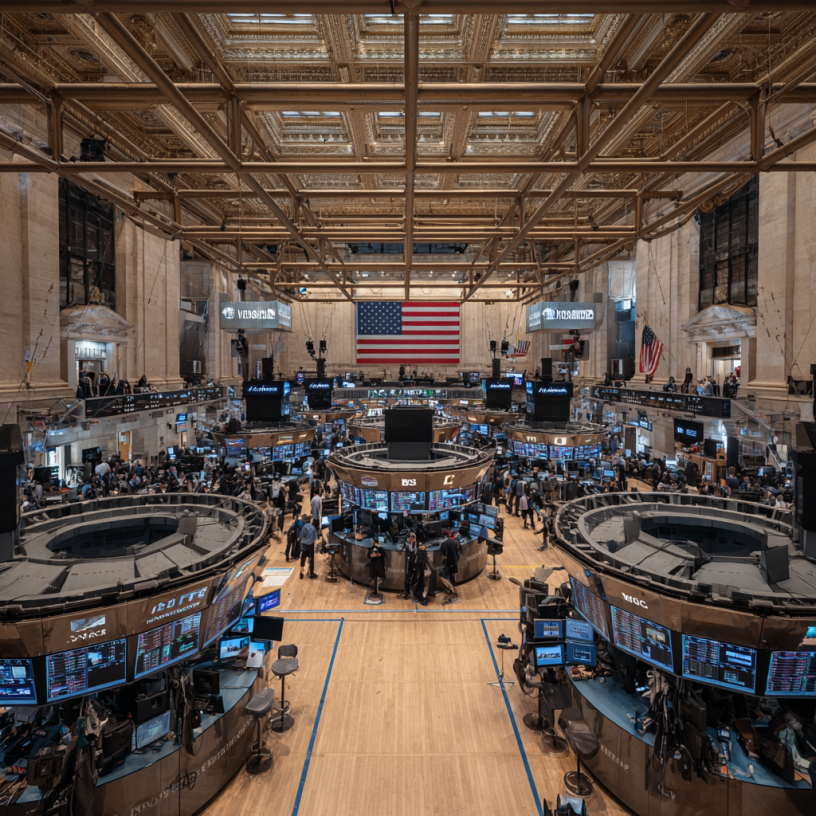
U.S. stock futures are trending higher early Wednesday as Wall Street digests incoming inflation data, a massive slate of corporate earnings, and evolving geopolitical risks impacting global energy markets.
The Polymarket traders, a Polygon (CRYPTO: POL) based prediction platform, are leaning bullish for the Oct. 14 trading session. The “S&P 500 (SPX) Up or Down on October 14?” contract currently reflects a 69% chance of a higher open.

Why That Number Matters
Traders are balancing positive equity futures against a critical inflation report and a busy earnings calendar:
-
Positive Index Futures: Equity futures are pointing to a green open across major benchmarks. Nasdaq 100 futures rose 0.27%, and Russell 2000 futures ticked up 0.26%. S&P 500 futures advanced 0.22%, while Dow Jones futures gained 0.16%.
-
Crucial Inflation Data & Earnings: Wednesday’s economic docket is headlined by September’s Consumer Price Index (CPI), core CPI, and annual CPI metrics at 8:30 a.m. ET, followed by the Federal Reserve’s Beige Book at 2:00 p.m. ET. A heavy earnings calendar features reports from ASML Holding NV (NASDAQ:ASML), Bank of America Corp. (NYSE:BAC), Morgan Stanley (NYSE:MS), BlackRock Inc. (NYSE:BLK), and Progressive Corp. (NYSE:PGR).
-
Geopolitics & Oil: Iran is reportedly altering its tactics in the Strait of Hormuz, increasing attacks on shipping vessels to purposefully keep global oil prices elevated ahead of the U.S. midterms. The strategy aims to frustrate U.S. and allied efforts to lower global energy costs. Consequently, crude prices continued to climb; Brent crude rose 0.53% to $106.25 a barrel, and WTI crude gained 0.54% to $94.65 a barrel.
The Bull Case and Market Outlook
Despite concerns regarding rising competition from Chinese chipmakers like ChangXin Memory Technologies (CXMT), tech strategist Luke Lango argues that not all memory exposure carries the same risk.
While China is catching up in commodity DRAM, high-bandwidth memory (HBM)—the critical component stacked next to AI accelerators—is much harder to produce, leaving Micron’s HBM4 capacity sold out through 2027.
Additionally, Lango notes that chip-export windfalls in South Korea and Taiwan are increasingly being recycled into U.S. stocks and AI names. Unlike the 2008 financial crisis, the current tech boom is backed by real hyperscaler purchases supported by $2.3 trillion in cloud commitments and substantially lower corporate leverage. Lango views this underlying fundamental strength as a solid foundation for tech equities despite short-term volatility.