James Brumley, The Motley Fool
4 min read
Most investors know the last two months of the year tend to be bullish ones. Yardeni Research, in fact, says the S&P 500 (SNPINDEX: ^GSPC) averages a gain of 1% in November, followed by nearly a 1.3% gain in December. Over the course of the past century, the index has also logged gains in about two out of three of these two-month stretches.
What most investors may not be aware of is that the next six months are typically bullish as a whole too. The S&P 500 averages a net gain of more than 5% between November and April, culminating in a gain of almost 1.4% in the final month of that six-month stretch. In other words, if you’re playing the historical odds, you want to make a point of getting in — and staying in — the stock market here.
Missed Nvidia in 2009? This Rare Signal Is Flashing Again. In 2009, a “Double Down” signal flashed for a little-known chipmaker called Nvidia. For the first time in years, that same “Total Conviction” signal is flashing for a company 1/100th the size of Nvidia. Continue »
The stage may be set to make the coming six months an exception to this norm.
A bearish backdrop
Yes, inflation and subsequent interest rate hikes are the market’s potential stumbling block for the foreseeable future. The Federal Reserve opted to leave the Fed Funds Rate target range unchanged at between 3.75% and 4% on Wednesday, suggesting the current inflation picture is tolerable enough for the time being.

The market doesn’t expect this to remain the case through the rest of the year, though. The CME‘s FedWatch snapshot of interest rate futures trading activity and pricing data suggests there’s an 85% chance of a quarter-point rate hike in early December. That jibes with the Fed’s so-called “dot plot” projection that the Fed Funds Rate would end 2026 between 4% and 4.25%, where it’s apt to stay through 2027.
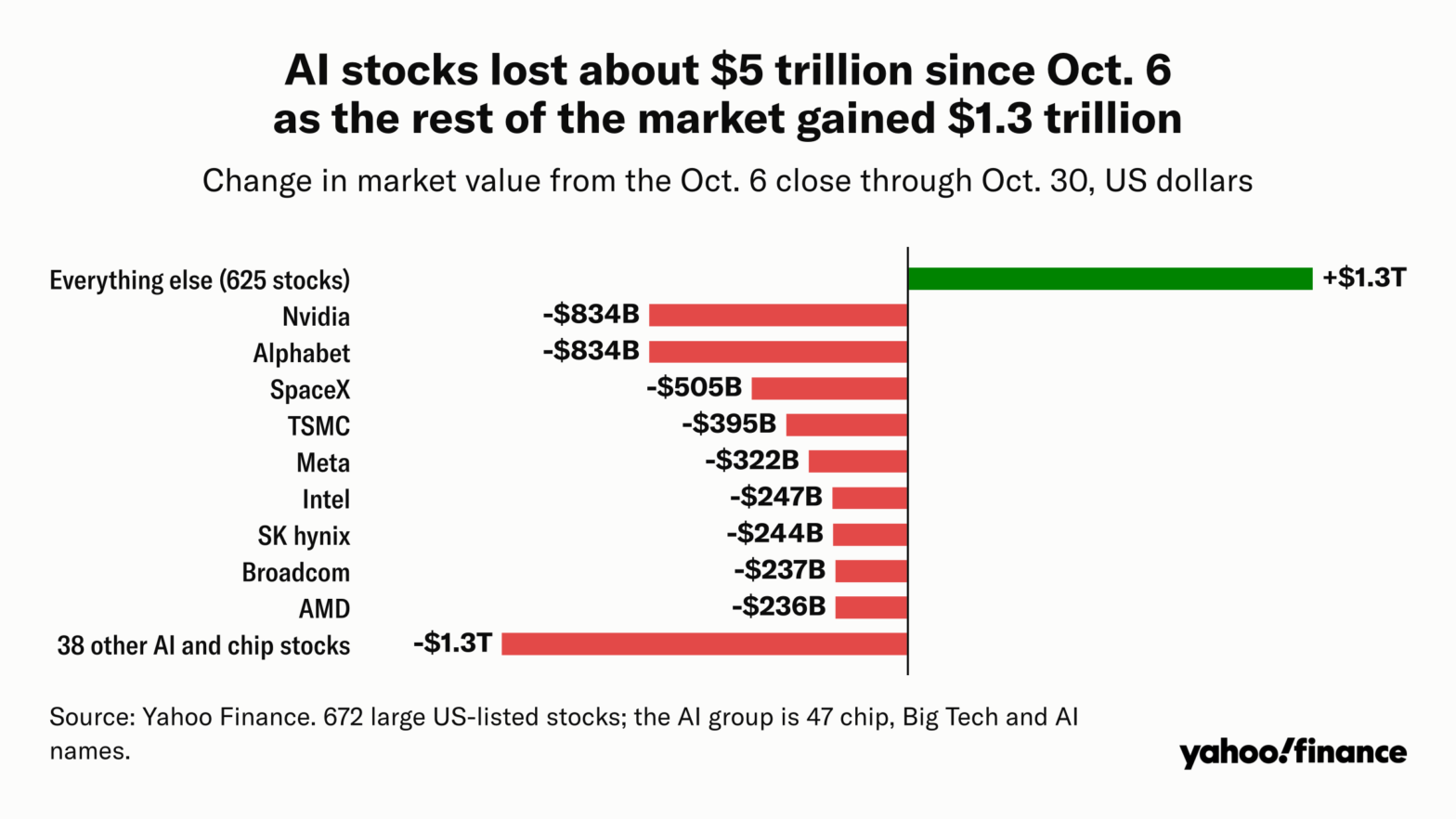
This, of course, works against the stock market. High or rising interest rates are intended to chill the economic activity that’s leading to demand-driven price inflation. This cooling, however, also undermines corporate profit growth… a two-edged sword. Throw in the fact that the S&P 500 is now valued at a frothy 23 times its trailing earnings and that most of its future profit growth is to be fueled by a fragile artificial intelligence industry, and stocks are vulnerable to even the slightest of headwinds and smallest of red flags.
Recognize that it’s just noise
The narrative is concerning, to be sure. Just don’t lose perspective on any of it. All sorts of other factors affecting the market — for the better and for the worse — will surface over the course of the coming six months. A year from now, you likely won’t care about (or even remember) the current worry surrounding the potential effect of rising interest rates between now and then. Let stocks do what they’re going to do in the short run.