Fears of a global recession have erupted following the plummeting of stocks and shares in the US and Asia.
Stocks have plunged globally, with Asian shares and bitcoin falling off a cliff after Federal Reserve Board of Governors member Christopher Waller’s stark warning of redundancies at an “eye-popping” scale across major US firms.
THIS BLOG HAS CLOSED NOW BUT YOU CAN STILL READ OUR COVERAGE BELOW.
Wall Street slips in early trading
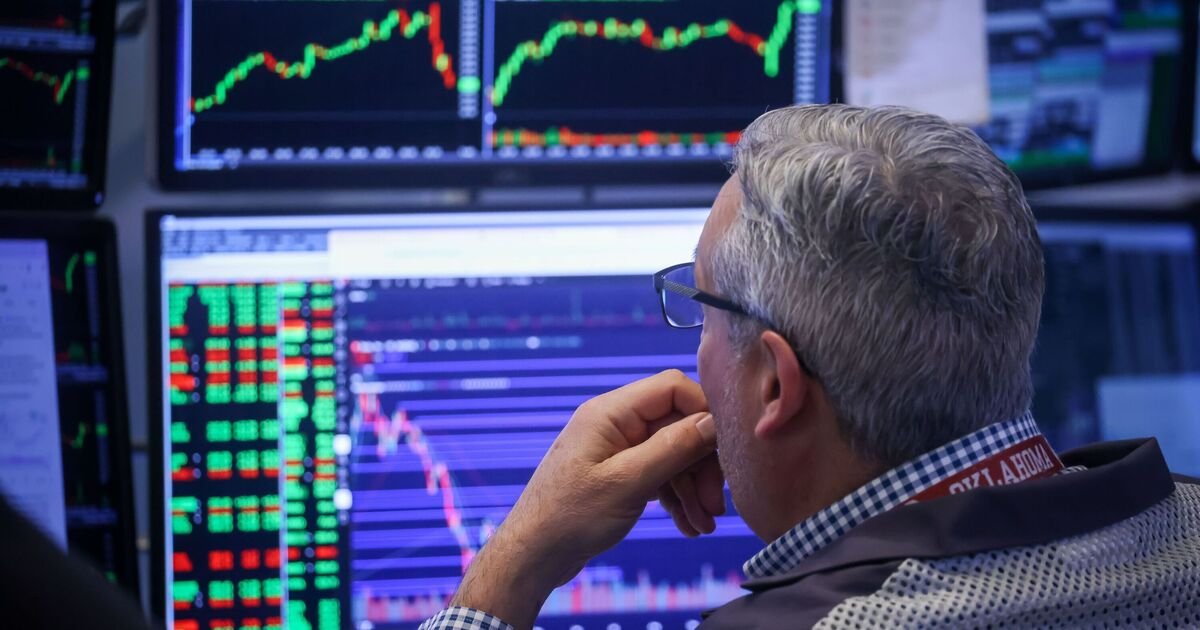
The US stock market has been slipping again in early trading as Nvidia and other Wall Street stars keep falling amid worries that their prices have risen too high.
Home Depot is also dragging the market lower today after saying it made less profit during the summer than expected.
The S&P 500 fell 0.3% in early trading. The index has had sharp swings the last few weeks.
The Dow Jones Industrial Average fell 361 points, and the Nasdaq composite lost 0.6%.
Cloudflare fell after an issue at the internet infrastructure provider caused global outages for ChatGPT and other services
Fuel prices reach highest level since March
Fuel prices in the UK have reached the highest level in seven months, figures show.
The AA said the average price of a litre of petrol at UK forecourts is 136.2p, while diesel costs 144.6p per litre.
The last time either fuel was that expensive was March.
UK inflation tipped to fall
Inflation figures for October are due to be released tomorrow.
Morningstar’s UK Economist, Grant Slade, said its estimate shows inflation will improve slightly, slowing to 3.6% – a 0.2% improvement on the previous month’s 3.8%.
He added: “Having reared its ugly head once more in 2025, inflation likely peaked in September when transport costs exerted upward pressure on headline CPI.
“The disinflation process remains intact, in our view.
“A weakening labour market and well-anchored long-term inflation expectations should allow for the impact of prior supply-side shocks to fade progressively over the coming quarters.”
Number of companies going bust increases, figures show
The number of businesses going under rose in October, with warnings insolvencies could become more common as companies grapple with rising costs and economic uncertainty.
In England and Wales last month there were 2,029 company insolvencies, according to official data from the Insolvency Service reported by the Telegraph.
This was 2% more than in September and a 17% increase compared with the same month a year ago.
What’s the latest on the FTSE 100?
The FTSE 100 was down 118.80 at 9,556.63 just before midday.
This was below the day’s current high of 9,675.64 but above the daily low of 9,551.23.
‘AI bubble is 17 times bigger than the dot-com bust of the early 2000s’
Scott Dawson, CEO of payments firm, DECTA UK, said it was obvious that the AI bubble is going to either burst, taking a large part of the economy with it, or slowly deflate over several years.
He added: “Naturally, my preference would be for the latter, but we may not get a choice when the AI bubble is 17 times bigger than the dot-com bust of the early 2000s.
“Looking back at that time might be constructive. It wasn’t so much a crash as a filter: a lot of companies didn’t make it through, like Pets.com, which gambled millions on shoppers buying pet food online instead of picking it up when they do their shopping. Other companies, like Amazon, have market caps in the trillions. The same process is going to affect the AI industry.”
Mr Dawson said a key difference is the dot-com bubble was based around dozens of companies all trying to get a piece of the pie, whereas a large part of the current bubble is based around a single company, OpenAI and Nvidia.
He added: “There are of course many smaller AI startups, some of which are already failing due to underdeveloped products, and inevitably some will go under in the case of a crash, but the bigger question is whether OpenAI will make it through.”
The CEO said what needs to be filtered out isn’t just companies built on faulty premises, but the “breathless hype” which has made what should be a revolutionary but ultimately everyday technology into a near-religious mania.
He added: “When that happens, we can hopefully start building upon the AI tools that are already proving themselves to be genuinely useful.”
The dot-com crash happened in 2000. It burst the speculative bubble in internet-related companies (dot-coms) which had emerged in the late 1990s.
Small investors urged not to panic
Dariusz Karpowicz from Albion Financial Advice said Bitcoin dropping like a stone proves it’s not the safe haven some claim, but investors shouldn’t panic.
He added: “Markets correcting after months of euphoria shouldn’t shock anyone, yet here we are with recession fears everywhere.
“The truth is simpler. US growth sits at 3.8%, hardly recession territory. Yes, companies are cutting jobs, but mostly through automation, not collapsing demand.”
Mr Karpowicz said this week’s tech earnings will matter more than the Fed’s warnings. Fed official Christopher Waller has warned of a potential US recession after redundancies at major companies and a slump in consumer confidence.
Mr Karpowicz added: “Valuations got silly, particularly in AI stocks promising riches without profits. Now reality bites. Global recession? Not from this correction alone. Watch what companies report, not daily price swings. Your portfolio needs patience, not panic.”
Fed’s interest rate decision weighs on Wall Street
Another source of possible disappointment for Wall Street is what the Federal Reserve does with interest rates.
The expectation had been that the Fed would keep cutting interest rates in hopes of shoring up the United States’ slowing job market.
But the downside of lower interest rates is that they can make inflation worse. Inflation has stubbornly remained above the Fed’s 2% target.
A strong jobs report on Thursday would likely stay the Fed’s hand on rate cuts, while figures that are very weak would raise worries about the economy.
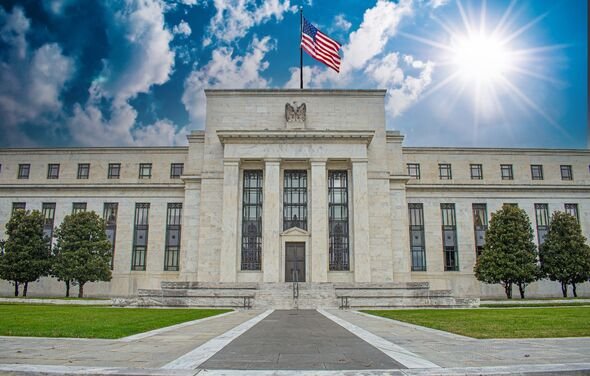
Inflation has stubbornly remained above the Fed’s 2% target (Image: Getty)
What’s been happening in the US?
Markets have yet to open in the US, but on Monday the S&P 500 fell 0.9% to 6,672.41, pulling further away from its all-time high set late last month.
The Dow industrials dropped 1.2% to 46,590.24, while the Nasdaq composite sank 0.8% to 22,708.07.
Nvidia dropped 1.8%, though it is still up nearly 40% this year. Losses for other AI winners included a 6.4% slide for Super Micro Computer.
Other areas of the market which had been winners also sank. Bitcoin extended its decline, dragging down Coinbase Global by 7.1% and Robinhood Markets by 5.3%.
Market wobble is ‘no reason’ for long-term investors to panic
Industry experts have urged investors not to panic, as “time in the market” is what really counts.
Scott Gallacher, director at Leicester-based wealth management firm Rowley Turton said:
After such a strong run, a market pull-back was always likely — this wobble is no reason for long-term investors to panic. The latest volatility follows Fed Governor Christopher Waller’s warning about ‘eye-popping’ levels of US job cuts, which has understandably rattled markets. These redundancies reflect weaker demand, cost pressures, and in some sectors the shift toward automation and AI.
Could this spark a global recession? It’s a risk, but far from a certainty. For most long-term investors, the best course remains the same: sit tight — it’s time in the market, not timing the market.
The investment expert pointed out the surprising decline in Bitcoin. Mr Gallacher said:
What’s especially interesting is Bitcoin’s sharp fall. In theory, if it were truly a ‘safe haven’, it should rise when fear enters the market. Instead, it’s fallen harder than equities, underlining that Bitcoin still behaves as a high-risk, speculative asset — not the defensive store of value some claim.

The investment expert pointed out the surprising decline in Bitcoin (Image: Getty)
AI stocks have ‘distorted’ market pricing and Trump voters have created ‘perfect storm’
Major AI stocks have shown little evidence of returns and have “distorted” entire market pricing, one expert has said.
Clive Bonny, managing director at Strategic Management Partners said:
Major investors are following Warren Buffett into cashing out. Buffett has been clear that USA stocks have been riding high by piggy backing on overpriced Ai stocks.
These major AI stocks show no evidence of ROI (Return on investment) and have distorted the entire market pricing. Additionally the full negative impact of USA global tariffs will be hitting the USA balance sheet in 2026.
USA’s main trade partner Canada is now divorcing USA in tourism, energy, raw materials and manufacturing, diversifying into Asia, China and Europe. Canada-UK trade is up 68% this year. These new supply chains are not returning to USA for years, if ever. USA isolationist economic policies have backfired badly and the 77 million voters for Trump have created a perfect storm.

AI stocks have ‘distorted’ market pricing (Image: Getty)
German’s DAX drops to 5-month low
Germany’s DAX dropped for a fourth straight session on Tuesday, falling over 1% to around 23,250.
Risk sentiment increased amid growing concerns over heavy valuations of AI-related stocks ahead of Nvidia’s quarterly results.
Experts at Trading Economics said: “Uncertainty surrounds the Federal Reserve’s next moves, since the prolonged shutdown has left it without extensive macroeconomic data, thereby complicating decision-making.
“Almost all sectors were in the red, led by banks, with Deutsche Bank down 3.5%.”
Artificial intelligence and US job figures hang over markets
Tech giant Nvidia, which is at the centre of the AI craze, is due to report its earnings on Wednesday.
There are worries that the stock prices of such companies are too high, spooking world markets with big swings in places which rely on trade in computer chips such as South Korea and Taiwan.
Also hanging over the markets is the release on Thursday of US employment data. This was delayed by the prolonged federal government shutdown.
Sentiment cools across global equities, expert says
Matt Britzman, senior equity analyst at Hargreaves Lansdown, said: “The FTSE 100 opened sharply lower, as European markets mirrored Wall Street’s risk-off tone.”
He said investors are trimming exposure ahead of a heavy week of macro and earnings “catalysts”.
Mr Britzman said: “Profit-taking dominated early trade, as sentiment cooled across global equities.”
Losses in Paris and Frankfurt amid tech sector fears
European shares have fallen amid concerns about an overvalued tech sector and weakening prospects of an interest rate cut from the US Federal Reserve.
The Stoxx 600 dropped 1.1% to 565.4 points. In Paris, the Cac 40 shed 1.3% and the Dax in Frankfurt lost 1.2%.
Markets in Asia see losses
Tokyo’s Nikkei has ended the day down 3.2% to 48,702.98.
In Hong Kong, the Shanghai Composite index lost 0.8%.
The benchmark Hang Seng Index fell 1.7%.
FTSE-100
The FTSE-100 index at 8:15am was down 94.63 at 9580.80.
Welcome to our live blog
Stay updated with us on today’s dramatic finance news right here.