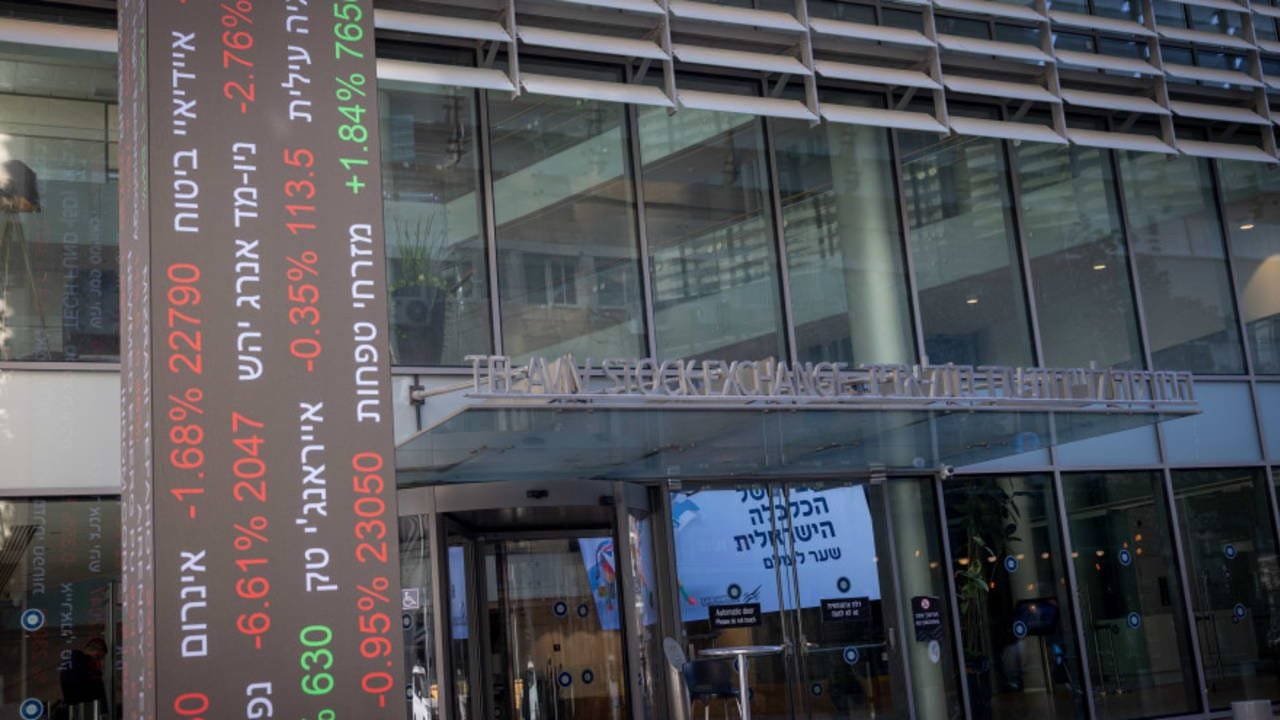
An analysis by the Tel Aviv Stock Exchange research unit, conducted by economist Nisan Avraham and published yesterday, examines the reasons behind the stock market’s decline since early October.
According to the findings, the stock market tends to weaken when expectations point to an inconclusive election. However, in the year following an election, the market has generally posted strong gains, although global markets have also tended to rise during these periods.
Pre-election trends and market reactions
When pre-election polls indicated that no clear winner would emerge, the local capital market showed relative weakness. This pattern may help explain the market declines that began in early October. The upcoming Knesset elections are taking place amid political, security and economic uncertainty, and investors may already be factoring in the possibility of an inconclusive result that fails to produce a stable government.
However, stock prices are shaped by a wide range of factors, including interest rates, inflation, economic growth, corporate earnings, the geopolitical situation and trends in global markets. Market performance therefore cannot be attributed solely to election-related uncertainty. The overall picture is more complex: While the TA-125 Index delivered an average total return of 16.4% in the year following an election, those gains came alongside positive trends in global markets.
When elections ended without a clear outcome, the stock market experienced significant weakness in the months leading up to the vote. In the months that followed, however, the performance gap between elections that produced an inconclusive result and those that yielded a clear outcome quickly narrowed. This suggests that traders tend to price in concerns about political uncertainty well before election day.

Between 2019 and 2020, Israel held three elections within a relatively short period. The data show that fears of prolonged political deadlock were reflected in market performance even before voters went to the polls. Yet within five months of the election, returns in the two scenarios were almost identical.
Long-term perspective and economic fundamentals
The findings suggest that markets tend to factor in the risk of an inconclusive election in advance. As a result, election day itself may not come as a major surprise to investors, even if no government is formed. Markets are not necessarily looking for a particular election winner, but rather for certainty. The stock market’s performance, in turn, is not necessarily determined by the identity of the winning party.
Ultimately, the key question on the day after the election will not simply be who won, but whether the outcome provides enough clarity to reduce uncertainty, advance a clear economic policy and strengthen investor confidence. In the long run, as past experience suggests, the underlying fundamentals of the Israeli economy, rather than the election results alone, will continue to shape the market’s direction.