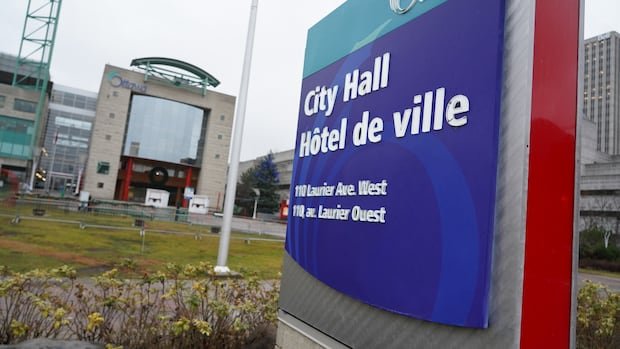
Investors have made a lot of money in recent years as the markets soared, but the City of Ottawa missed out on tens of millions of dollars in much-needed gains because it took more than three years to set up its new system for investing.
City poured over $800M of reserves into new investments, but only after market runup that sent assets soaring


Listen to this article
Estimated 7 minutes
The audio version of this article is generated by AI-based technology. Mispronunciations can occur. We are working with our partners to continually review and improve the results.
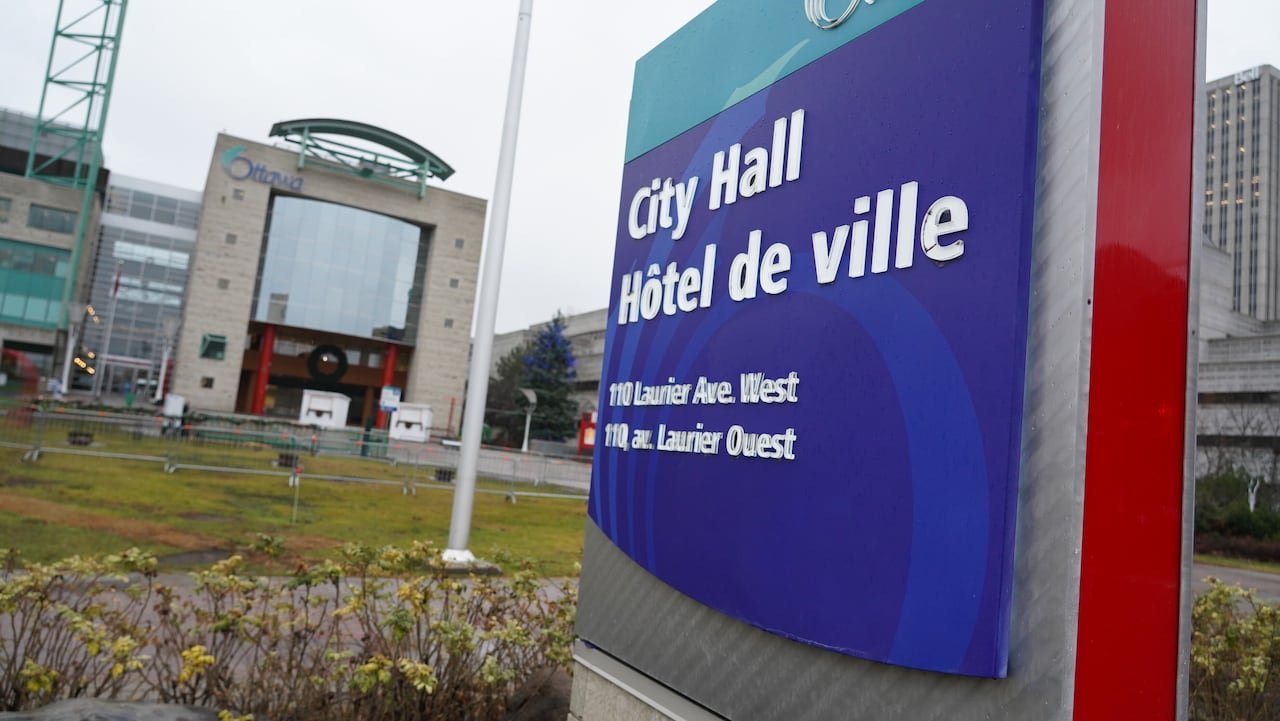
Investors have made a lot of money in recent years as the markets soared, but the City of Ottawa missed out on tens of millions of dollars in much-needed gains because it took more than three years to set up a new system for investing.
The city had long held its long-term reserve funds in conservative investments that were bringing in a pittance, generally less than two per cent per year. But the province changed the rules in 2019 to allow municipalities to invest in a wider range of assets including global stock market funds.
City council voted to do so in June 2022, under former mayor Jim Watson. It asked staff to write up policies and hire a board to oversee the investments, with an eye to getting higher returns.
Yet it took until December 2025 for the city to transfer more than $800 million in reserve funds to buy up the new assets. Meanwhile, similar investments had surged more than 25 per cent during the three-and-a-half-year wait.
Asked whether the city lost out on a fortune, chief financial officer Cyril Rogers said that’s not the right way to look at it. He said it only seems that way in hindsight.
“It’s kind of a hypothetical thing. If the markets weren’t doing good and we did invest in 2022, you would be asking me the inverse question,” he said.
“It took the time it needed to take to get through the governance, the process, the structure and establish that board.”
Years of meagre returns
Ottawa relies on reserves for everything from funding capital projects, to paying out long-term disability claims, to holding a rainy day fund to cushion taxpayers from unexpected fiscal shocks.
A share of the city’s reserve funds — varying year to year but generally well over $1 billion — have been held in long-term investments. In 2021, those investments yielded a return of 1.5 per cent.
In 2022, after city council approved the new investment regime, staff said they would recruit an investment board to oversee the system and an outside company to manage the funds. They also said they would come back with draft policies and procedures by the end of that year.
Yet the draft didn’t come back to council until 2024. A final version, the last step needed to allow Rogers to move forward with the new approach, wasn’t approved until last September.
Rogers called the process “onerous” but important. He noted that there was a pandemic going on when staff first began work on the change, then staff had to go back to council to get approval at every step.
“Keep in mind, in that transition as well, there was a turnover in council,” he said. “I’m not making excuses, but if you layer in the different gates in the process, we had to re-educate and reinform new members of committee and council, because they’re the ones that have to endorse this … [and] that adds to the time it takes.”
Meanwhile, the long-term funds kept languishing with the same meagre gains. The returns were 1.7 per cent in 2022, 1.5 per cent in 2023, 1.9 per cent in 2024 and 1.6 per cent in 2025.
The city actually got substantially better results for its short-term investments, which sometimes yielded more than five per cent as interest rates rose.
In 2025, that finally started to change. In April, the city selected fund manager Mercer to manage the new investment regime. The city then sold a big chunk of its long-term fixed-income funds, netting a $19.5-million gain due to changes in the value of those securities.
It transferred more than $800 million of the funds to Mercer. That was done by early December, and the company bought up a mix of investments, split about down the middle between fixed-income assets like bonds on the one hand, and equity funds that hold stocks from Canada and around the world on the other.
The city also transferred a $200-million endowment fund, but that money was already getting relatively high returns before the switch.
Not taking big risks
On Friday, the board met to get its first quarterly update on how those investments are doing. Three Mercer representatives presented a report showing that the funds have remained essentially flat during the roughly four-month period since their creation up to the end of the first quarter.
That’s hardly surprising. Four months isn’t a long time horizon, and the first quarter ended in March, right at the bottom of a brief downturn driven by the U.S. and Israel-Iran war. Since then, markets have rebounded and broken new records.
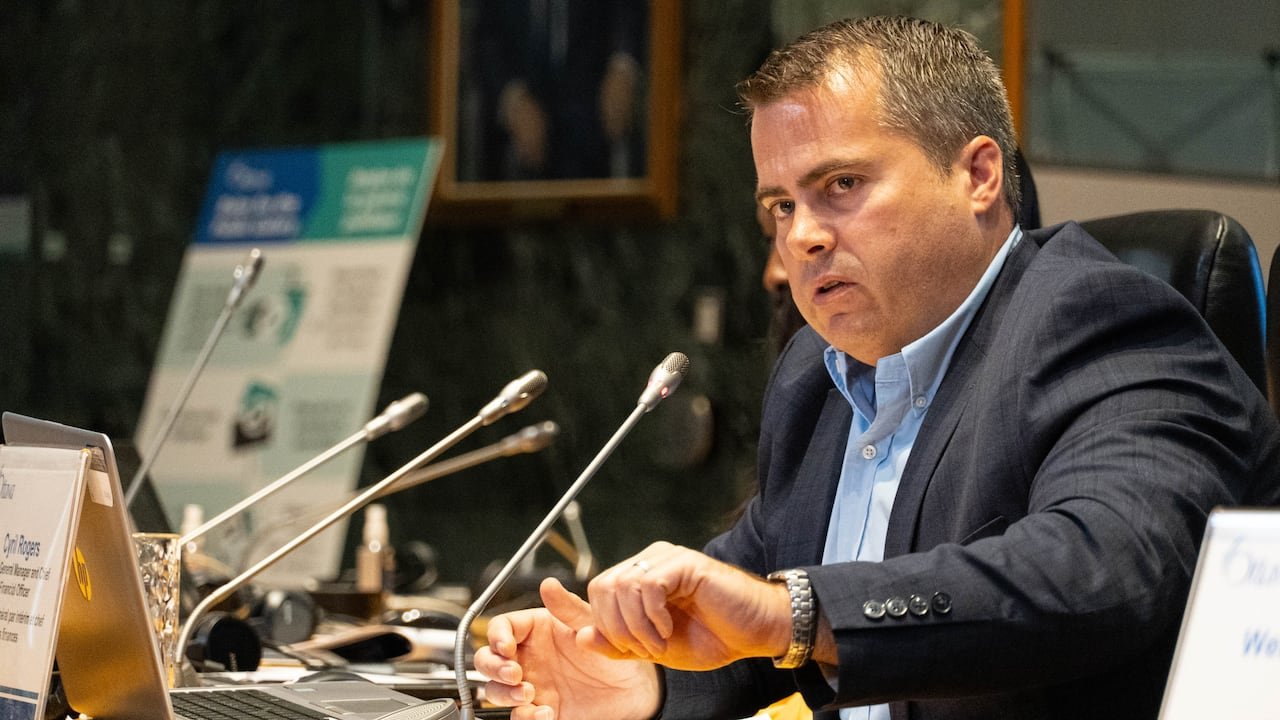
“When you look at investments, you can’t judge performance by one quarter,” said Rogers. “The market is obviously up and down.”
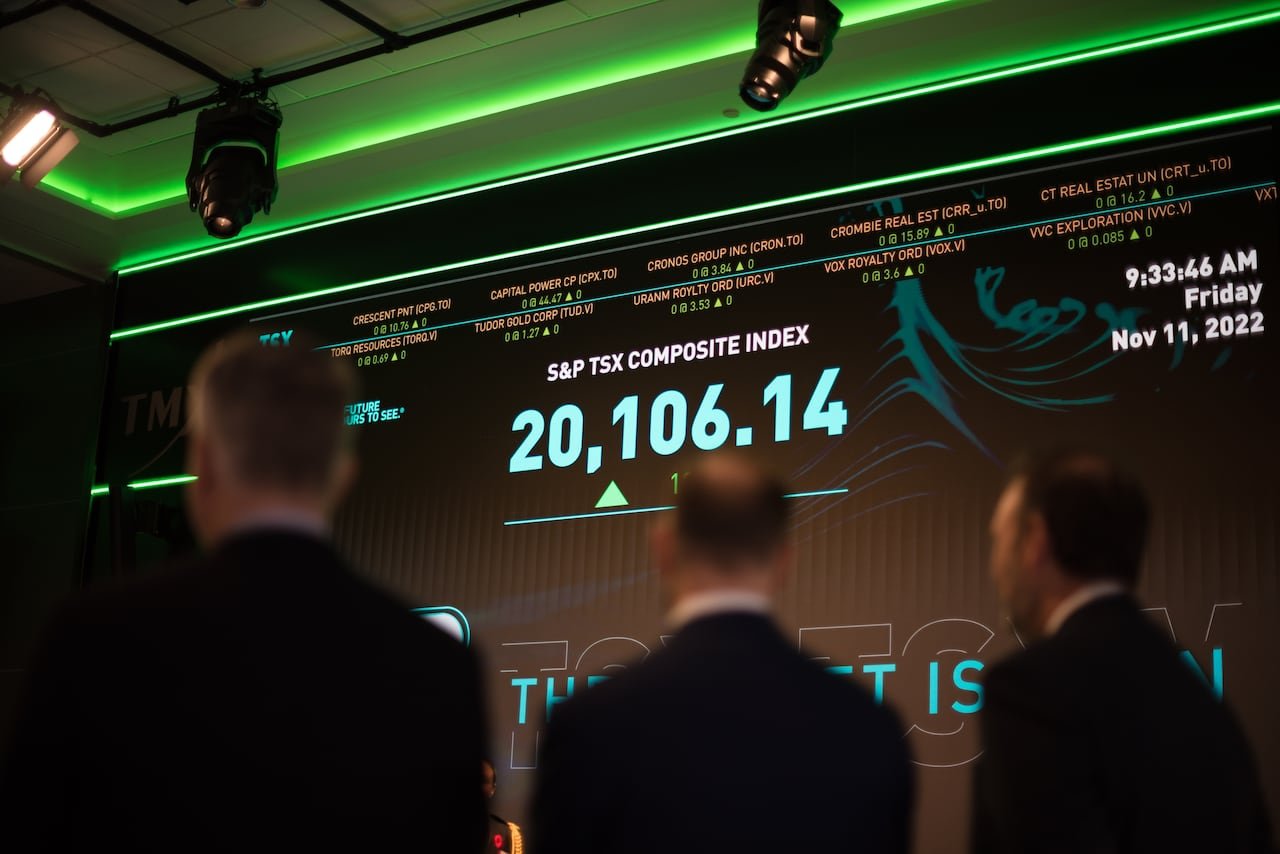
But what about the many quarters since city council approved the new investment policy back in 2022? Between then and the end of last year, the market went up and up. U.S. stocks jumped 75 per cent and Canadian stocks about 55 per cent.
The city was never going to get those kinds of returns. These are public funds and city staff aren’t looking to take the risk of going all in on the stock market.
“We’re not putting it in high-risk,” said deputy city treasurer Isabelle Jasmin. “The portfolio is still very conservative and we are looking for five per cent returns, not the large ones you’ve seen in the past for other markets.”
The funds it’s investing with Mercer aim for a balanced asset mix that will eventually hold about 40 per cent equity, plus a combination of fixed income, private debt, infrastructure and real estate-related assets.
Other cities see big returns
So what should Ottawa’s meagre performance since 2022 be compared to? Balanced funds from banks like TD and RBC, which also split bonds and stocks, have gone up by 25 or 30 or 35 per cent during the same three-and-a-half-year period, and sometimes more.
For an $800-million portfolio, that could exceed $200 million in gains, far more than the city earned on all of its long-term investments over that period.
Cities that moved on the new provincial standards earlier have also seen higher returns than Ottawa, including several municipalities that moved to a joint investment board managed by ONE Investment.
In just one year, from March 2025 to March 2026, municipalities including Aurora, Bracebridge, Muskoka and Thunder Bay saw returns exceeding 10 per cent.
Like Ottawa, Toronto has its own investment board, but it got a head start on the new investment standards because it operates under separate provincial legislation.
Its long-term investments earned about nine per cent annually in 2023 and 2024, though that came after an abysmal 2022 in the depth of the pandemic.
But Rogers said he’s not thinking about the past — he’s focused on the future.
“We didn’t lose out. It’s all about context. When you talk to any investor, there’s no hindsight on forward-looking investments,” he said. “If the markets reacted differently, depending on the craziness of the market, we may have lost money. So the whole idea about investments is the long term.”
ABOUT THE AUTHOR

Arthur White-Crummey is the municipal affairs reporter at CBC Ottawa. He grew up in Ottawa, spent years in Saskatchewan covering the courts, city hall and the provincial legislature, before moving back to his hometown. You can reach him at arthur.white-crummey@cbc.ca