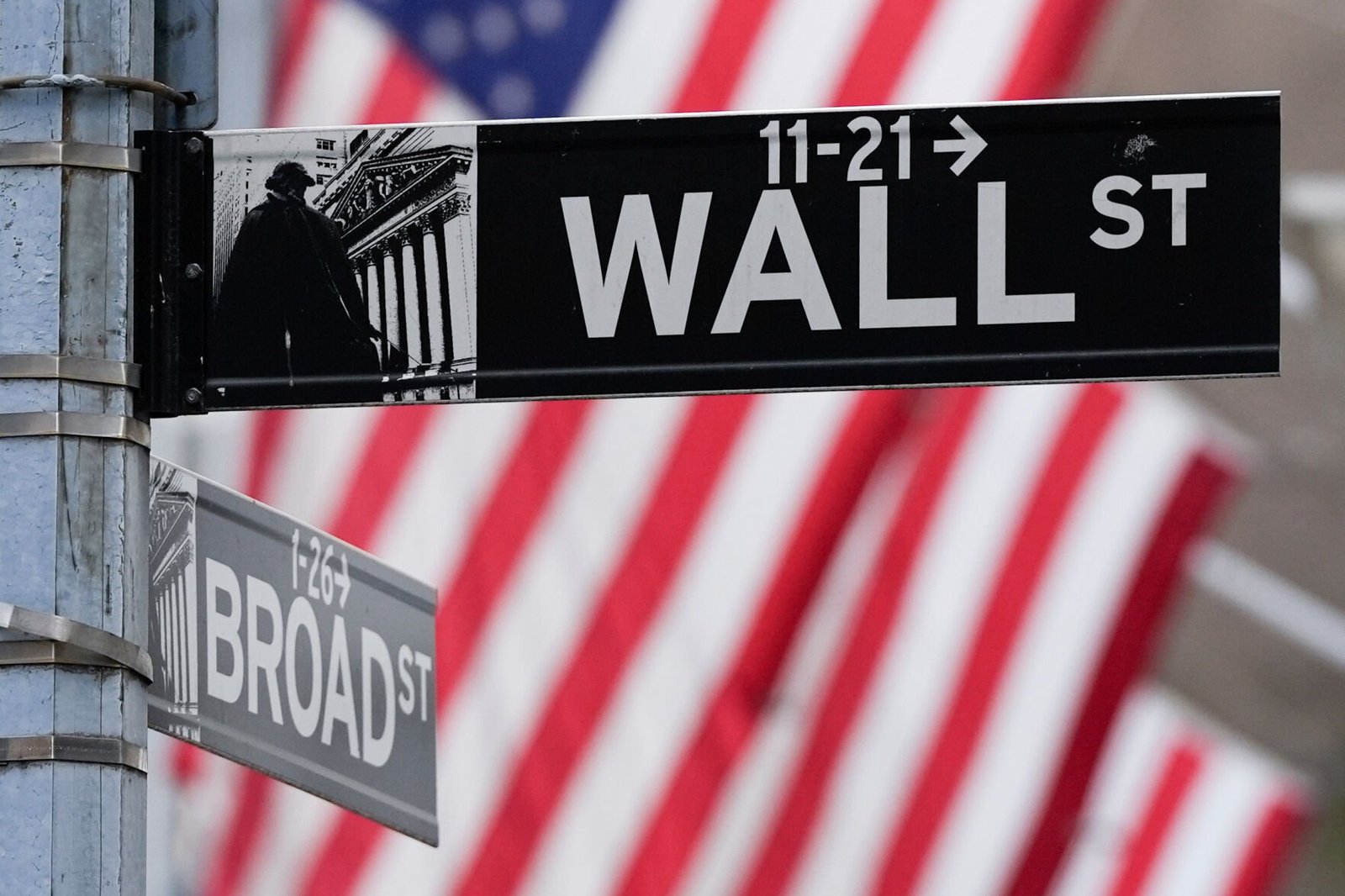
FILE – A sign outside the New York Stock Exchange marks the intersection of Wall and Broad Streets, Tuesday, Jan. 28, 2025, in New York.
Julia Demaree Nikhinson – AP
NEW YORK — Almost everything in 401(k) plans should be coming up a winner now.
That makes it a good time for a gut check.
Not only is the U.S. stock market setting records, so are foreign stocks. Bond funds, which are supposed to be the boring and safe part of any portfolio, are also doing well this year, along with gold and cryptocurrencies.
Many professionals on Wall Street are forecasting that the stock market will keep rising. But the threat of a sharp drop remains, as it always does. That leaves investors with the luxury now, while prices are high, to reassess.
One tip is to avoid getting lulled into leaving a 401(k) on autopilot, unless it’s intentional, and to assess the amount of risk.
Even after a few recent stumbles, the S&P 500 has soared more than 35 percent from its low point in April, shortly after “Liberation Day.”
“The market continues to (hit) record highs on the back of strong earnings and easing U.S.–China trade tensions,” said Mark Hackett, chief market strategist at Nationwide, who calls the current state of “steady growth without irrational exuberance” a “Goldilocks environment.”
Investors probably don’t need to worry at the moment, but the should remember that the stock market will fall eventually.
It always does.
The S&P 500 index, which dictates the ups and downs of many 401(k) accounts, has forced investors to swallow a 10 percent drop every couple of years or so, on average. It’s what Wall Street calls a “correction,” and professional investors see them as ways to clear out excessive optimism that may have pushed prices too high.
More serious drops of at least 20 percent, known as “bear markets,” are less common but can last for years.
In April, the S&P 500 plunged nearly 20 percent from its record at the time. But it came back, propelled by the so-called “Big Tech” stocks that have led the way the last few years.
The market has charged to records because investors are expecting several important things to happen. If any fail to pan out, it would undercut the market.
Chief among those expectations is that big U.S. companies will continue to deliver big growth in profits. That’s one of the few ways they can justify the jumps in their stock prices and quiet criticism that they’ve become too expensive. One popular measure of valuing stocks, which looks at corporate profits over the preceding 10 years, showed the S&P 500 recently was near its most expensive level since the 2000 dot-com bubble.
Consider Nvidia, the chip maker that’s become the poster child of the artificial-intelligence boom. If it fails to meet high expectations for growth, its stock will look more expensive than it already does. It’s been trading at 54 times its earnings per share over the last year, much higher than the overall S&P 500’s price-earnings ratio of nearly 30.
Last week’s Federal Reserve meeting also could be a key moment for the market. Besides companies delivering bigger profits or stock prices falling, another way for the market to look less expensive is if borrowing costs ease.
The Fed followed through by cutting its main interest rate Wednesday. But chair Jerome Powell cautioned that another reduction at the central bank’s December policy meeting is not “a foregone conclusion.”
“Far from it,” he said.
The frothy market has some investors worried about bubble forming in the stock market and wondering whether to sell. But there’s a famous saying on Wall Street is that being too early is the same as being wrong.
The best approach for ordinary investors might be to make sure their portfolios are set up the right way, so they can stomach the market whether it goes up or down.
For instance, how much of a 401(k) should be in stocks depends on age and risk tolerance.
It’s important for investors to know that anyone decades away from retirement has the luxury of waiting out any drops in the market. Bear markets are actually great in that case, because they put stocks on sale for anyone continuing to make regular contributions to their 401(k).
Workers closer to retirement still need stocks, though in smaller proportions, because they have historically provided the highest long-term returns.
All this uncertainty, unfortunately, it’s the price investors pay if they want the strong returns that the U.S. stock market has historically provided over the long term.
This is what the stock market does. It goes up and down, sometimes by shocking amounts, but it usually helps patient savers build their nest eggs over decades.
Ben Fulton, CEO of WEBs investments, recommends monitoring volatility by paying attention to the VIX, a volatility index, sometimes called the “fear index, which measures market expectations of future risk. The VIX is currently around 16, which Fulton said signals “calm by historical standards.”
However, if the VIX holds steady above 20, it often “signals a time to gradually reduce market exposure,” he said.