
After a brief post-election rally, major stock market indexes are crashing. The S&P 500 (^GSPC +2.36%) and Dow Jones Industrial Average (^DJI +2.24%) ended the week more than 5% down from their recent highs, while the Nasdaq Composite (^IXIC +2.63%) entered correction territory by falling nearly 12% from its peak.
The CBOE Volatility Index (^VIX -21.37%), which is often considered the market’s “fear gauge,” also increased sharply. The index reached its highest level since March, suggesting that investors are bracing for more volatility in the coming weeks.
The investing moves you make right now can affect your portfolio for years to come, and all of the smartest investors are doing the same thing.

Image source: Getty Images.
History says this is the single best strategy during a crash
When stock prices are plunging, the temptation is often to sell your investments before the market sinks further. However, it’s often safer — and more lucrative — to stay invested until the volatility subsides.
The market’s short-term performance will always be unpredictable to an extent, and no one can say how long this slump might last. Sometimes, the market will crash only to rebound almost immediately.
This has happened multiple times in the past few years. In the early stages of the COVID-19 pandemic, for instance, the S&P 500 lost roughly one-third of its value in a matter of weeks. We saw similar crashes after the “Liberation Day” tariff announcement in April 2025 and earlier this year after the start of the war in Iran.
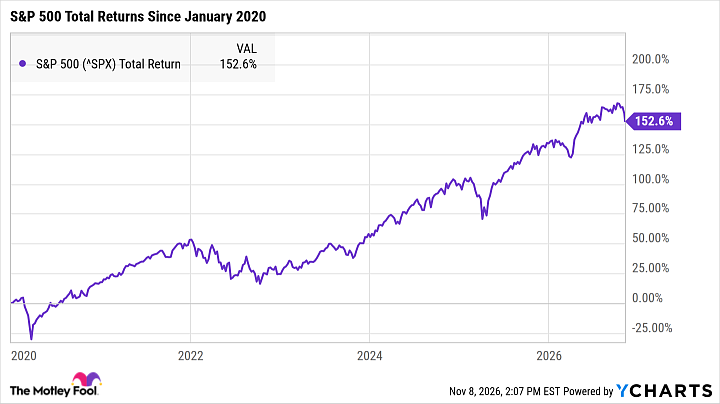
The investors who suffered the most during those downturns were those who sold their stocks after prices fell. Not only did those investors risk locking in losses by selling a stock for less than they paid, but they also missed out on the lucrative recovery period when the market bounced back.
Investors who continued buying throughout the downturns reaped the greatest rewards. When stock prices fall, it’s a prime opportunity to buy quality companies at deep discounts. The market is essentially on sale right now, and the smartest investors are taking this chance to buy more.
What if this is the start of a deeper recession?
Of course, it’s not guaranteed that the market will bounce back quickly as it has after recent crashes. But even if we are headed toward a prolonged bear market or recession, staying invested for the long haul is still a lucrative move.
The average S&P 500 bear market since 1929 has lasted 340 days, or around 11 months, according to analysis from Yardeni Research. Some of the most severe downturns in history have also occurred in the last two decades.
The dot-com bubble burst led to the longest bear market in history, lasting two and a half years and surpassing the Great Depression. The financial crisis from 2007 to 2009 was the most severe economic downturn post-World War II, with the S&P 500 losing more than half of its value.
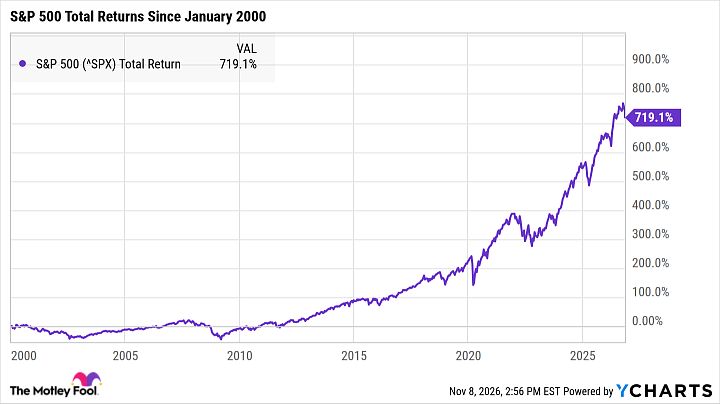
Since January 2000, however, the S&P 500 has earned total returns of more than 700%. If you’d invested $10,000 in the S&P 500 back then and never contributed another dollar, you’d have nearly $82,000 by today.
Market crashes are daunting even for experienced investors, so if you’re feeling rattled right now, that’s normal. The best thing you can do right now is double-check that you’re investing in strong stocks with healthy fundamentals, prepare to hold those investments until the market inevitably recovers, and perhaps consider buying more while stocks are at a discount.