You have a preview view of this article while we are checking your access. When we have confirmed access, the full article content will load.
The Federal Reserve only cuts rates outside of scheduled meetings in extreme cases. But job market weakening could make for bigger rate cuts in time.
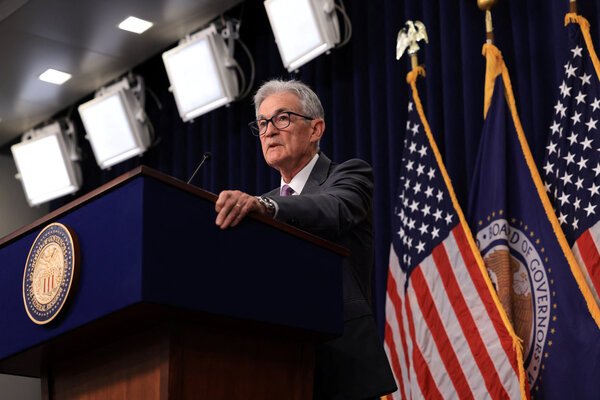

As turmoil swept through global financial markets on Monday, fueled by concerns that the economy is headed for a hard landing, investors began to speculate that the Federal Reserve could jump in to cushion the fallout with an emergency interest rate cut.
But a market sell-off is unlikely to prod the Fed to lower rates before its Sept. 18 meeting, especially at a time when economic data have yet to show conclusively that the economy is entering a recession.
The latest job report does leave officials with worrying evidence that the job market is slowing. But it was just one month of data, and it came at a time when consumer spending is holding up. Given that — and given how high the bar is for the Fed to cut rates outside of regularly scheduled meetings — careful Fed watchers doubted that the jump in unemployment and the sell-off in stocks would be enough to spur an emergency inter-meeting move.
“We’ve got to be monitoring the real side of the economy: There’s nothing in the Fed’s mandate that’s about making sure the stock market is comfortable,” Austan Goolsbee, president of the Federal Reserve Bank of Chicago, said in an interview on Monday afternoon.
The Fed only calls unscheduled meetings to adjust interest its policy stance in extreme situations. The most recent instance happened on March 15, 2020, when central bankers slashed borrowing costs to near-zero as the onset of the coronavirus pandemic sent panic coursing across global markets and caused a widespread breakdown in how markets functioned.
Monday’s sell-off was far less drastic than that moment. Investors dumped stocks because they have become nervous that the economy might fall into a recession after a few weak economic data releases in the United States, including a jobs report last Friday that showed unemployment rising. But even as they sank, markets continued to trade in an orderly fashion.