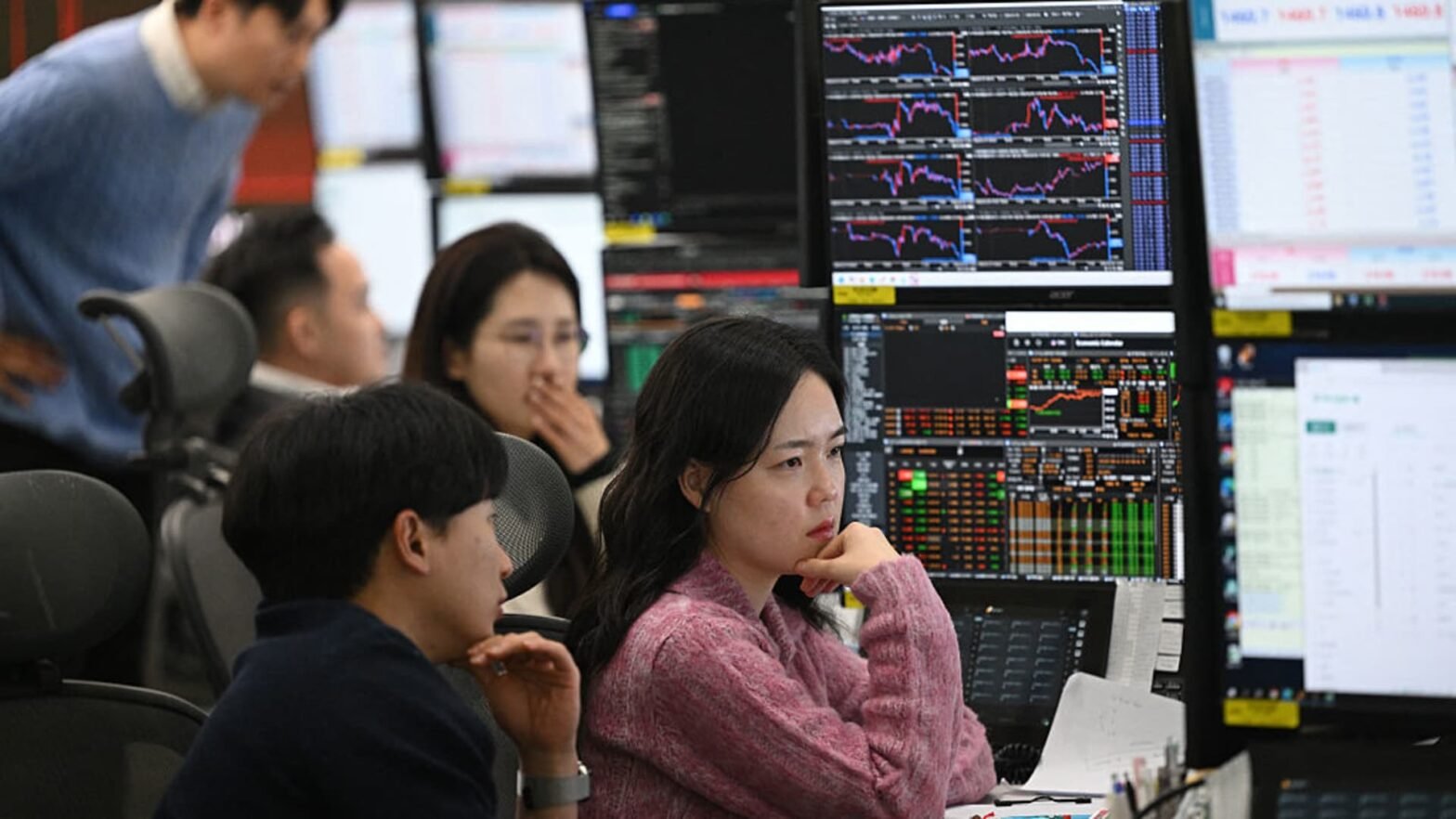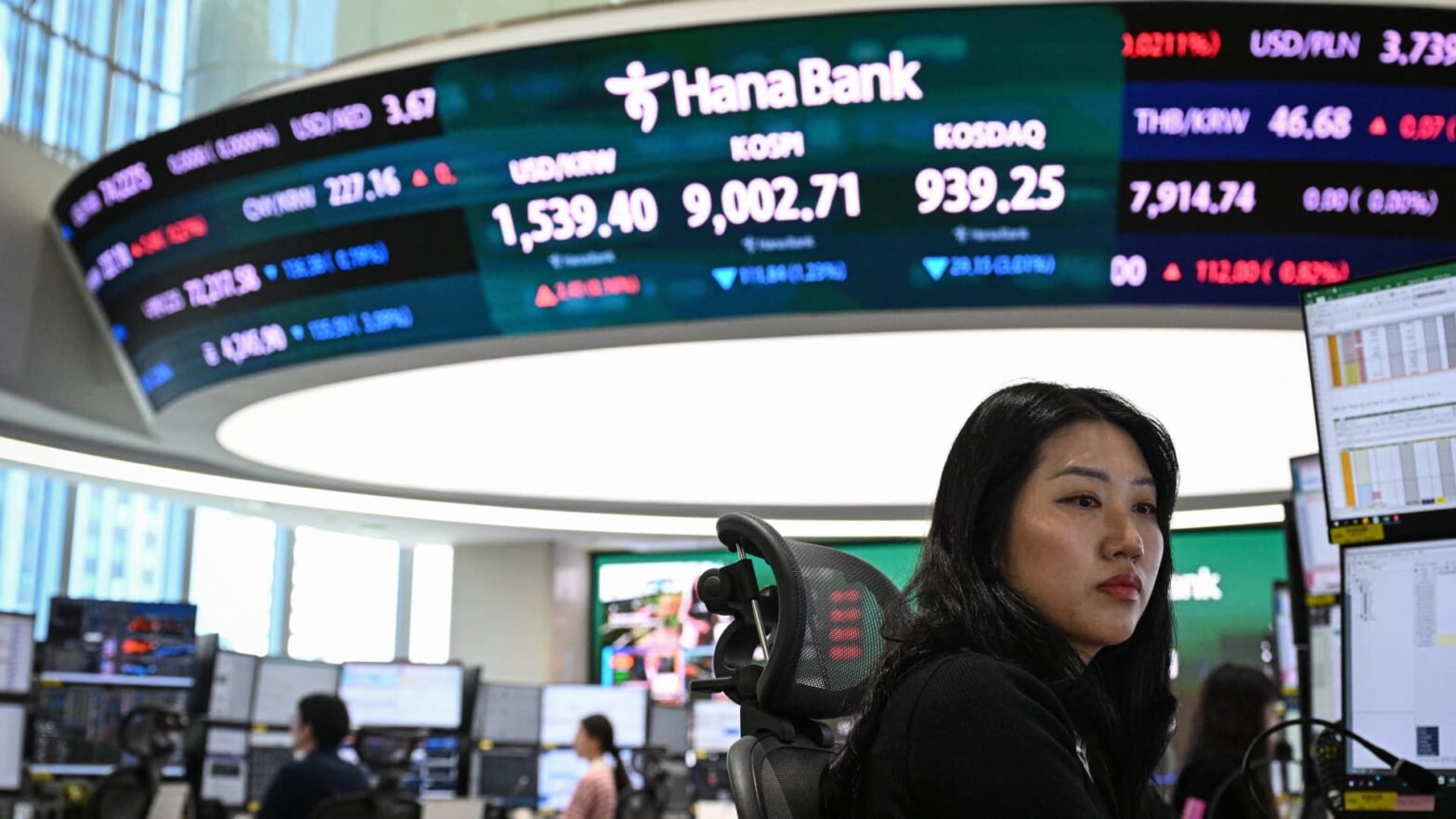
Stock market today: Indian equity benchmark indices – Sensex and Nifty 50 – began Thursday’s trading session on a flat note, following subdued sentiment in Asian markets amid investor unease over the uncertain future of US Federal Reserve Chair Jerome Powell.
As of 9:19 am, the BSE Sensex was up 33 points, or 0.04%, at 82,668, while the Nifty50 inched up by 8 points, or 0.03%, to 25,230.
Markets remained cautious, awaiting concrete Q1 earnings data to gauge real economic momentum, while uncertainty around Donald Trump’s tariffs continued to fuel volatility.
“Any earnings disappointment could increase downside pressure. In such an environment, traders should prioritise disciplined execution, employ strict stop-losses to avoid large drawdowns, and diversify positions across sectors or asset classes to reduce specific risks,” said Prashanth Tapse, Sr VP Research, Mehta Equities Ltd.
Market outlook in short term
According to Tapse, the undertone in Nifty remains strong, with every dip being bought into.
“A decisive close above 25,350 will likely confirm continued strength and open the path for further upside. However, if Nifty closes below 25,080, there is a risk of testing the 50-day DMA near 24,950. A sustained trade below this level could lead to deeper corrections,” Tapse said.
Meanwhile, Shrikant Chouhan, Head of Research – Equity, Kotak Securities, believes that the market’s volatility within a narrow range is a healthy sign, hinting at a corrective phase of the recent uptrend from 24,500 to 25,650.
“With value buying emerging, the focus should remain on quality stock selection while maintaining active participation at every level. Technically, a close above 25,500 may open the gates to 26,000, while a break below 25,000 could dampen near-term sentiment,” Chouhan said.
What should be the market trading strategy?
Prashanth Tapse of Mehta Equities recommend short-term traders to find opportunities in volatility by capitalising on small price moves and booking profits or losses swiftly. Meanwhile, long-term investors should view market dips as opportunities to accumulate high-quality companies with strong balance sheets and consistent earnings visibility.
On the other hand, Anuj Gupta, Director, Ya Wealth Research & Advisory, advises investors should trade with strict stop-loss levels in the volatile market.
“Generally, in the volatile market, prices go elsewhere, and the trend is not clear. So generally in that case, the chances of stoploss triggered are very high. Traders can go with fewer quantity positions. Firstly, they should calculate important key levels to enter and exit. The timing of the market is always very important. One should keep an eye on the sectoral or individual stock to trade based on its fundamental values. They can also use a hedging strategy by using option trading to protect the position and limit the losses,” Gupta said.
Disclaimer: This story is for educational purposes only. The views and recommendations above are those of individual analysts or broking companies, not Mint. We advise investors to check with certified experts before making any investment decisions.