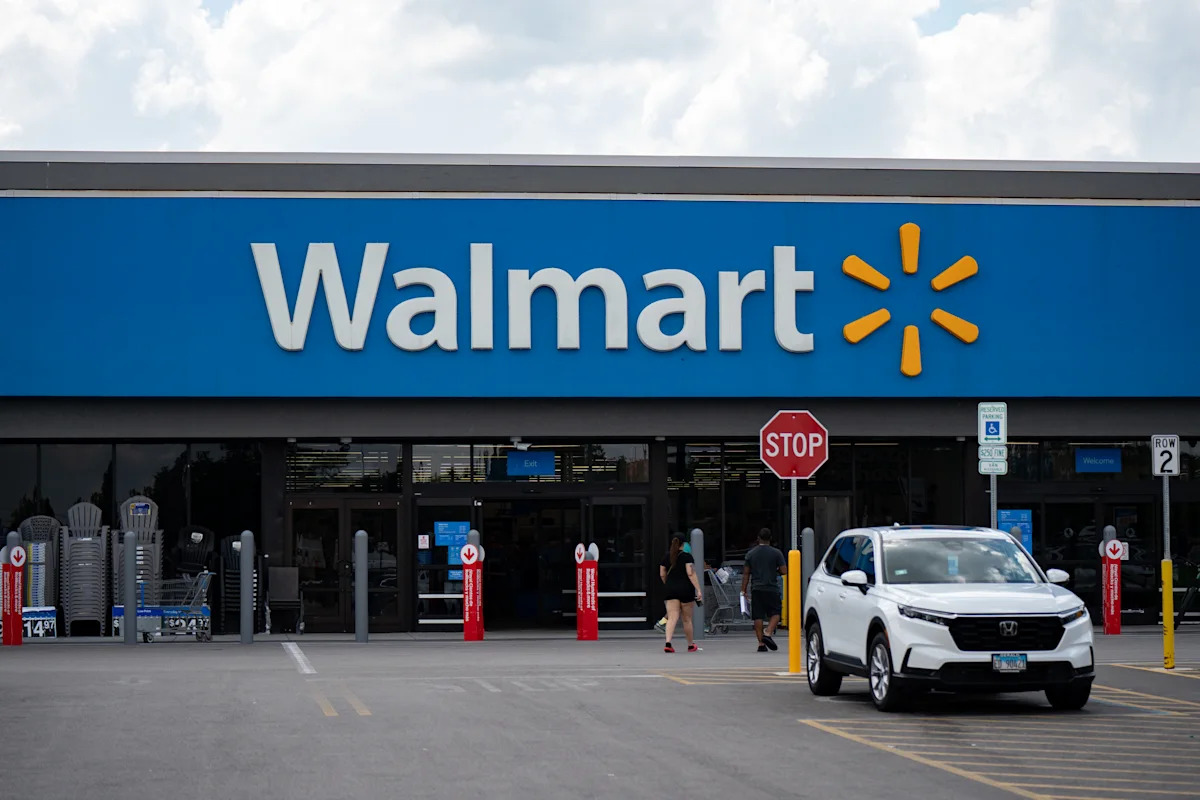
Walmart (WMT) raised its full-year financial outlook after beating Wall Street estimates on both the top and bottom lines, but the stock fell 9% after US same-store sales slowed.
America’s biggest retailer, often considered a bellwether for the industry, posted revenue growth of nearly 6% to $187.9 billion, above the roughly $186 billion expected, per Bloomberg consensus data. Adjusted earnings per share clocked in at $0.81, also higher than the $0.74 expected.
However, US same-store sales grew 2.6%, below Wall Street’s forecast of 3.7%. This was the slowest pace of US same-store sales growth since Q4 of 2020.
Lower drug prices dragged down sales growth. Excluding health and wellness, which was negatively impacted by maximum fair price legislation that allows Medicare to negotiate drug prices, Walmart reported 3.4% same-store sales growth in core merchandise.
The company also noted it was lapping strong growth in GLP-1 adoption over the past two years.
During the quarter, Walmart looked to gain share with cost-conscious consumers by cutting prices on thousands of items, including beef, chips, and soda.
“As you go through month by month in the last quarter, you can tell when fuel prices increase and got above $4, and perhaps there’s a psychological impact to that, that there are choices that consumers are making,” Walmart CFO John David Rainey told investors on the call. “So June was a little more obvious as we look at the quarter in terms of customers making trade-offs.”
Traffic and ticket sizes came in lower than what Wall Street expected for the quarter. Walmart’s grocery business posted mid-single-digit growth, led by personal care, beauty, and pet supplies, followed by general merchandise, which increased by low single digits.
E-commerce sales were up 23%, above the expected 22% increase, with a 24% increase in the US alone, likely tied to promotions Walmart ran to compete with Amazon’s (AMZN) Prime Day.
Operating income grew by roughly 21% year over year, as gross profit increased by 158 basis points, driven by a tariff refund benefit and partially offset by price investments and higher fuel costs.

For the third quarter — comprising the crucial back-to-school season and the beginning of the retailer’s holiday plans — Walmart expects net sales to increase 3% to 3.75%, alongside adjusted earnings of $0.62 to $0.64.
For fiscal year 2027, Walmart forecast revenue to increase by 4%-5% and adjusted earnings of $2.80-$2.87. That guidance was conservative compared with the nearly 5% growth Wall Street predicted and original estimates of adjusted earnings of $2.97 per share for the year.