 By Renato Campos | CEO – Mon, 01/26/2026 – 06:00
Looking ahead to 2026, the major investment banks are projecting new highs for the S&P 500. Deutsche Bank points to levels close to 8,000, while institutions such as Bank of America, Morgan Stanley, JPMorgan, and UBS place their estimates in the 7,000–7,500 range. Put more plainly, the market would continue to rise and post a third consecutive year of double-digit returns.
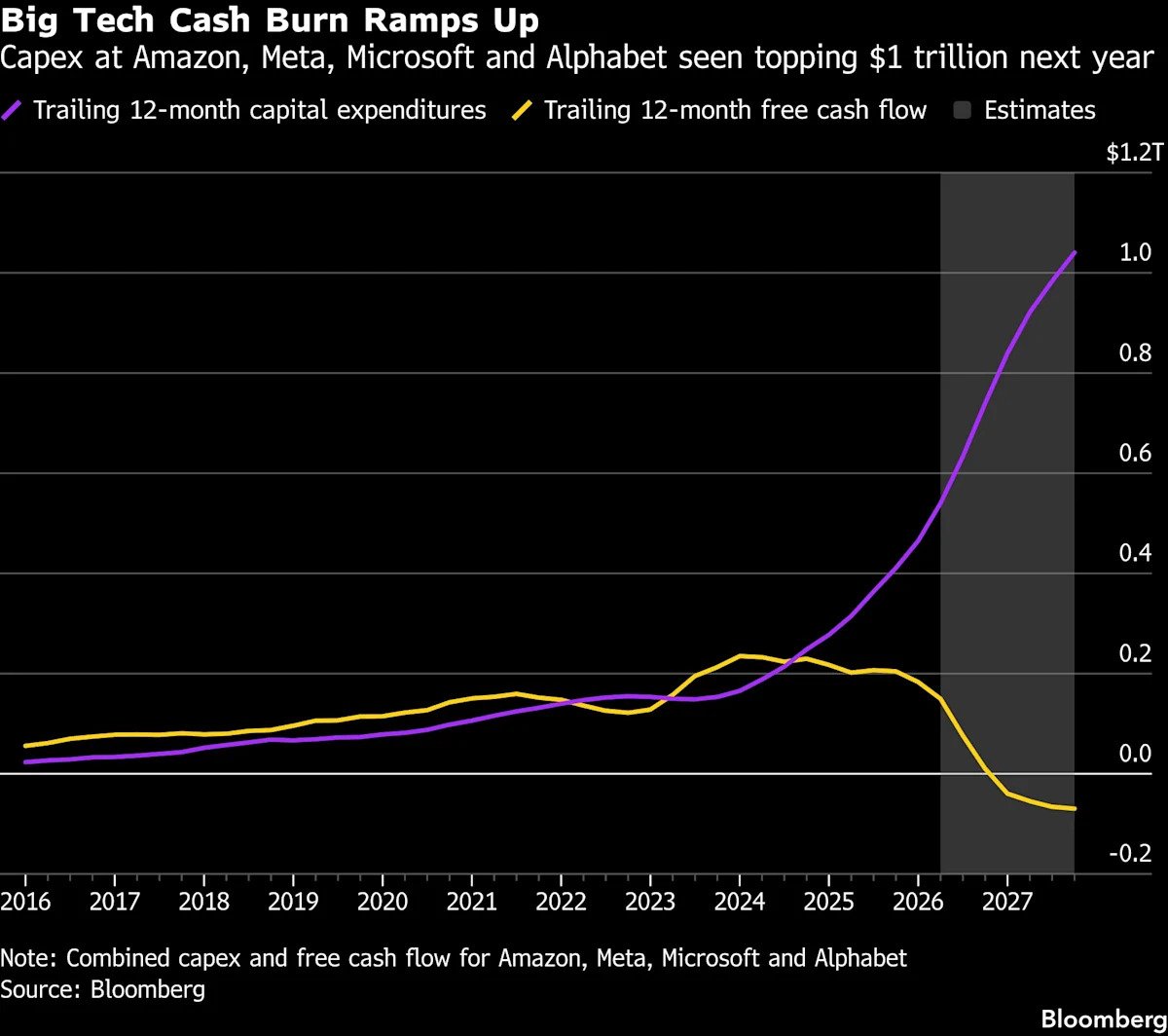
Beyond the specific figures, however, what truly matters is the broader environment surrounding these projections. Just a few months ago, many of these same institutions were warning about significant risks, including a potential artificial intelligence bubble, excessive spending by large technology firms, demanding valuations, and an increasing reliance on a small group of companies to sustain the indices. None of these concerns has disappeared entirely. What has changed is sentiment.
This behavior is not new. In financial markets, forecasts tend to be driven less by economic certainties than by shifts in sentiment. When prices rise steadily, the narrative becomes progressively more optimistic; when they fall, risks suddenly appear obvious and urgent. Wall Street, like any human ecosystem, is not immune to this dynamic.
This is why projections are structurally biased to the upside. Pessimism does not sell well. It is uncomfortable for clients, for headlines, and for commercial narratives. By contrast, revising estimates upward when markets are cooperating is a way of aligning with the prevailing consensus.
The issue arises when that consensus becomes overly uniform. Historically, periods in which nearly all major banks anticipate sustained gains have not marked exceptional starting points, but rather moments of elevated expectations. They do not necessarily precede sharp market declines, but they often lead to phases in which returns ultimately prove more modest than promised.
From this perspective, adopting a more cautious stance does not mean “betting against the market.” It means recognizing that forecasts tend to say more about the current emotional state of the market than about the future path of prices. The S&P 500 may continue to rise, consolidate, or correct — each remains a valid possibility.
What is truly useful for investors is not predicting the exact level of the index two years from now, but understanding how the narratives that dominate each stage of the cycle are constructed. When optimism becomes almost unanimous, it ceases to be a sign of certainty and instead turns into a quiet warning.
In that global backdrop of renewed optimism, Mexico occupies a distinct place that deserves its own reading. Unlike the major Wall Street indices, the appeal of Mexico’s market is less about the promise of immediate record highs and more about a mix of narrative, expectations, and structural shifts — though all of these remain vulnerable to swings in sentiment.
Over the past several years, nearshoring has become the cornerstone of Mexico’s investment story. The relocation of supply chains, proximity to the United States, and North America’s updated trade framework have fueled a broadly positive view of the country’s investment potential. As a result, that enthusiasm has shown up in capital flows to certain sectors, more demanding valuations for some companies, and a narrative that has sometimes treated benefits still in the process of materializing as if they were already guaranteed.
As with Wall Street, the risk is not in recognizing the opportunities, but in assuming the favorable scenario is inevitable. Mexico still faces meaningful challenges: uneven infrastructure, regulatory uncertainty, political transition, and dependence on the US economic cycle. None of these factors is new; however, they tend to slip into the background when optimism becomes the consensus and growth stories dominate investors’ thinking.
For investors, the key is to distinguish between trend and promise. Mexico’s role as a strategic piece in the region’s industrial reconfiguration does not guarantee outsized returns across all assets or at any point in the cycle. When a narrative becomes too popular, prices often bake in a large share of those expectations well before results are visible.
Investing in Mexico today calls for the same discipline and caution required in developed markets: separating long-term analysis from short-term enthusiasm. The country offers real opportunities, but it also demands patience, selectivity, and a critical reading of consensus. In markets where optimism starts to feel obvious, the real edge is often in adding nuance — not in simply joining the chorus.