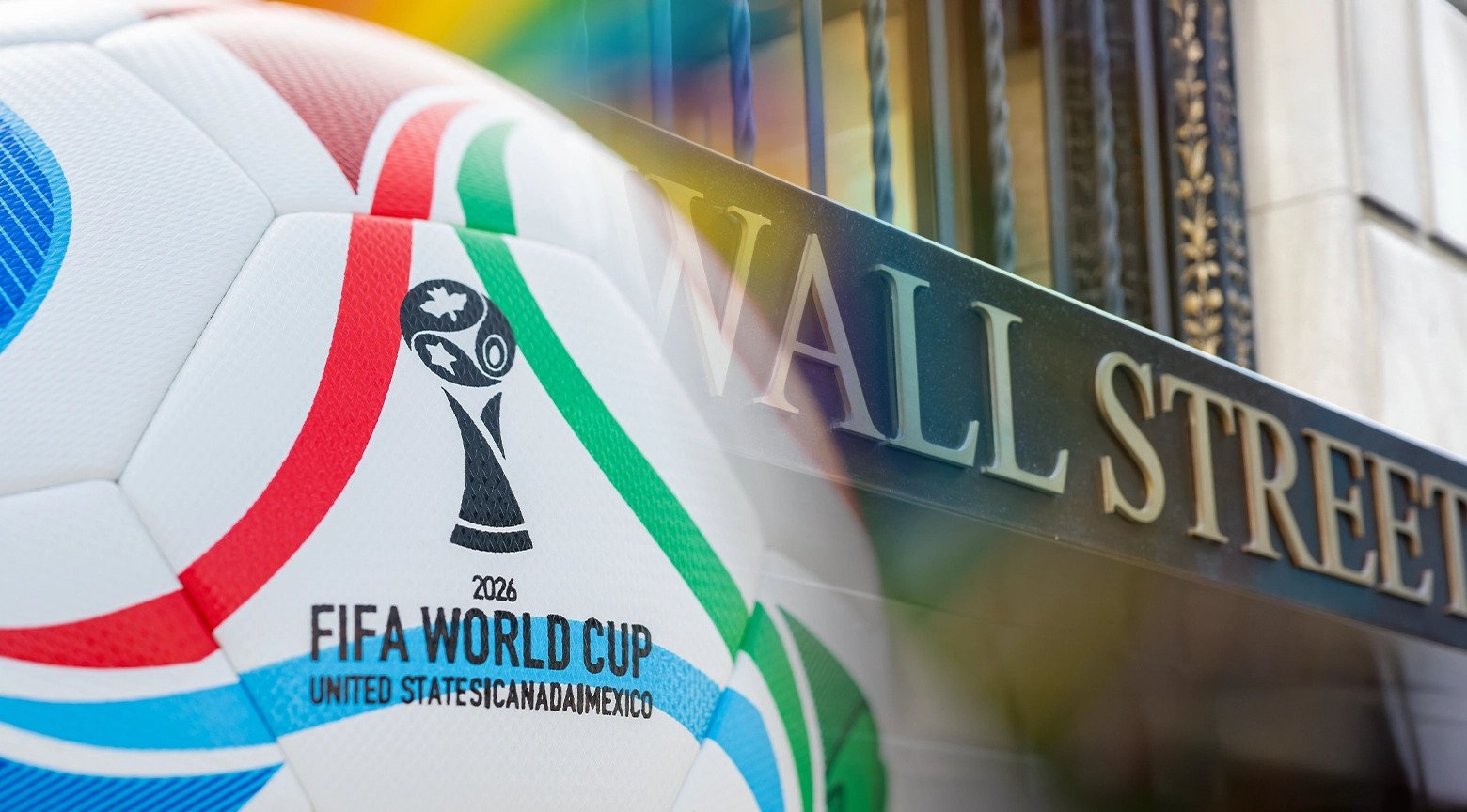
While millions of fans follow every match of the 2026 World Cup, another tournament is being played in parallel in the financial markets. Historically, the Football World Cup has become a temporary catalyst for various economic sectors, from food and beverages to e-commerce, entertainment, betting, and consumer electronics.
The 2026 edition—the first to be jointly hosted by three countries (Mexico, the United States, and Canada), and the largest in history with 48 teams and 104 matches—could generate more than 41 billion dollars in global economic activity and become one of the year’s biggest drivers of consumption for multiple industries.
Analysts at Morgan Stanley estimate that advertising activity associated with the tournament alone could exceed 500 million dollars, while around 44% of US consumers plan to actively engage with the event through television, streaming, and social media.
For investors, the question is not whether the World Cup generates money, but which companies manage to capture that additional spending.
The E-commerce Championship
The first regional beneficiary appears to be e-commerce, and stocks like Mercado Libre, which trades on the Nasdaq under the ticker MELI, seem to confirm this. This stock has registered an advance of approximately 6% to 7% from the start of the World Cup on June 11 until the first days of July, driven by expectations of higher digital consumption and a strengthening of electronic payments during the tournament.
The company also reported year-over-year revenue growth of 49% during the first quarter of 2026, with Mexico contributing nearly a quarter of the group’s consolidated performance. The phenomenon is not surprising: televisions, jerseys, food, promotional items, and delivery services usually see increases in demand during World Cup weeks, benefiting e-commerce and digital payment platforms.
Breweries Await Their Own Final
Few industries are as closely linked to football as beer. Jefferies analysts estimate that the 2026 World Cup will generate the additional consumption of more than 1 billion cases of beer globally, enough to raise the sector’s annual sales volume by 0.2 to 0.3 percentage points.
Among the best-positioned Latin American companies is Ambev, the largest beer producer in Latin America and owner of brands like Skol, Brahma, and Antarctica in Brazil. The company maintains a market capitalization close to 50 billion dollars and distributes an annual dividend of around 4.2%.
Arca Continental, one of the largest Coca-Cola bottlers in the world and a key player in the Mexican and US markets, also stands out. The company even announced investments linked to the World Cup legacy worth 76 million pesos for water infrastructure in schools in Nuevo León and Jalisco, two of the states hosting the tournament in Mexico.
Another issuer that could benefit is Fomento Económico Mexicano, owner of the OXXO chain and a major participant in the bottling business through Coca-Cola FEMSA, whose extensive network of points of sale usually sees traffic increases during large-scale sporting events.
Streaming and Advertising: The New Digital Stadium
The streaming revolution has transformed how football is monetized. The 2026 World Cup is already recording record digital audience figures. In Brazil, CazéTV reached peaks of over 12 million simultaneous viewers, while the Spanish-language broadcast of the match between Mexico and South Korea recorded 6.1 million viewers via streaming in the United States.
The agreement between DAZN and DirecTV Latin America to broadcast the tournament’s 104 matches in several South American countries is another sign of the event’s strategic relevance for digital platforms. Standing out in this segment is the Argentine tech company Globant, which specializes in digital transformation, artificial intelligence, and media and entertainment solutions—sectors that historically increase technological investment during major sporting events.
Electronics and Televisions: The Giant Screen Effect
The television business is usually one of the most sensitive to the football calendar. The analysis firm Omdia reported that global TV shipments grew 6% year-over-year during the first quarter of 2026, reaching 50.3 million units, driven primarily by inventory accumulation ahead of the World Cup.
NielsenIQ forecasts that global TV sales will increase by around 10% during the World Cup season, although the boost would be lower than that observed in Russia 2018 due to a weaker macroeconomic environment and market maturity.
An Alternative Indicator of Consumer Sentiment
Although the so-called “World Cup effect” is usually temporary and does not change companies’ long-term fundamentals, it does serve as a thermometer of consumer appetite and household sentiment.
Historical experience shows that companies linked to beverages, entertainment, e-commerce, and discretionary consumption usually record temporary increases in sales and traffic during the tournament—something that can eventually translate into better quarterly results and, in some cases, better stock market performance. Because during a World Cup, it is not just national teams that compete; companies, investors, and stock exchanges play too.