

Since April 2026, CooperCompanies has been in a holding pattern, posting a small loss of 4% while floating around $60.41. The stock also fell short of the S&P 500’s 7.5% gain during that period.
Is now the time to buy CooperCompanies, or should you be careful about including it in your portfolio? Check out our in-depth research report to see what our analysts have to say, it’s free.
Why is CooperCompanies not exciting?
We’re passing on CooperCompanies for now. Here are three reasons why there are better opportunities than COO, plus one stock we’d rather own.
1. Slow organic growth suggests waning demand in core business
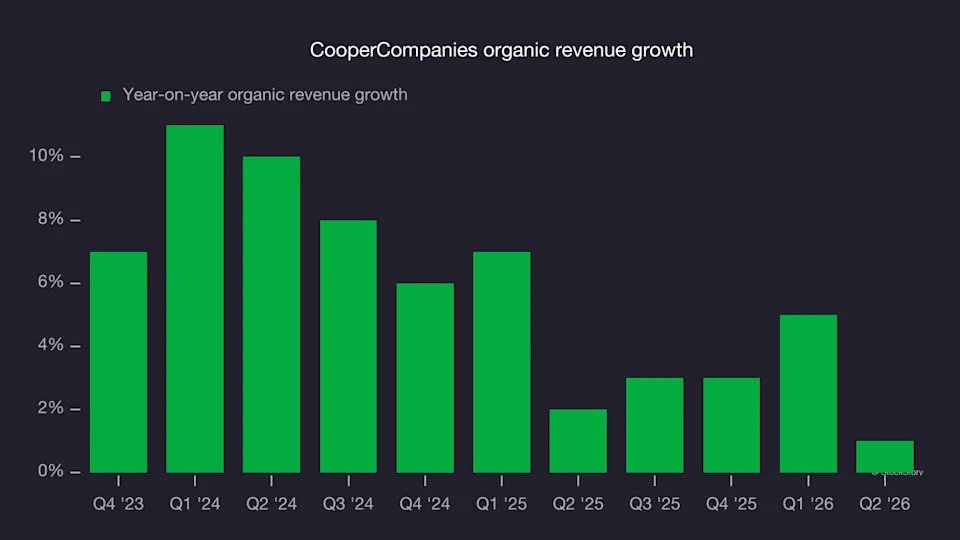
Investors interested in medical devices & supplies – diversified companies should track organic revenue in addition to reported revenue. This metric gives visibility into CooperCompanies’s core business because it excludes one-time events such as mergers, acquisitions, and divestitures along with foreign currency fluctuations – non-fundamental factors that can manipulate the income statement.
Over the last two years, CooperCompanies’s organic revenue averaged 4.4% year-on-year growth. This performance slightly lagged the sector and suggests it may need to improve its products, pricing, or go-to-market strategy, which can add an extra layer of complexity to its operations.
2. Projected revenue growth is slim
Forecasted revenues by Wall Street analysts signal a company’s potential. Predictions may not always be accurate, but accelerating growth typically boosts valuation multiples and stock prices while slowing growth does the opposite.
Over the next 12 months, sell-side analysts expect CooperCompanies’s revenue to rise by 2.9%, according to S&P, a slight deceleration versus its 8.3% annualized growth for the past five years. This projection doesn’t excite us and indicates its products and services will see some demand headwinds.
3. Previous growth initiatives haven’t impressed
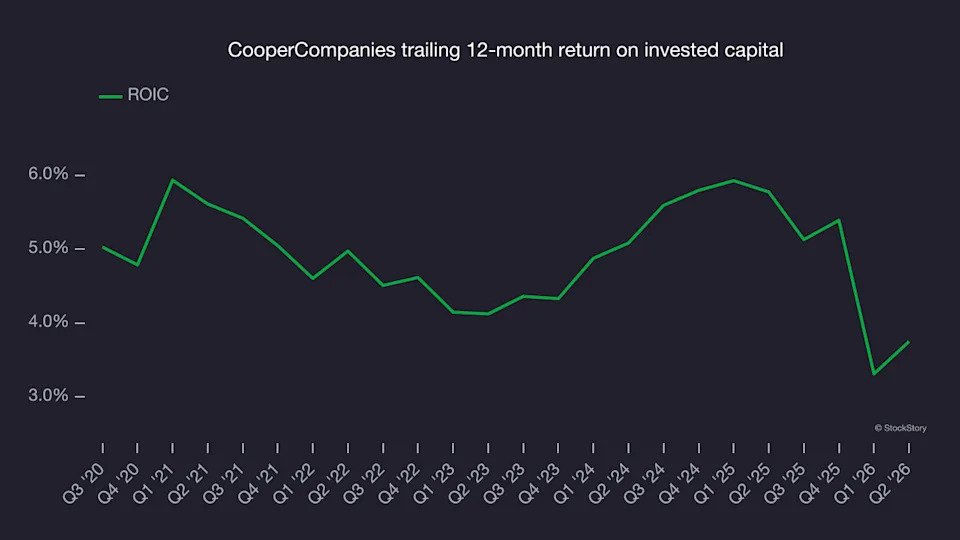
Growth gives us insight into a company’s long-term potential, but how capital-efficient was that growth? A company’s ROIC explains this by showing how much operating profit it makes compared to the money it has raised (debt and equity).
CooperCompanies historically did a mediocre job investing in profitable growth initiatives. Its five-year average ROIC was 4.7%, lower than the typical cost of capital (how much it costs to raise money) for healthcare companies.
Final judgment
CooperCompanies’s business quality ultimately falls short of our standards. With its shares trailing the market in recent months, the stock trades at 13× forward P/E (or $60.41 per share). While this valuation is fair, the upside isn’t great compared to the potential downside. We’re fairly confident there are better investments elsewhere. Let us point you toward the most dominant software business in the world.