(Bloomberg) — While much of Wall Street is standing by to hear what Federal Reserve Chairman Kevin Warsh has to say today at his first speech to the Jackson Hole economic symposium, history suggests the stock market is likely to react with a whimper rather than a roar.
Most Read from Bloomberg
-
The Unraveling of Podcaster Ashley Flowers’ True Crime Empire
-
Pakistan Says Not Bound to Accept Unilateral Sanctions on Iran
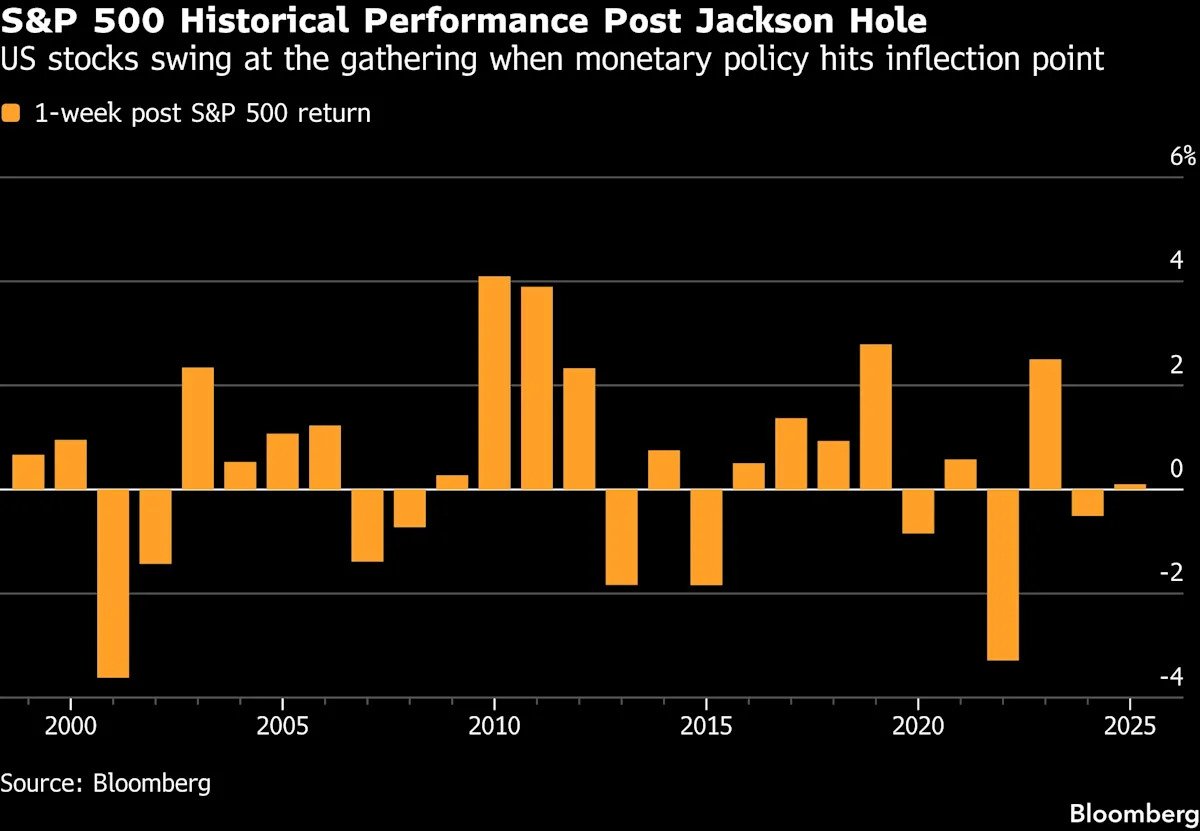
Despite a few exceptions, a Fed chair’s speech at the symposium normally isn’t a big catalyst for stocks — unless it comes before a crucial shift in monetary policy. Since 2000, the S&P 500 Index has gained just 0.4% on average in the week following the gathering, data compiled by Bloomberg show. And options markets aren’t pricing in any fireworks this time either.
Of course, “this time won’t be different” are arguably the second-most dangerous words on Wall Street after “this time it’s different.” As a result, many traders will be ready to take action, especially since Warsh has broken with his predecessors by abstaining from providing guidance on how the central bank is thinking about potential future interest rates moves.
“The bar is low, with traders not anticipating any groundbreaking changes to his policy views,” Kevin Flanagan, head of investment and fixed income strategy at WisdomTree, said by phone. “But a lack of forward guidance still leaves the market up to its own devices to interpret what he says, which leaves the risk of misinterpretation across Wall Street.”
Warsh, scheduled to speak Friday at 10 a.m. New York Time, could remain especially tight-lipped about the timing of hikes since the next jobs report on Sept. 4 and consumer price figures on Sept. 11 are both likely to be important data points for the Fed when they meet later in the month to set rates.
Warsh “is likely to acknowledge the better recent inflation news but is unlikely to provide policy guidance,” Goldman Sachs Group Inc. economists led by Jan Hatzius wrote in a note to clients on Tuesday, adding that they expect the Fed to keep rates steady in September and through the year-end. “The majority of participants and especially the majority of voters will feel even more strongly that it is appropriate to remain on hold after better inflation reports in June and July.”
Any surprises, though, could trigger some volatility since swaps traders are pricing in only about a one-in-three chance that the Fed will raise borrowing costs in September.