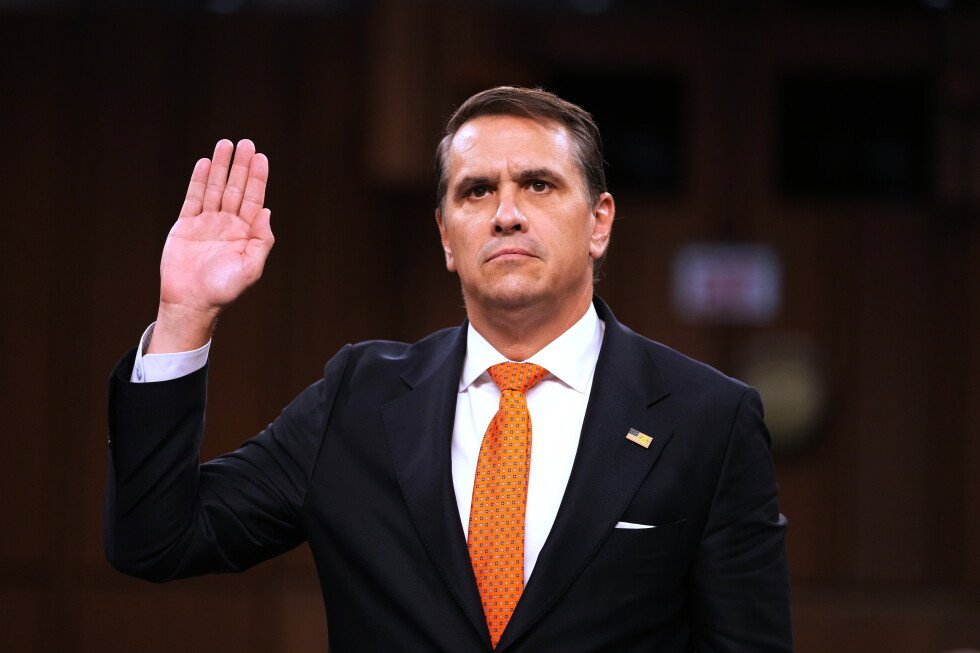
| Guest: | Arthur Stein |
| Title: | Certified financial planner, Allworth Financial |
| Summary: | The first half of the year delivered strong returns for many TSP investors. But rising balances can sometimes mask a more important question: how much risk sits underneath those gains? |
The Federal Drive with Terry Gerton provides expert insights on current events in the federal community. Read more interviews to keep up with daily news and analysis that affect the federal workforce. Reach out to Terry and the Federal Drive producers with feedback and story ideas at FederalDrive@federalnewsnetwork.com.

Terry Gerton We are about halfway through the calendar year, and it seems like a good time maybe to take stock of where the TSP is. And I would imagine a lot of people are feeling pretty happy given how the market has played out in the first six months of this year. Should people be sitting back on their TSP laurels or should they be doing some reevaluation of their portfolios at this point?
Arthur Stein Well, I think this is the most unexpected stock market rally since COVID, you know, where COVID, the whole world economy shut down and we had a 35% decline in the C fund, which is the S&P 500 stock index fund in the TSP. But then it turned out to be a great year. I mean, the C Fund was up about 18%. Now I don’t think news is as bad right now, but we are in a situation we have multiple conflicts in the Middle East, higher oil prices, higher inflation, higher interest rates, higher U.S. debt levels. And also, I would point out that midterm elections, you see that on average, the quarter before midterm election is frequently a negative quarter for stocks. And so there’s a lot of reason to be pessimistic. Now there is one really solid reason to be optimistic about stocks or that might explain why it’s been such a good year. And that’s that corporate earnings are up about 25% over the last 12 months, which is a really solid increase. And stock prices, you know, reflect corporate earnings. I mean, that’s what you’re paying for to share in the corporate earnings, but still, you know, the first quarter of the year was pretty bad. The second quarter was great. So far this year, the C fund’s up 10%, S fund 18%, I fund 16%. Those are really great rates of return for a six month period. One other thing to worry about is there’s a lot of what can be called speculative fever, fear of missing out, FOMO is the acronym, and people see the market going up and they get excited and they buy in. There have been a couple of recent polls and studies. A Harris poll found that 80% of respondents admitted that they had been making high-risk or speculative investments because they felt financially left behind. Another more solid statistic is that Americans now have 45% of their total financial assets in stocks. That’s the highest it’s ever been. The previous peak was 39% in 2000. And we certainly see this in the TSP, where the percentage invested in the C fund has gone up and the percentage invested in the G fund has gone down over longer periods of time. So it means that feds are much more invested in stocks than they used to be.
Terry Gerton Art, is that folks taking a conscious position there or is it just a function of a long market run up?
Arthur Stein Well, I think it’s a lot of things. And a big one is the L funds, because newer employees are automatically invested in an L fund that’s going to mature and go into the I fund many decades in the future. Those L funds can have as much as 99% in the stock funds. And that has increased the percentage in the stocks. Of course, another reason, Terry, as you just mentioned, stock returns have been great, so that increases the percentage. But I think, in general, people are more secure, comfortable with stock investments. They’ve heard for a long time that they outperform. And recent stock market declines have been very short term. You know, the one in 2020 lasted months. The one in 2022 lasted months, but some previous market declines, like 2000, was the longest term one since the Second World War. It was three straight years of declines in the stock markets. I mean, that was really grinding. That was really hard on investors. So, you know, if people wanted a recommendation, I would say, one, don’t chase returns. You know, just because stocks have done well isn’t a reason for you to put more or less in stocks. Choosing an allocation between the stock funds and the bond funds that’s right for you. But also, we need to be emotionally prepared for a big market decline. I mean, it’s going to happen. It’s a regular part of the market cycle. And employees need an emergency fund because there could be another government shutdown in September and because their jobs are no longer secure. Retirees need an emergency fund so they won’t have to withdraw from the TSP and other investments when the stock and bond markets are down.
Terry Gerton Arthur Stein is a partner with Allworth Financial. At the beginning of our conversation, you talked about a number of global factors that add uncertainty into the market, and then you talked about a natural correction that’s coming up. If the market dropped 15% tomorrow, who would be most surprised? Folks who invested in the C fund, the S fund, the I fund, or folks maybe who thought they were playing it safe in an L fund?
Arthur Stein I think the most surprised are going to be a lot of the L fund investors, because many times they don’t realize what a high percentage of their L fund investments are in stocks. You know, a lot the L funds are, as I said, 99% stocks. I would never recommend to a client that they have 99% of their investments in stocks, to me it’s like too much. Maybe for a younger employee, 80-20 or something like that. But the L Fund’s very heavily invested in stocks. I think a lot of the L fund investors don’t realize it. And I think it’s gonna be a big shock when we get the market crash, which is not 15%, but it’s 20% or more. I mean, that’s really a major decline. Could be 30, 40, 50%.
Terry Gerton Why do you think there’s such a disconnect between what people think they own and what they actually own in the TSP?
Arthur Stein Okay, well, you know, I speak to a lot of feds, because a lot feds are clients. A lot of the people I speak too are feds. And I think most of them have been told that the L funds are safer. And so they invested in them and they’ve been told they no longer have to worry about their allocation because the L Funds are gonna take care of it for them, which they will. But they don’t realize how the L funds work, which is that in the beginning, if you were investing in the L2070 or 2080 fund today, it would be about 99% stocks. And in about, I don’t know, 10 years I think it is, then you start to see a decline. But even about five or six years before the fund matures, is what I call it, say it’s 2075, you’re in the 2080 bond, you would still be about, well more than fifty percent stocks more than 50 percent stocks it’s only in that last five years that it really becomes conservative and then it becomes too conservative all of a sudden you’re about 80 percent in bonds, which means the G fund and the F fund and those are likely to lose purchasing power after you take into account taxes and inflation. So, to me, the L Funds take you where you don’t want to go. They start you out over-invested in stocks, and you then end up under-investing in stocks. And most people don’t realize it.
Terry Gerton You mentioned the importance of planning for emergency funds. If you could offer one other piece of advice, maybe around risk and return, how would you want people to be evaluating their portfolios right now?
Arthur Stein I think they just need to understand if they’re long-term investors, which means that some of their investments are there to pay for stuff 10, 20, 30 years from now, that historically and past performance is no guarantee of future performance. Stocks and well-managed diversified portfolios have had a high enough rate of return to increase purchasing power. Bonds did not. The G fund certainly did not. Bank accounts do not do that. So when people say, you know, the G fund is safer, really it’s only less volatile. It’s safe in that one way. It is less volatile, but it’s riskier in terms of losing purchasing power.
Copyright © 2026 Federal News Network. All rights reserved. This website is not intended for users located within the European Economic Area.