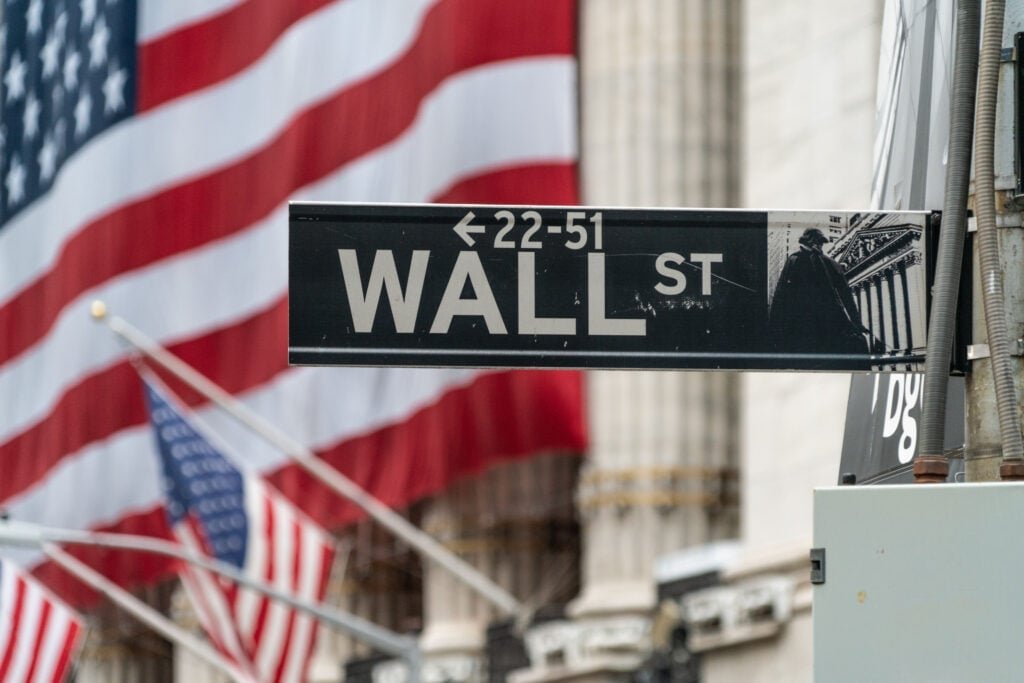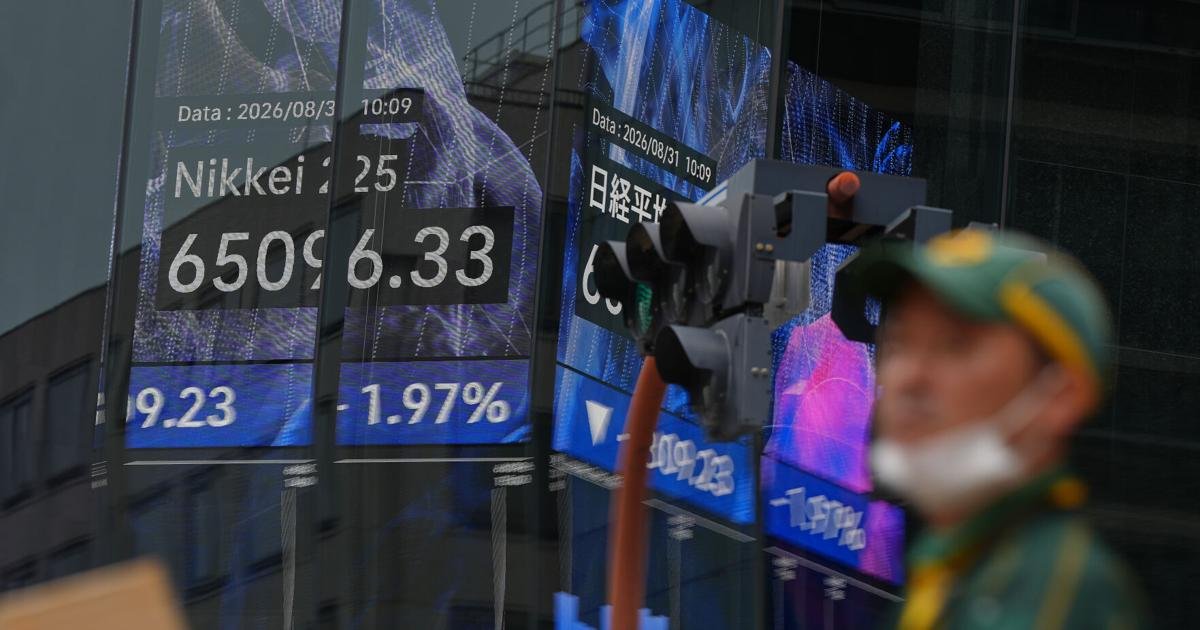
Rising oil prices are raising inflation fears and pushing bond yields higher, weighing down stocks on Wall Street. The S&P 500 fell 0.7% Tuesday. The Dow Jones Industrial Average fell 299 points, or 0.6%, as of 9:33 a.m. Eastern time. The Nasdaq composite fell 1.4%. Much of the pressure being felt by Wall Street is coming from a sell-off in U.S government bonds. The yield on the 10-year Treasury rose. Oil prices continued climbing, putting more pressure on inflation. Markets in Europe were mostly lower and markets in Asia were mixed.
THIS IS A BREAKING NEWS UPDATE. AP’s earlier story follows below.
A heavy sell-off in U.S. government bonds is gaining momentum with anxiety about persistent inflation driving prices lower.
The yield on the two-year Treasury, which closely tracks expectations about Fed moves, rose to 4.35%, on Tuesday. That’s up significantly from about 3.50% at the beginning of 2026. Meanwhile, the yield on the 10-year Treasury rose to 4.79% from 4.73% late Friday. That’s the highest it has been since January 2025.
The bond sell-off is global, with other nations facing the same economic pressures.
Japan’s 10-year bond yield touched 3%, a level it hasn’t hit since 1996. In Germany, the 10-year bond yield also rose to 3%, a 15-year high.
The U.S. debt surpassed $40 trillion two weeks ago, a shocking milestone as defense costs and interest on the burgeoning deficit make up an enormous share of federal spending. But investors are asking governments across the globe to pay more, with the perceived risk rising.
Futures for the S&P 500 index fell 0.6%, while the Dow Jones Industrial Average declined 0.8%. Nasdaq futures tumbled 1%.
The U.S. attacked rocket launchers on an Iranian island on Sunday, saying they were preparing to launch mines into the Strait of Hormuz. Meanwhile, the United Arab Emirates said it intercepted an Iranian drone over its waters on Monday.
September is off to a tepid start, a day after Wall Street closed out August on a downbeat note. The S&P 500, Dow Jones Industrial Average and the Nasdaq composite all declined on Monday. And the losses were broad, with nearly every sector within the benchmark S&P 500 finishing in the red.
Tech stocks are also back in focus, with shares of Nvidia, Microsoft, Alphabet and Micron Technology all declining before the market open.
Oil prices remain high as the Iran war has curtailed traffic in the Strait of Hormuz, which once accounted for about 20% of the world’s oil shipments.
Brent crude gained 1.7% to $92 per barrel on Tuesday, following a 2.7% rise on Monday. U.S. benchmark crude climbed 2.2% to $87.67 per barrel.
The national average for gasoline in August has been above $4 per gallon every day of the month for the first time ever, according to the AAA. It has been the most expensive August at the pump on record, outpacing even the enormous supply chain crunch during the COVID-19 pandemic in 2022.
Higher energy prices have fueled already elevated inflation, which remains well above the Federal Reserve’s 2% target. Many experts are expecting a rate hike soon after Fed Chair Kevin Warsh — in a speech last week at a conference of central bankers — left the door open to it if inflation didn’t improve.
The government’s next report on prices comes out just days before the Fed meeting and could play an outsize role in determining whether the central bank acts.
Also this week, the government issues its latest monthly jobs report, which could also play into the Fed’s decision on interest rates.
Thought the unemployment rate remains low at 4.1%, the job market stalled unexpectedly last month as inflation continues to squeeze businesses and households.
A weakening employment market could create a tough situation for Federal Reserve, which has to balance fighting inflation with supporting full employment. Its main tool for managing that “dual mandate” remains interest rates. Raising its benchmark rate to bring down inflation could further damage the jobs market; cutting its benchmark interest rate to help support employment can exacerbate inflation.
In Europe, Germany’s DAX lost 1%, while the CAC 40 in Paris gave up 0.4% and Britain’s FTSE 100 declined 1%.
Asian markets were mostly lower, with shares in online fast-fashion retailer Shein sliding as much as 10% after they began trading in Hong Kong on Tuesday. They closed 4% lower.
—-
AP Business Writers Michelle Chapman and Matt Ott contributed to this report.
Copyright 2026 The Associated Press. All rights reserved. This material may not be published, broadcast, rewritten or redistributed without permission.