4 min read

(Bloomberg) — The biggest stock market rally in years is leaving out Poland’s ordinary investors.
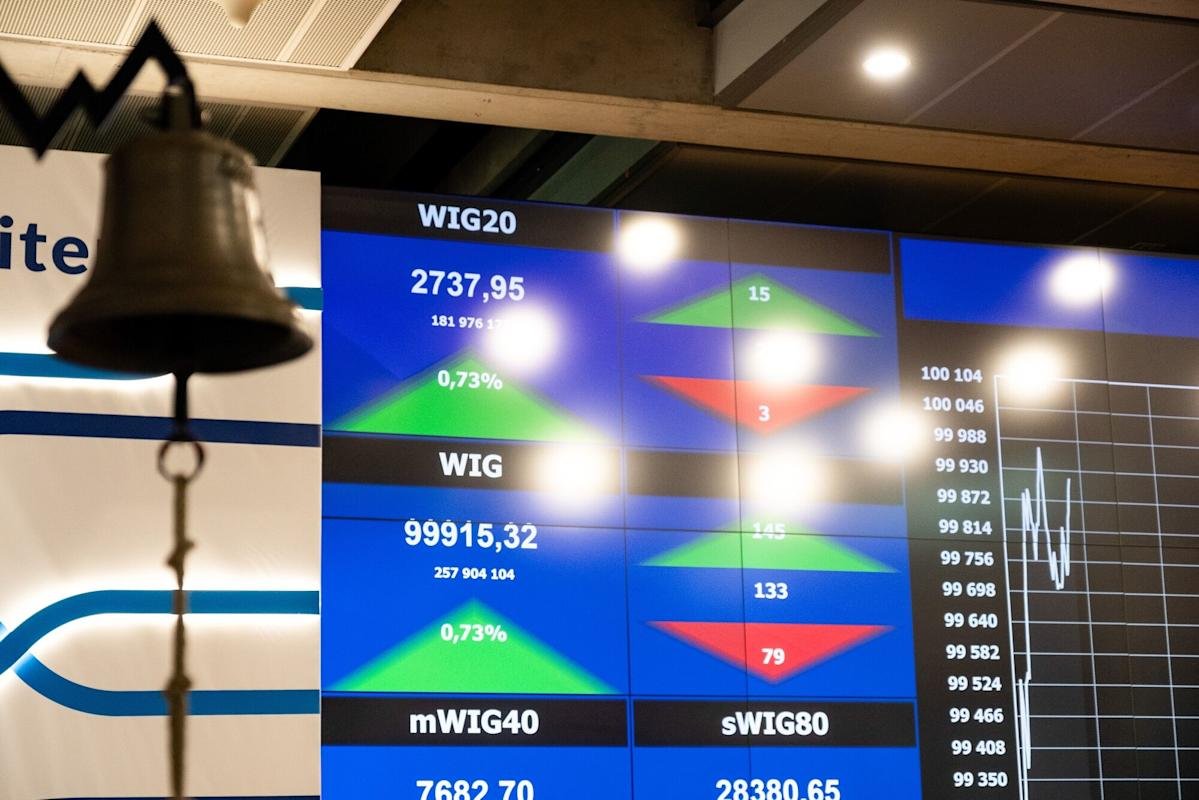
Time and time again, they’d been burned by volatile swings in equities and have found safety in cash. Before 2025, Poland’s benchmark WIG20 Index had been in a rut for most of the last two decades, unable to return to levels from the emerging-market boom of the early 2000s.
Most Read from Bloomberg
So as a surprise rally took hold this year, pushing the WIG20 stock gauge up 45% in dollar terms, local retail investors have largely stayed out of the market and missed out on the wealth it’s creating.
“It’s sad but most of my friends avoid the stock market,” said Mateusz Juroszek, whose family office in Warsaw manages 8 billion zloty ($2.2 billion) in assets. “There’s no belief that it’s a safe place to invest, so locals are on the sidelines in the current rally even as changing perceptions of geopolitical risks make the Polish market more attractive.”
Despite surging prices, retail investors have reduced exposure to stock funds. Nearly 1 billion zloty has been pulled from Polish stock strategies during the January-July period, while 22 billion zloty has been poured into money market and debt funds, according to data from IZFiA.
The government is seeking to lure people back to stock investing — something it sees as crucial to sustaining the country’s economic growth. Finance Minister Andrzej Domanski, a former stock fund manager, this month unveiled tax incentives based on a Swedish model, seeking to rekindle an “equities culture.”
“The plan is a boon for individual investors,” said Andrzej Bieniek, investment director at Warsaw-based mutual fund Esaliens TFI SA, which has 4.8 billion zloty in assets under management. “Hopefully, it will make the equity market more attractive and trigger a gradual flow of capital out of bank deposits and into shares.”
Like their counterparts across the European Union, officials in Warsaw are trying to unleash savings by encouraging stock purchases. By some measures, the anti-equities bug is more severe in Poland, where households keep 52% of their savings in cash and deposits, the highest ratio in the 27-nation bloc after Cyprus.
Domanski, the finance minister who used to manage stocks for the local unit of KBC Group NV, expects as much as 100 billion zloty to be funneled into the low-tax accounts within three years.