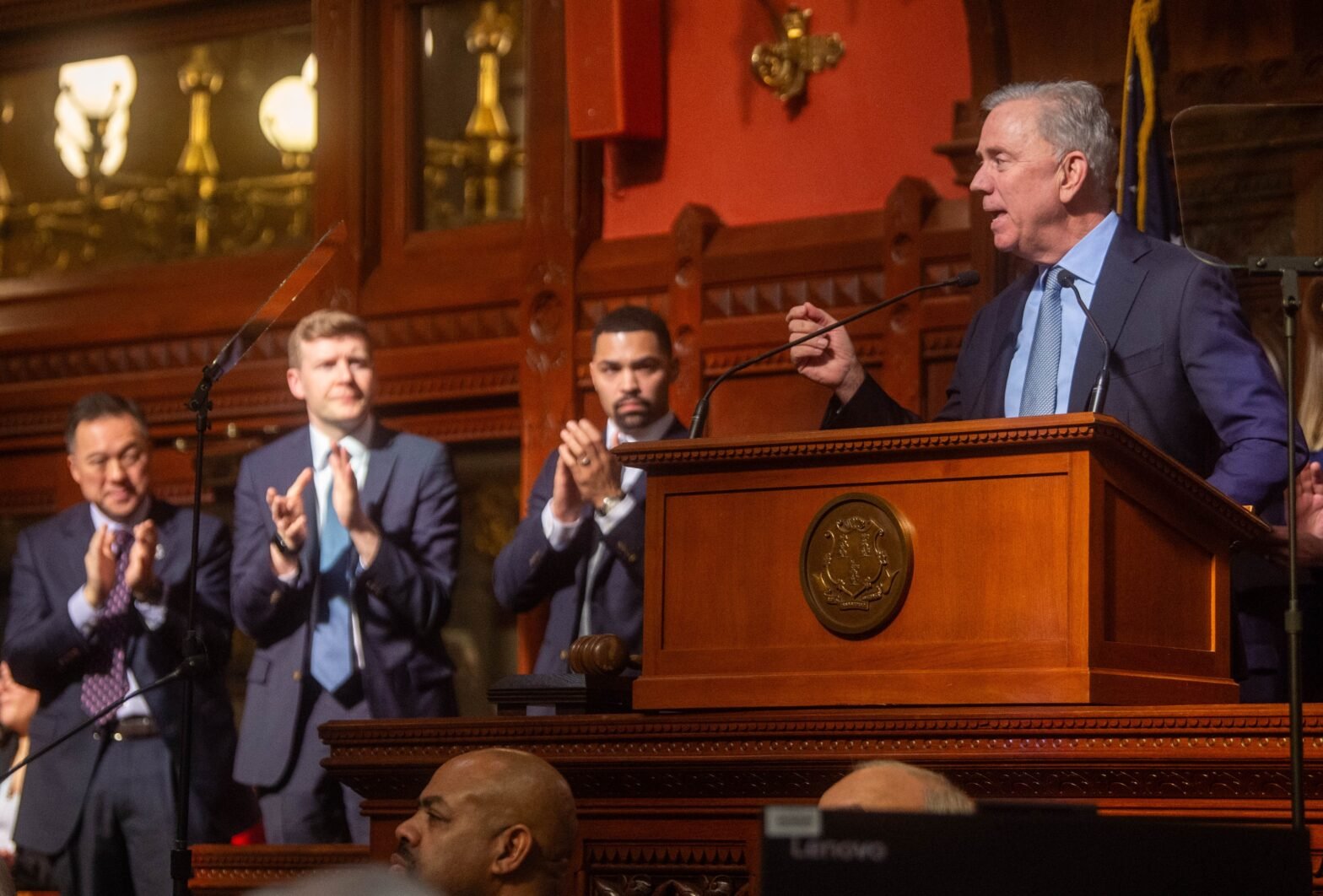
With the stock market soaring in recent years, Connecticut’s pension fund has jumped to $76 billion — offering state employees and retirees a sigh of relief after years of underfunding.
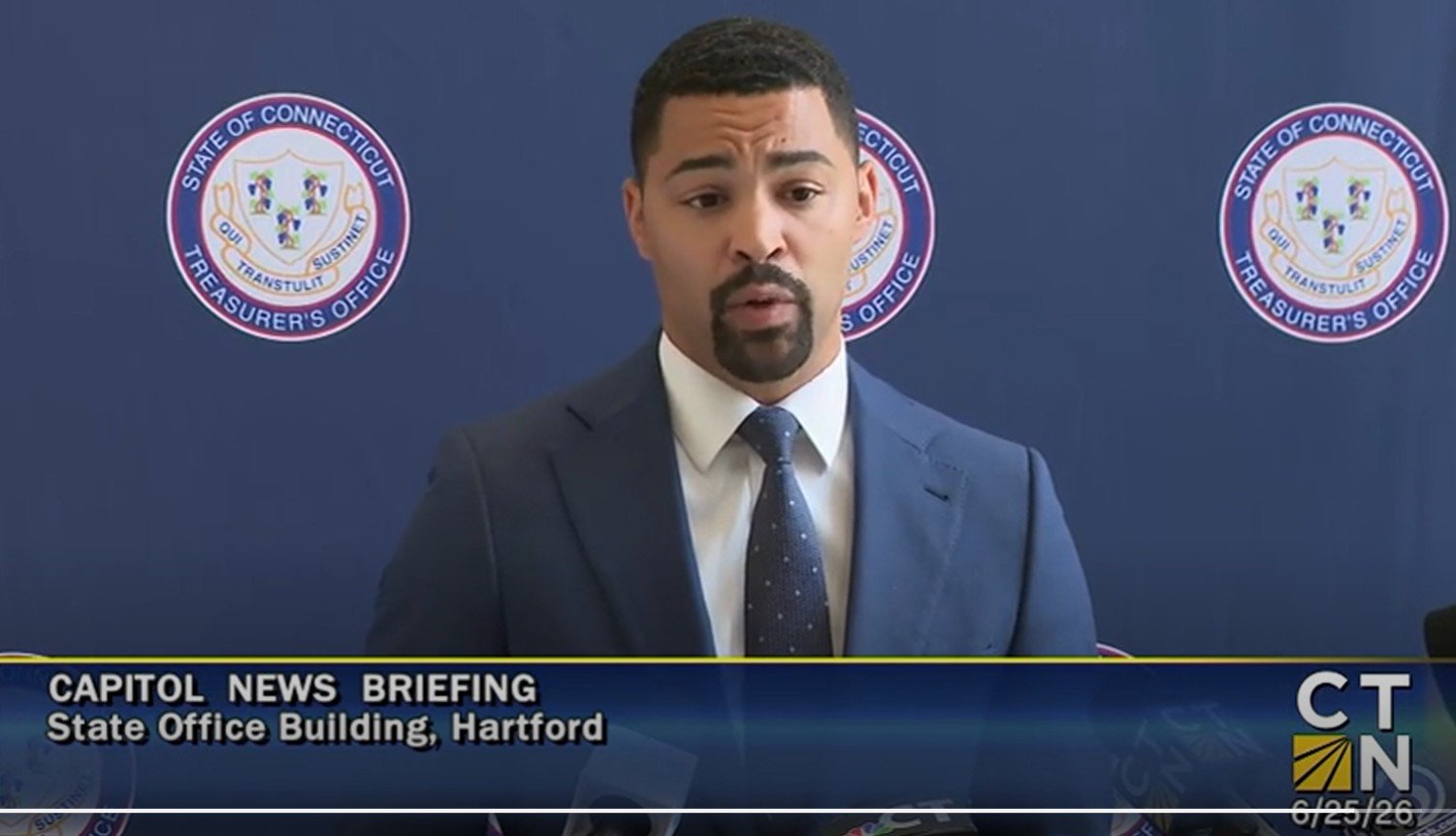
The fund jumped by 15% during the 2026 fiscal year, adding $11 billion to the total in a single year, according to statistics released by state treasurer Erick Russell. The fund stood at $73.7 billion when the fiscal year ended on June 30 but has continued to climb since then.
The statistics show a remarkable turnaround from the days when the pensions were 35% funded after previous governors and state legislators failed for nearly 70 years to place enough money into the funds. In the coming months, the pensions could be close to 70% funded, officials said.
“For a long time, it was very much a drag on the state,” Russell said. “Yes, we’re in a moment in time where the market is very strong. But if you look at us compared to our peers, it really shows the progress that we have made. We yet again ranked in the top 25% of performers across the country.”
The recent past includes an overall increase of 10.14% last year, 11.5% in the 2024 fiscal year, and 8.5% in the 2023 fiscal year.
Gov. Ned Lamont, a wealthy Greenwich resident who follows the stock market closely, is keenly aware of the market’s volatility and declined to make predictions about the future. Even with the huge increases in recent years, he is taking a cautious approach.
A relatively small number of stocks, known as the Magnificent Seven, have been responsible for driving the market as companies pour billions of dollars into seeking improvements in artificial intelligence, which is seen as the industry of the future. But Lamont, 72, has seen the ups and downs many times in past decades.
“I think it’s scary right now,” Lamont said when asked by The Courant. “You take out AI and all those enormous investments there. That represents 20 stocks, 15 stocks. The rest of the market is doing OK, but not nearly what the numbers would suggest. I’ve got to balance that. It’s incredibly volatile — our revenues. I’ve got to make sure if there is a stock market downturn, or worse, we’re still in good shape. That’s why our $4.5 billion rainy day fund is important. That’s why we don’t spend every dime of what we have in stock market gains. Some of that goes to one-time things like the pension paydown and the early childhood endowment.”
When asked twice if there is an AI bubble, Lamont responded, “It reminds me a little bit of the internet bubble from 25 years ago. But I’m a guy that is trying to manage the Connecticut state budget now, so I’m going to stay within my lane.”
Lamont was referring to the internet crash after the technology-heavy Nasdaq composite index peaked in March 2000 at more than 5,000 and then plummeted by nearly 80%. The downturn lasted for 15 years before the Nasdaq finally reached its previous levels in 2015. Today, the Nasdaq has repeatedly broken records and surpassed 27,000 in June, which is far beyond the 2000 peak.
After sharp downturns from the Great Recession in 2008 and 2009 that marked a highly volatile market for years, Lamont said, “It’s been an extraordinary eight or 10 years for the stock market.”
Lamont’s rival in the governor’s race, state Sen. Ryan Fazio of Greenwich, said he agrees with Russell’s move that “has increased Connecticut’s exposure to U.S. equities over the last several years, which our state was previously underinvested in.”
He added that he believes the treasurer should have “shared fiduciary responsibility like every other state in the nation” instead of the current system of “legal power being concentrated in a single elected official.”
Russell told reporters that he is a “principal fiduciary,” rather than a sole fiduciary, but noted that he retains wide power over how various funds are invested.
Concerning how the state pension money is invested, the major categories are 51% in stocks globally, 17% in bonds and fixed income, and 12% in private equity. The total includes 6% in real estate, 6% in private credit, 3% in a “liquidity” fund that paid 4% interest in the last fiscal year, and less than 2% in hedge funds, among others.
While only about half of the state’s portfolio is in stocks, the overall rate of return of 15% reflects a blend of performances in stocks, bonds, cash and all investments. By contrast, the rate of return on the S&P 500, the widely followed index that covers a broad range of stocks, was 20.74% during the fiscal year that stretched from July 1, 2025, to July 1, 2026.
Over four years, the S&P 500 went up by 95%, while the state pensions went up by about 53%, according to statistics.
Pension history
The fortunes of the pension fund have been like night and day.
The strong performance in recent years marks a solid turnaround from years when Connecticut ranked as the second worst pension fund in the nation, according to a study by the Yale School of Management. The annualized return for the five-year period from 2017 through 2022 was 5.8%, which was less than half of the highest performing state of Washington. Connecticut ranked ahead of only South Carolina in the survey.
The study prompted the legislature’s tax-writing finance committee to hold a forum in 2024 in which both Democratic and Republican admitted they had failed to provide the proper oversight of the treasurer’s office during the years of poor performance. After discussing the poor performance, state Sen. John Fonfara of Hartford conceded that the legislature and the Investment Advisory Council, which oversees the investments, had not watched the treasurer’s office closely enough in the past.
Legislators blasted the funds for the previous poor showing, including being the nation’s only public pension fund to lose money in 2012. Part of the problem was massive turnover in the office during a 12-year period, including 10 different chief investment officers — a crucial position in managing the funds.
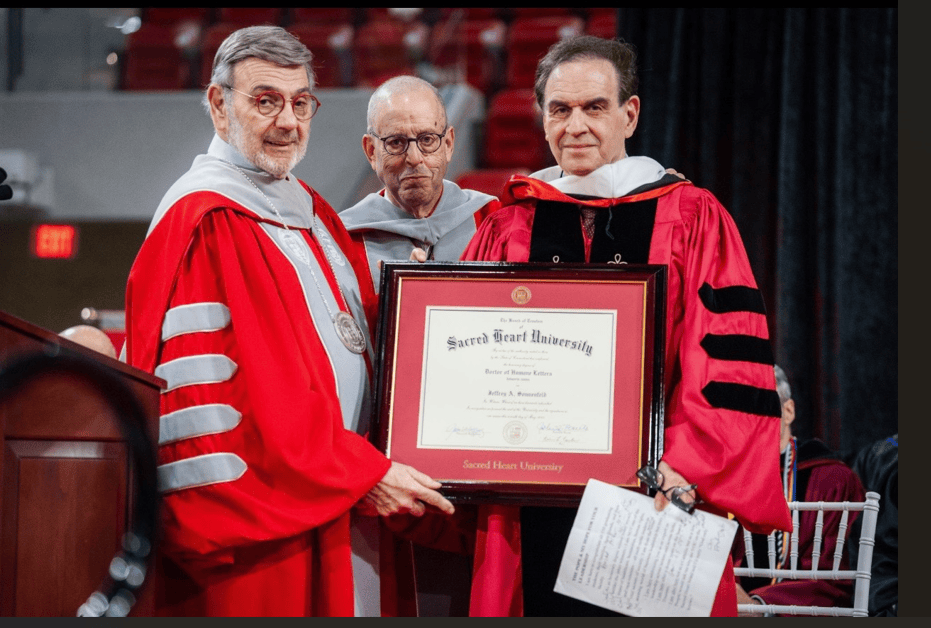
Professor Jeffrey A. Sonnenfeld, a highly regarded academic who serves as senior associate dean at the Yale School of Management, conducted the analysis of all 50 states and said that Connecticut has turned the corner under Russell, who started in January 2023.
“It is breathtaking,” Sonnenfeld told lawmakers in 2024. “We’ve come a very long way. We wouldn’t say mission accomplished just yet, but I wouldn’t have anticipated we would be where we are.”
Sonnenfeld added, “The pension funds are clearly moving in the right direction. … There’s still more that needs to be done, though.”
Regarding the constant turnover, the most extreme case came in 2018 under then-Treasurer Denise Nappier when the new chief investment officer, Sean Crawford, quit after only 10 days. Crawford had been hailed before his hiring as a top investment manager for the previous 21 years on Wall Street who was well prepared for the position that paid $325,000 per year at the time.
Nappier said only that it was “an unfortunate situation,” and she wished Crawford “the very best in his future plans.”
A replacement was hired but eventually left the treasurer’s office less than three years later.
Series of funds
While officials often make reference to the pension fund, there are actually six different pension funds and 13 trusts that cover about 240,000 state and municipal employees, teachers, retirees, and survivors, according to the treasurer’s office. State employees, teachers, and judges, for example, all have separate pension funds.
Yale researcher Steven Tian, who works with Sonnenfeld, said in 2024 that the pension funds could have been much larger if they had been managed properly. A traditional index fund, which is routinely used by individual investors, often outperformed the state’s well-paid managers.
“Connecticut missed the bull run in stocks,” Tian said, referring to the pre-2024 period. “We just totally missed it. … Connecticut would have had many billions of dollars more. … Connecticut had the habit of doubling down on a bad bet. … That’s the irony that the public employees and teachers would have done better on their own.”
Since then, the fund had three gains above 10% in the past three years, with the highest at 15% in the just-completed fiscal year.
Largest pension over $400,000
As the stock market has soared, state statistics show that hundreds of retired state employees are collecting six-figure pensions, with the number growing each year with cost-of-living increases.
The top five retired state employees are currently receiving more than $300,000 each in annual pensions. The statistics also show that, with cost-of-living increases ranging from 2.5% to 6% every year, the payments have been increasing at a steady pace, for them and for thousands of other retirees.
For the first time in state history, a state employee is now receiving an annual pension of more than $400,000 per year.
That total goes to John F. Veiga, a former University of Connecticut business professor whose pension has been increasing steadily with COLA increases. State records show that Viega received nearly $382,000 during the 2023 calendar year and another $193,000 for the first half of 2024. The COLA eventually pushed his total in 2025 beyond $400,000.
Veiga served as chairman of the management department at UConn’s school of business for 26 years and spent a total of 37 years teaching at UConn.
The second-highest pensioner is Dr. Jack N. Blechner at $364,000 per year. He is a former professor at the UConn Health center in Farmington and the former chairman of the department of obstetrics and gynecology.
Unlike many workers in the private sector, state retirees are not paid at a fixed rate for the rest of their lives; annual COLA increases have a major impact on the payments. Blechner, for example, received more than $157,000 more in 2024 than he did 19 years ago in 2005.
The pensioners above $300,000 per year include Dr. Edward A. Blanchette, the former clinical director at the Department of Correction; longtime UConn psychology professor Jeffrey D. Fisher; and former UConn president Harry J. Hartley. Richard L. Judd, the former president of Central Connecticut State University in New Britain who died this year on July 15 at the age of 89, received more than $300,000 in 2025.
Hartley previously defended his pension in an interview with The Courant, saying that he was opposed to any changes to eliminate the annual cost-of-living increases that increase the pensions.
“No, no, no,’’ Hartley said by telephone from his retirement home. “Remember, I’m the former president of the union, the AAUP. Those kinds of threats from right field caused people to join unions.’’
Hartley blamed the state legislature for failing to adequately provide funding for the pensions in the past.
“The problem wasn’t the pensions,’’ Hartley said. “The problem was they didn’t fund them properly.”
When asked for his view of his pension, Hartley responded that it is “well deserved.”
Looking ahead, Russell said he is working to create long-term results for state employees and teachers.
“What is most important about these results is we’re not short-term investors,” Russell said. “We’re not thinking about this as trying to time the market. We’re not day traders. What we are doing is building something that is set up to last.”