See what changed in the new Fed statement
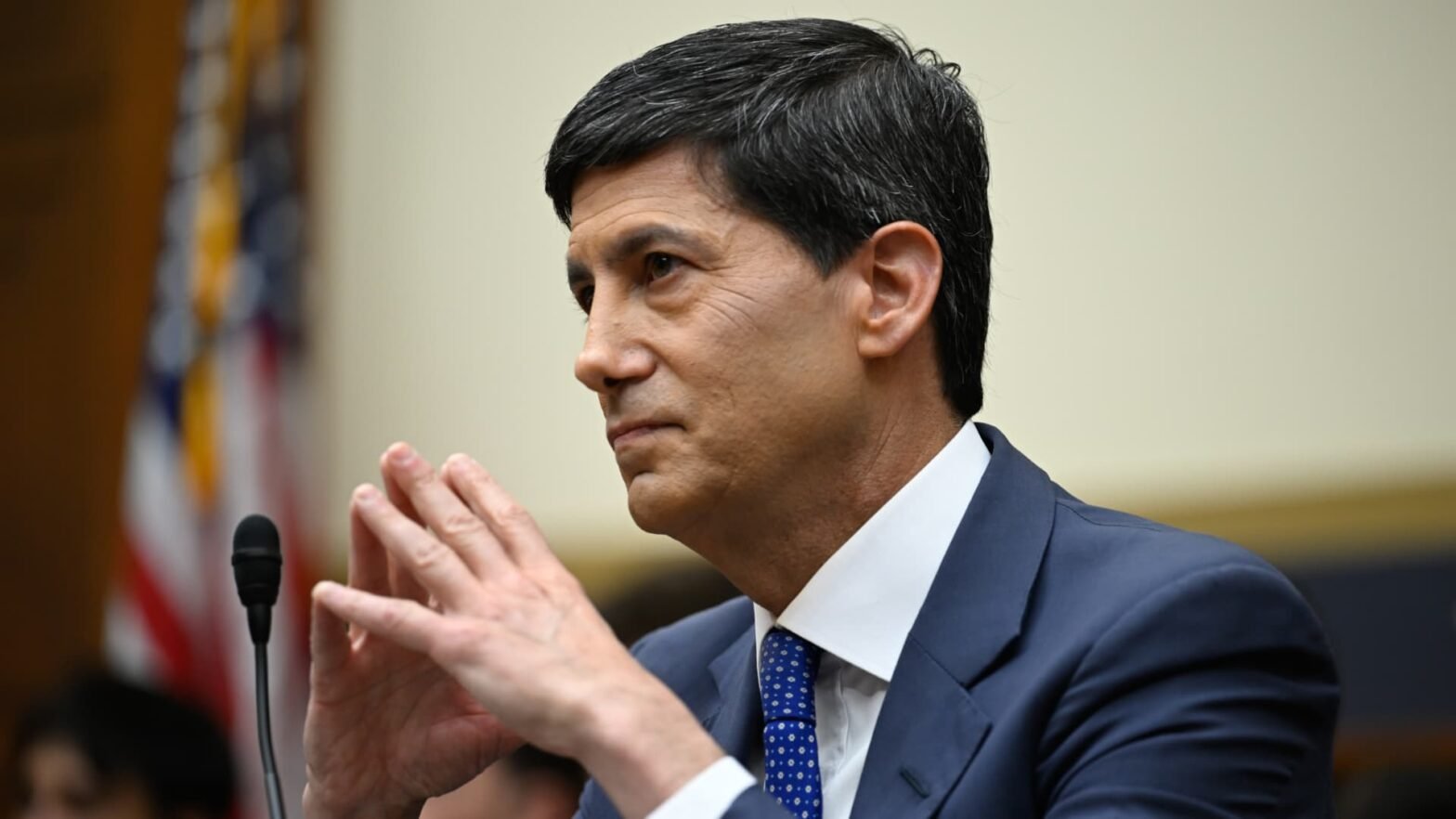
The Fed released its second meeting statement under Chairman Kevin Warsh.
Investors and economists were closely watching to see if the Fed would stray once again from a largely formulaic structure under former Chair Jerome Powell. While Wednesday’s release looks similar to the one released a month prior, it’s still much shorter than those published with Powell at the helm.
Click here to see what changed.
— Alex Harring
Fed keeps rates unchanged: Where consumer borrowing costs go from here
A television displays the Federal Reserve decision to leave interest rates unchanged as a trader works on the floor of the New York Stock Exchange (NYSE) in New York, US, on Wednesday, July 29, 2026.
Michael Nagle | Bloomberg | Getty Images
The Fed’s benchmark rate influences a wide range of consumer borrowing and savings costs, including mortgages, credit cards, car loans and deposit rates.
While shorter-term rates are closely pegged to the prime rate, longer-term rates are more dependent on inflation expectations and other economic factors.
For example, 15- and 30-year fixed mortgage rates don’t directly track the Fed’s benchmark rate but also follow the lead of long-term Treasury rates. With renewed tensions between the U.S. and Iran, mortgage rates have already moved near a one-year high.
By contrast, most credit cards carry variable interest rates, which are tied more directly to the Fed’s benchmark. But with that rate holding steady, credit card APRs are also likely to remain elevated.
— Jessica Dickler
A hike in September is ‘finely balanced,’ says Goldman Sachs Asset Management
The Fed appears to be running out of patience with above-target inflation, said Kay Haigh, global head and CIO of fixed income and liquidity solutions at Goldman Sachs Asset Management.
“The committee’s growing hawkish sentiment, shown by the three dissents against today’s hold, has also likely been exacerbated by the recent flare up in hostilities in the Middle East,” he said. “A hike in September is finely balanced, with any further action likely dependent on a combination of developments in the Middle East and the next two CPI prints.”
— Michelle Fox
Fed keeps rates steady, but three members dissented
Stocks are down heading into decision
Hassett: Expect Warsh to ‘do the right thing’; Latest CPI proves Fed can control inflation
Director of the National Economic Council Kevin Hassett speaks to reporters outside of the West Wing of the White House in Washington, DC, Feb. 25, 2026.
Saul Loeb | AFP | Getty Images
National Economic Council Director Kevin Hassett expressed sky-high confidence in Warsh, telling CNBC his stewardship of the central bank is “already a home run” and “we trust his judgment.”
“We expect him to do the right thing, which is be an independent Fed that looks at the data, looks at the best models, and then makes the best judgment that he can,” Hassett said.
Hassett did not say whether “the right thing” also involves making any particular decision regarding interest rates. But the NEC director added that the latest consumer price index reading, which showed a pullback in inflation, suggests that the Fed has inflation under control.
“I think that anyone who looks at the latest CPI would have to say, you’ve got to be really bullish on the Fed’s ability to control inflation,” Hassett said, “because basically, they’re working in tandem with the White House to lower costs for everybody.”
— Kevin Breuninger
Oil price jumps bolster inflationary concerns for Fed
This month’s climb in oil prices as fighting between the U.S. and Iran revved back up is a top-of-mind issue for consumers and economists heading into the Fed decision.
Brent crude jumped more than 15% month to date in July as of Tuesday’s settle, putting the global oil benchmark on pace to snap a three-month negative streak. Brent has climbed more than 38% in 2026 as the Middle East conflict severely restricted transit in the Strait of Hormuz passageway.
An average gallon of unleaded gas in the U.S. hit $4.09 on Wednesday, according to AAA. That’s up roughly 6% from a month ago and 30% from the same day in 2025.

Brent, 1-month
— Alex Harring
The Fed’s plan to restore price stability relies on AI
Fed communication review could impact rate market volatility, UBS says
The task force review of the Fed’s communications could be one of the most consequential and have ramifications for volatility in rates markets, according to UBS.
The bank’s chief investment office said in a Wednesday note that the so-called dot plot release has helped “anchor” expectations in the near term. Meanwhile, having forward guidance has decreased market volatility over the last two decades, the team said.
Warsh announced his intention for task forces looking at several key aspects of Fed operations in June. He said earlier this month that the communication group would include University of Washington professor Peter Fisher and former Bank of England Governor Mervin King.
— Alex Harring
Expect markets to scrutinize Chairman Warsh’s more opaque Fed
A television displays a Kevin Warsh, chairman of the Federal Reserve, press conference as traders work on the floor of the New York Stock Exchange during afternoon trading on June 17, 2026 in New York City.
Michael M. Santiago | Getty Images News | Getty Images
Sahm expects FOMC statement to point to rate hike ahead
The post-meeting statement is likely to hint at a coming interest rate hike unless there’s more substantial progress on inflation, economist Claudia Sahm said.
Following Chairman Kevin Warsh’s first meeting in June, the Federal Open Market Committee released a statement that was dramatically shorter than what had become the norm. The communique ditched prior boiler-plate language and included a simple declarative sentence that “The Committee will deliver price stability.”
Sahm, the chief economist for New Century Advisors, said she expects this statement to provide stronger clues about where the Fed is heading, despite Warsh’s disdain for forward guidance.
Specifically, she foresees language stating: “Despite recent improvement, inflation is above the Committee’s 2 percent goal, in part reflecting supply shocks from the conflict in the Middle East and tariffs, as well as strong AI-related demand. If inflation remains elevated amid stable labor markets, some policy firming may be warranted soon to deliver price stability.”
Sahm also sees the statement issuing a more confident outlook on the labor market, saying conditions are “broadly consistent with the maximum employment mandate.”
—Jeff Cox
Stocks open lower ahead of decision
Traders work at the New York Stock Exchange
NYSE
Stocks opened lower Wednesday, raising the stakes for the Fed rate decision this afternoon with the Dow losing nearly 400 points. Most of the negative sentiment was because of a spike in oil prices, which came after Trump told Fox News the U.S. would be hitting Iran hard in response to surprise attacks on personnel in the Middle East.
Rates increased with the 10-year Treasury yield inching higher to 4.62%, near its highs for the year. The 2-year yield, which is more sensitive to Fed decisions, was higher by about 3 basis points to 4.3%, also near its highest levels of the year.
Traders are mostly hoping the Warsh Fed will signal that it believes the oil shock from the Iran war is temporary and won’t rush to hike rates this year. Though some believe a single hike could be warranted and have the effect of calming the long-end of the rate curve by showing the central bank is serious about curbing inflation.
JPMorgan predicts how the stock market will react to the rate decision
The best-case scenario for U.S. equities on Wednesday is if the Fed delivers a dovish hold as its interest rate decision.
The bank’s trading desk predicts the S&P 500 would rise between 0.5% to 1% if that scenario unfolds.
JPMorgan’s trading desk, though, sees a hawkish hold as more likely to drag equities down. A hawkish hold would see an inclination toward rate hikes ahead, while the dovish would imply less of a likelihood that the Fed will tighten soon.
A hawkish tilt could lead the S&P to still rise by 0.25% or, conversely, fall by 0.5%. However, the desk notes this is the most likely scenario, where central bank officials indicate rhetorically they’ll keep inflation at bay while maintaining the interest rate status quo.
A hike, though, could lead to a sell-off in the market. While unlikely — CME’s FedWatch tool gives just under a 36% chance of a 25 basis point hike happening — a rise in rates by a quarter point could facilitate a decline in the S&P of between 1.5% and 2%, according to the bank’s analysts.
— Davis Giangiulio
Citadel Securities expects Fed rate hike
Citadel Securities expects a surprise rate hike on Wednesday.
“We think the market may once again be underestimating the extent of the hawkish shift at the Fed, and that the (for now) moderate increase in energy prices may tip an already finely balanced meeting in favor of a hike this week,” said Frank Flight, the firm’s head of macro strategy.
Such a move would “emphatically end the forward guidance era” and underline the central bank’s independence, he said in a note Monday.
“Most importantly, however, a surprise rate hike can meaningfully alter the price-setting and wage-formation process because it demonstrates to firms and workers, through a willingness to accept some cost to economic activity, that the central bank will not tolerate inflation,” Flight added.
— Michelle Fox
Tom Lee sees most likely Fed move as a hold
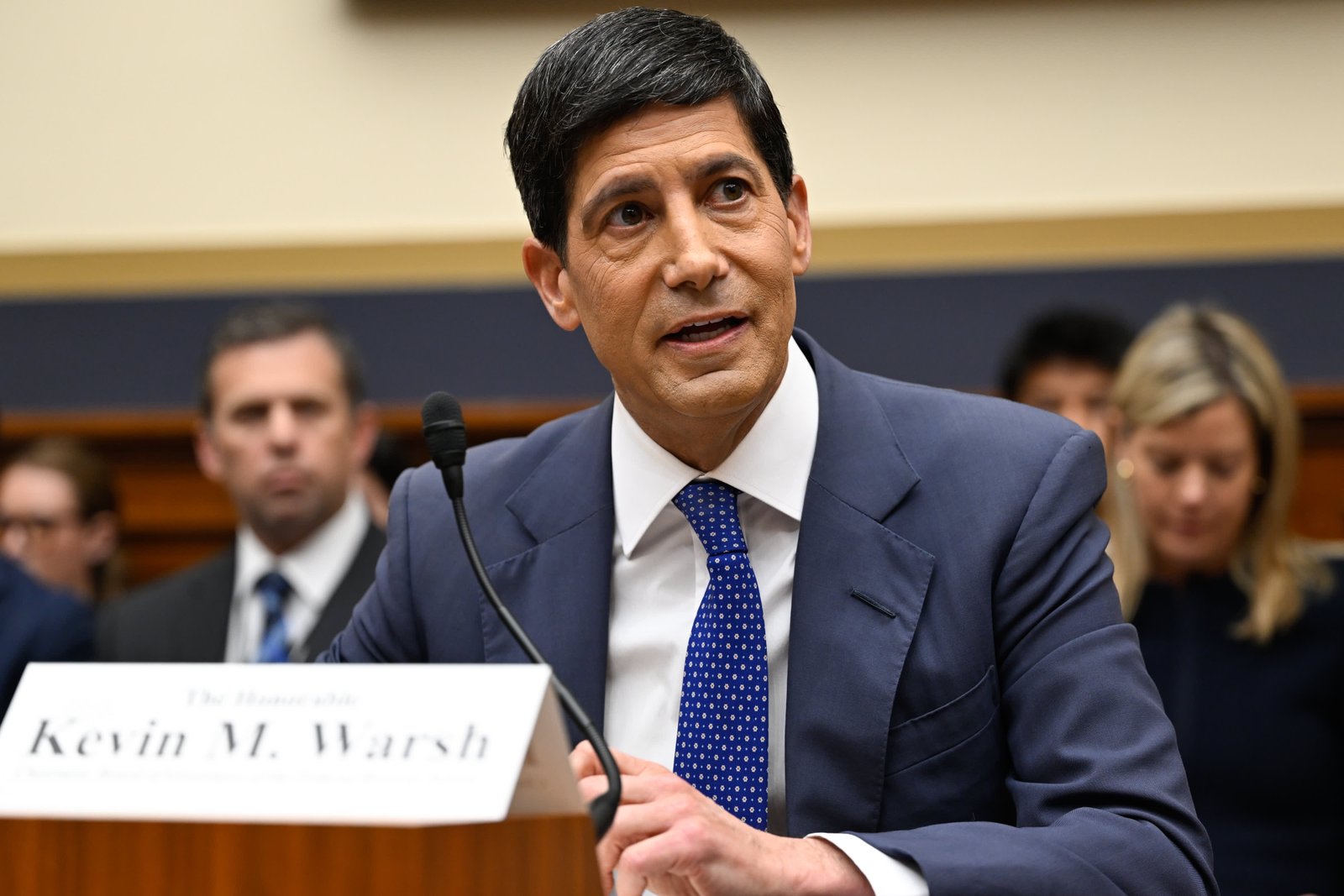
Despite speculation in some quarters that the Fed might try to pull off a surprise hike Wednesday, market strategist Tom Lee doesn’t see it happening, mainly because of recent progress on inflation.
Fundstrat’s head of research said in his daily market note that the composition of the most recent inflation reading shows that shelter and other key components are moderating, giving the Fed leeway to hold rates steady.
“So, we would be surprised that a Fed that values ‘data collection’ would take a somewhat superficial view that inflation pressures remain strong. Granted, inflation is not back at 2% but the tariff effects and higher oil are distorting these results,” he wrote.
Lee did note that it’s possible the Fed could consider further reductions in asset holdings on its balance sheet.
—Jeff Cox
How Wall Street has been adjusting to the Warsh era
Wall Street firms have been preparing for an era with less communication and forecasting expected out of the Warsh-run Fed.
F/m Investments this month rolled out “WarshGPT,” an artificial intelligence-powered bot that helps users understand how Warsh is thinking about topics. UBS sent a note out to clients following his innaugural policy meeting press conference as chair analyzing how relevant his comments were to policy.
— Alex Harring
Former Fed Governor Miran thinks rates should stay on hold
Federal Reserve Governor Stephen Miran speaks with CNBC during the Invest i America Forum on Oct. 15, 2025.
CNBC
While a Federal Reserve Governor, Stephen Miran pushed for lower interest rates. Now, he thinks the central bank at least should stay on hold rather than considering hiking.
In a CNBC interview, Miran said policymakers should consider the current spate of inflation as “transitory,” a view that got the Fed in trouble just a few years ago. However, he said this round is driven more by temporary effects from the Iran war, as evidenced by negative monthly inflation readings in June when oil prices fell.
“The Fed should stay on hold based on this, but also based on everything else that’s going on in the economy,” said Miran, who served on the Fed from September 2025 to May 2026.
“We had a marginally negative core [consumer price index] month-on-month print, so I don’t know what type of reaction function would say in June I thought it was appropriate to hold rates steady, but then I had a negative core CPI print, and that’s what pushed me over the edge to think I have to hike,” he added.
—Jeff Cox