The Consumer Price Index (CPI) is the most widely followed measure of inflation. It came in at an annualized rate of 3.8% in April — nearly twice the U.S. Federal Reserve’s target of 2% — as elevated oil prices drive up the cost of every product that travels by truck, boat, and plane.
The Fed was aggressively hiking interest rates last time the CPI was this high in 2023, which was a key reason why the S&P 500 (^GSPC 1.16%) stock market index plunged into bear territory. Considering the S&P is currently in one of the strongest bull markets investors have ever seen, the CPI has become one of the most important data points on the economic calendar.
The Bureau of Labor Statistics will release the May CPI report at 8:30 a.m. ET on June 10, and here’s why it could heavily influence the direction of the stock market.

Image source: Getty Images.
Oil prices remain stubbornly high
The ongoing geopolitical conflict between the U.S. and Iran is causing disruptions in the Strait of Hormuz, a critical waterway through which 25% of the world’s seaborne oil transits each day. Iran is restricting the passage of commercial oil tankers to gain leverage in peace negotiations, so a single barrel of West Texas Intermediate crude is now 62% higher than it was at the start of 2026.
Rising energy prices were the primary reason for the concerning CPI number in April, but there are signs inflation could get even worse. The Producer Price Index (PPI), which measures the change in input costs for businesses, soared to an annualized rate of 6% in the same month, with the energy component alone coming in at an eye-popping 22.7%.
Businesses can be expected to pass at least some of those rising costs on to consumers, which means the May CPI report on June 10 could bring a nasty upside surprise.
The Fed has cut interest rates six times since September 2024, after bringing the last inflation spike from 2022 under control. But according to the CME Group‘s FedWatch tool, which forecasts interest rate moves based on activity in the 30-Day Fed Funds futures market, Wall Street expects at least one interest rate hike before the end of 2026. However, there could be more if the CPI continues to trend higher.

Today’s Change
Current Price
Rising interest rates could upend this bull market
Rising interest rates are a headwind for corporate earnings for a few reasons. First, they force consumers to allocate more of their household budgets to debt repayments, leaving them with less money to spend on goods and services. Second, higher rates increase the cost of debt for businesses, dealing a direct blow to their bottom line. Third, businesses can’t borrow as much money to fuel their growth because higher rates reduce their ability to service larger loans.
Earnings drive stock prices over the long term, which is why the S&P 500 plunged by more than 20% when the Fed increased the federal funds rate (overnight interest rate) from 0.1% to 5.3% between March 2022 and August 2023. The index promptly recovered, but it delivered practically no return overall during that period.
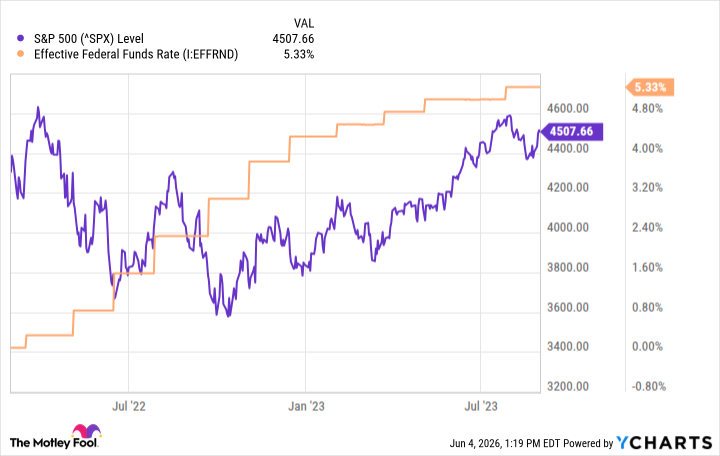
Data by YCharts.
The federal funds rate is starting from a much higher base of 3.6% this time around, so the Fed probably can’t hike as aggressively as it did during the last cycle. Therefore, the impact on the stock market might be much smaller — but there’s a catch. The S&P 500 is currently trading at a cyclically adjusted price-to-earnings (CAPE) ratio of 39.6, the second-highest valuation in its history, behind only the dot-com internet bubble in 2000. This could make the index ultra-sensitive to any potential headwind to corporate earnings.
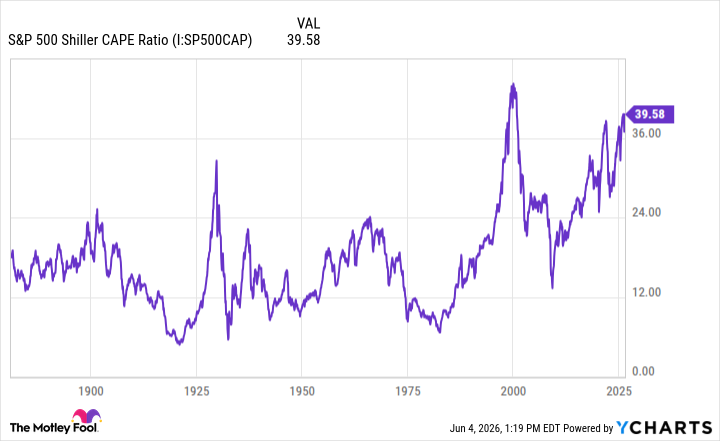
Data by YCharts.
But here’s the good news: Even if interest rates rise and spark a sell-off in the S&P 500, I would expect the index to eventually recover and set new highs just like it did after 2023. Therefore, rather than reacting to economic data such as the upcoming CPI report by selling stocks, investors should be on the lookout for long-term opportunities.