A version of this article was originally published on TKer.co.
Words and phrases can help us communicate with each other quickly and efficiently.
But for some important matters, a single word or phrase can be a little too imprecise and ambiguous, leading some to make incorrect assumptions about what’s being said.
This can be a big problem when discussing the markets and the economy, where language sometimes has multiple meanings.
There’s also the fact that people often leave out the time frame when they’re talking about markets, which is why short-term traders and long-term investors often sound in conflict when they might actually agree.
Let’s discuss some of these words and phrases.
“The economy”
Some people say the economy is doing well. Some say it’s doing poorly.
But what economy are they talking about?
There’s the economy as measured by gross domestic product (GDP), which aggregates a bunch of financial measures of activity, like personal consumption, investment, government spending, and international trade.
There’s also the National Bureau of Economic Research’s (NBER) definition, which includes non-financial metrics like employment gains.
Some say the economy goes into recession when GDP growth is negative for two consecutive quarters. But officially, it’s not a recession until the NBER determines we’ve had a “significant decline in economic activity that is spread across the economy and that lasts more than a few months.”
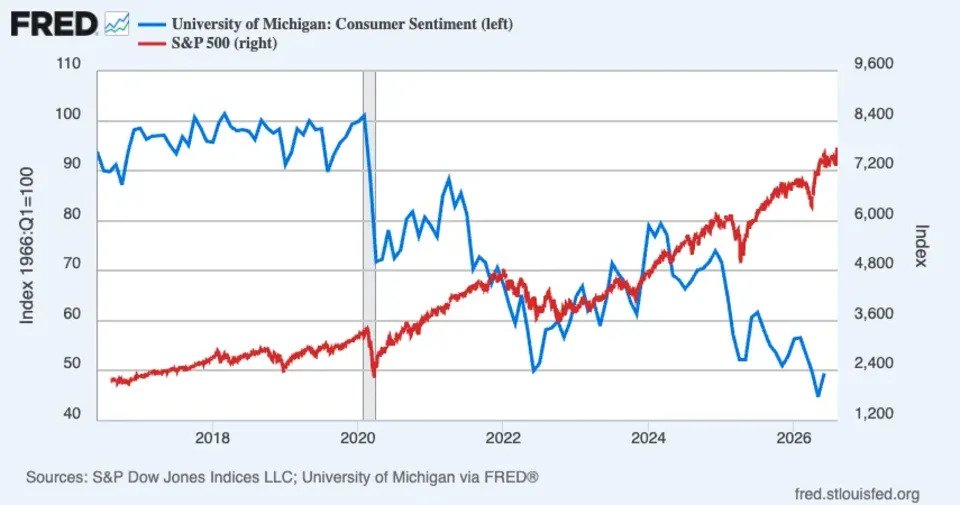
Many people will tell you neither of those definitions is sufficient. Just because you have a job and you’re buying stuff doesn’t mean you feel particularly good about the economy. Maybe you hate your job more than ever. Or despite all your spending, maybe you’re actually falling short of your hopes and dreams. Surveys of confidence and sentiment show people feel unusually crummy about their present situation and prospects despite GDP at record highs and unemployment at historic lows.
And then there’s the stock market, which appears to reflect ebullience, with prices near all-time highs. That’s because stocks are driven by corporate earnings, which is to say the economy matters to the stock market to the extent it’s fueling earnings growth. The stock market doesn’t care how poorly you feel about the economy as long as profits are going up.
Also, don’t get me started on how politicians will spin the definition of the economy in ways to confirm their biased narratives.
“Bullish” and “bearish”
To be bullish means you think a stock or the stock market is going up. To be bearish means the opposite.