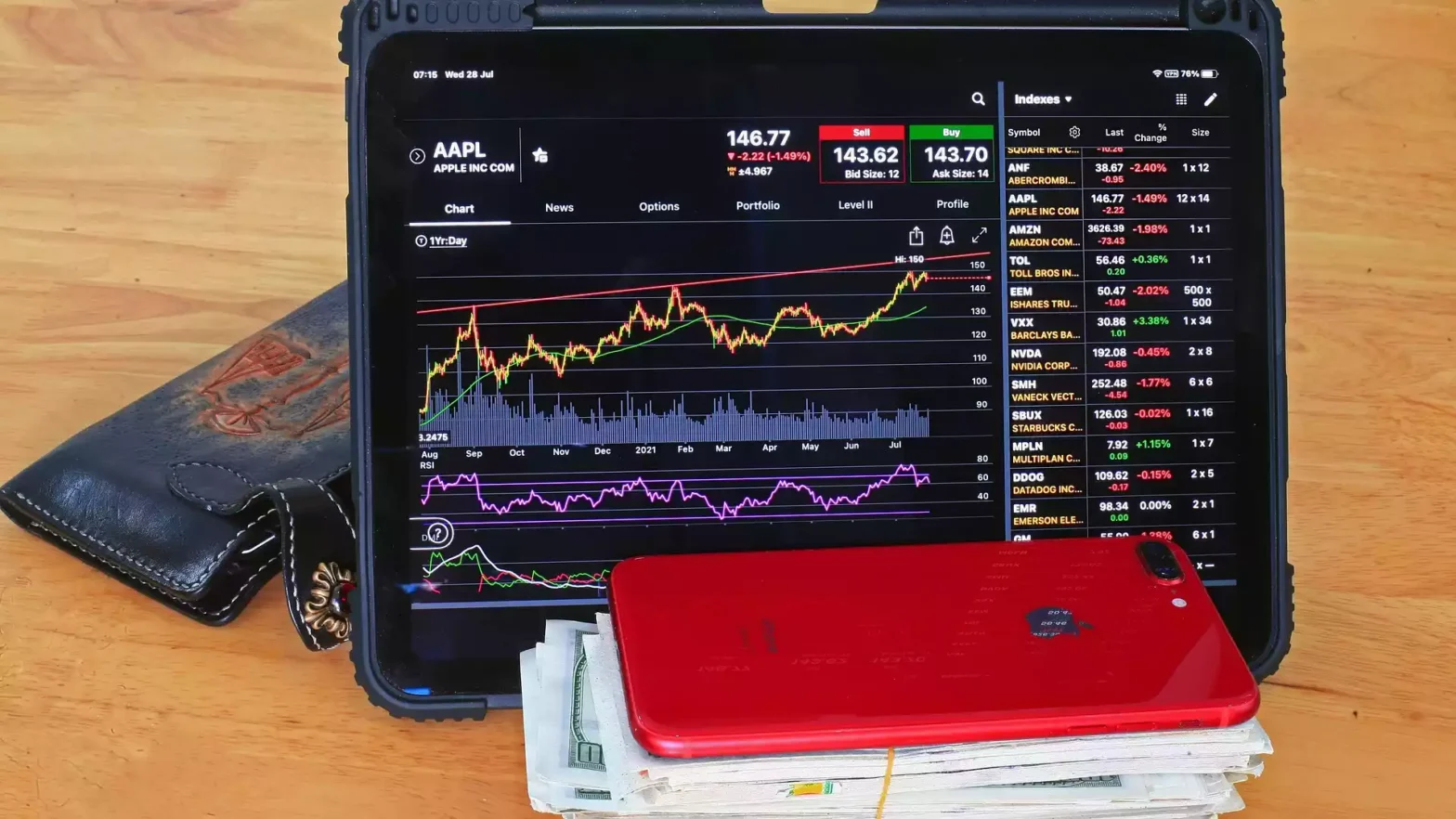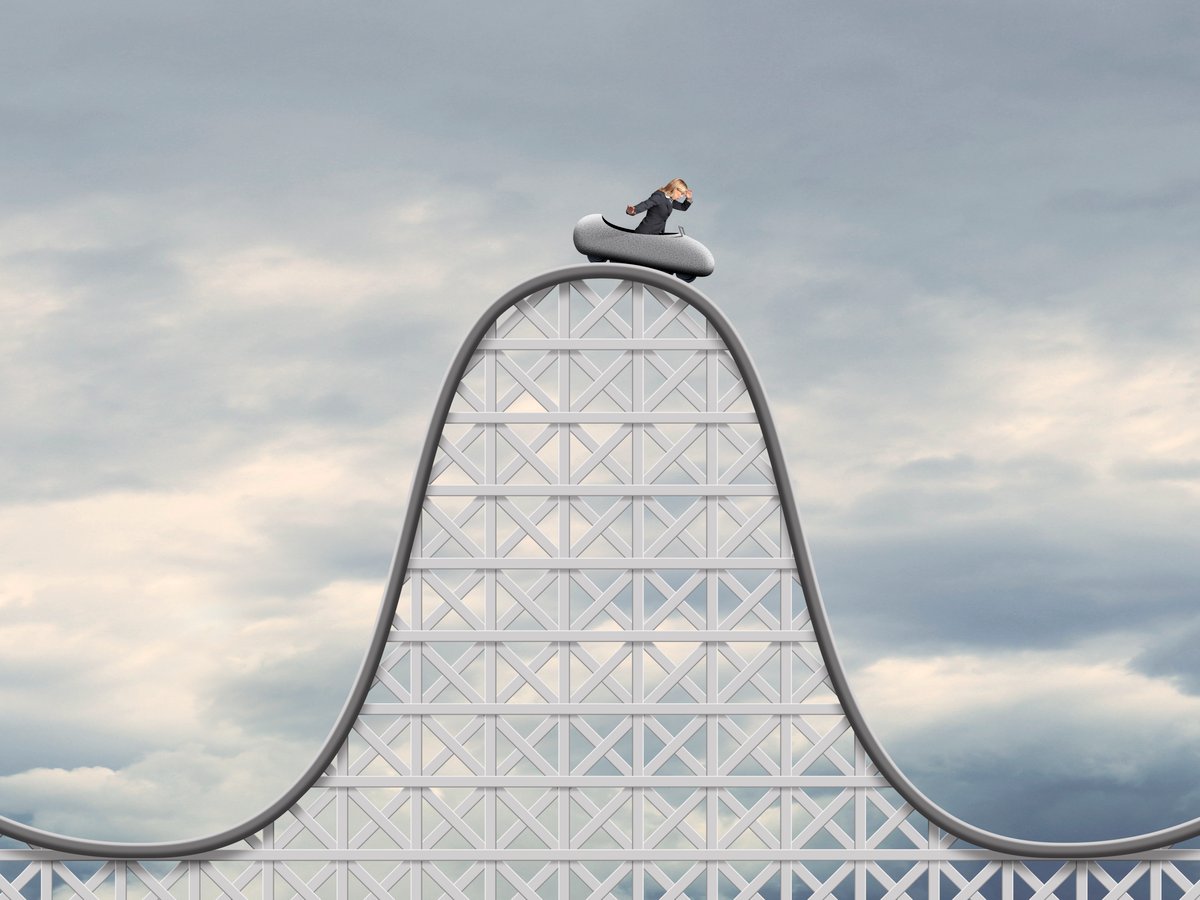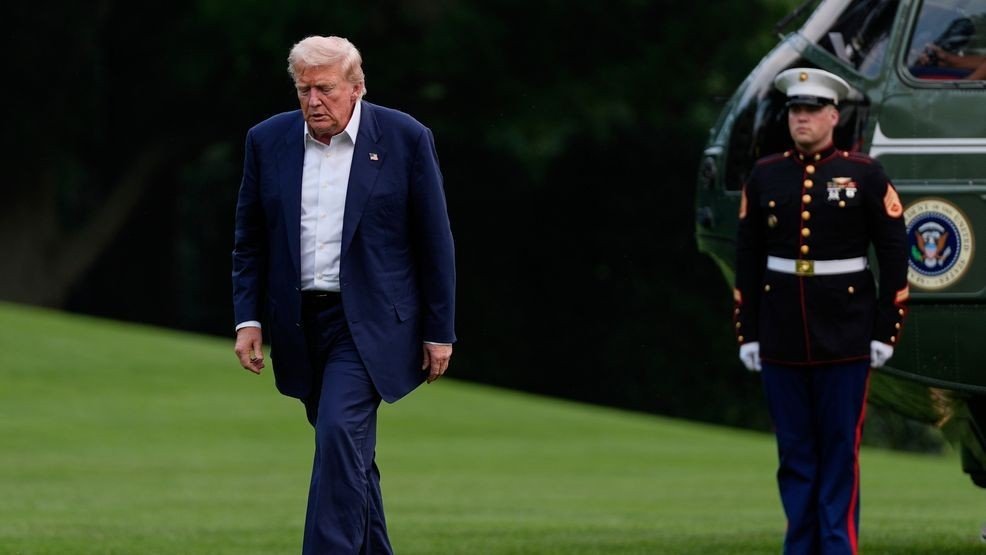
WASHINGTON (TNND) — The stock market is still thumping and hitting record highs despite a White House tariff barrage threatening to remake the entire global economic system. Traders are pricing into their investments all of Trump’s ever-changing trade moves while they focus specifically on what happens in China.
Both the S&P 500 and the Nasdaq are still hitting a string of highs. The former represents the largest companies in the U.S., and the latter contains many of the country’s most valuable technology firms. They are making these moves even as the White House promises most countries that the U.S. trades with will pay a 15 percent duty on American imports.
Many economists are worried about the impact of those tariffs, which are expected to go into effect on Friday. Trump has previously paused the tariffs since initially announcing them back in April, so traders are banking on that possibly happening again.
There are other factors.
NO RECESSION — YET
It’s been almost four months since Trump rolled out what he called his “Liberation Day” tariffs, and yet the economy has held up to the pressure. While inflation increased slightly to 2.7 % in June from a year earlier, consumer prices are staying relatively stable and the unemployment rate low.
The labor market shows that the health industry is adding jobs, as are state and local governments. But otherwise, the private sector is mostly flat in terms of job creation. There are alsohundreds of thousands of manufacturing jobs yet to be filled in the U.S., according to the Bureau of Labor Statistics.
One reason for the vacancies is that companies are preferring to maintain staff levels now rather than fire or hire, and employees are happy with where they are for the time being. Reports indicate economic uncertainty is playing a part in their decision making.
Even so, a new report from the Commerce Department shows economic growth rebounded more than what was expected in the second quarter. Still, the report shows signs of a slowdown, as imports declined substantially. Consumer spending grew at a 1.4% while business investment declined in the second quarter.
The picture is not pretty, an own goal by U.S. policymakers,” Freya Beamish, chief economist at TS Lombard, told Reuters. “An economy that was purring along, defying expectations of a slowdown, has been placed on hold.”
LOWERED EXPECTATIONS
Trump has also lowered traders’ expectations for what tariffs might look like during his second term. Back in April, when Trump’s tariff barrage began, tariffs on China-made products were set at a whopping 104%.
Other Asian nations were also hit hard, with Cambodia facing a tax rate at 49% and Vietnam at 46%, according to Nationwide Chief Economist Kathy Bostjancic. Trump later announced a 90-day pause on his reciprocal import taxes after the stock market plunged.
Stocks rebounded after he pulled back. Despite stepping down on some of his steeper tariffs, Trump left in place the baseline 10% duties on just about everything the U.S. imported, while imposing other more on some items such as steel and aluminum.
Trump has announced and then backed off multiple times in the past few months. So much so investors have taken to calling the policy Trump’s “TACO trade” — short for “Trump Always Chickens Out.” The phrase was coined and made popular by the Financial Times.
But the gyrations have had an effect. When he announced a trade deal with Japan last week that imposed a 15% tariff on imports from Asia’s second-largest economy, the stock market actually went up, not down. It’s lower than the 25% he had first announced.
In 2024, a rate that high would have been nearly unthinkable.
Some analysts have compared this technique to a car salesman pricing a vehicle at a very high level, expecting to eventually sell at a price point above the market value but still lower than the initial asking price.
CORPORATE PROFITS HIGH
Most major companies are still reporting high profits.
The parent company to Google — Alphabet — and other large tech companies are beating Wall Street expectations despite the on-again-off-again tariffs. They are also sounding more optimistic about their economic outlook.
Mega-cap technology firm Apple also reported record results in the second quarter in 2025. The company’s revenue rose 5% year-over-year to $95.4 billion despite pressure coming from Trump’s trade policies.
Likewise, Disney posted a 7% revenue increase, as the House of Mouse’s streaming and parks rake in money. While many Americans are not feeling great about where the economy is going, they are still spending, which is helping to boost companies’ bottom line.
We may feel bad. We may feel concerned, but the hard data would suggest our behavior is something else entirely,” Amanda Agati, the chief investment officer for PNC Asset Management Group in Philadelphia, told NPR this week.
GOING BIG ON MERGERS
Stock valuations often spike when large firms successfully merge. Trump’s original appeal for some was his populist support for a more aggressive posture on antitrust. But recent reports have raised eyebrows about the degree to which his administration is focused on that goal.
The Justice Department’s antitrust division is allowing a merger between Hewlett Packard Enterprise and the company’s rival — Juniper Networks. A recent Axios report states the decision was based on national security concerns related to competition with China’s Huawei Technologies.
But reports show there has been a significant amount of lobbying from business groups to derail the case against Hewlett Packard. Earlier this week, two aggressive antitrust enforcers at the DOJ were fired for reportedly being insubordinate regarding their work.
Several Democratic senators are now asking a judge to investigate whether there was corruption involved in the matter. The DOJ and Federal Trade Commission are likely to deal with several other merger deals in the next several months.
Like rail giant Union Pacific, which is considering buying Norfolk Southern in an $85 billion mega-merger. There is also oil giant Chevron. It’s closing a deal with Hess as both mammoth fuel companies work to consolidate more of the oil sector.
There are also antitrust cases pending against Apple, Amazon, Google, Ticketmaster, Meta, RealPage, and John Deere.
RISKS STILL REMAIN
While Trump has hammered out a handful of trade deals with Japan and the European Union, there are still larger agreements still to negotiate. Mexico, Canada and China for example are three of the U.S.’s largest trading partners, and they also represent a big cog in the global economy.
And there’s also the possible long-term impact from the average tariff rate, which is higher than it’s been since before the Great Depression. Analysts believe import costs will likely accelerate in the next few months or years and have an oversized impact on economic growth and inflation.
Federal Reserve Chairman Jerome Powell is keeping interest rates pat for the time being, partially over concerns that an inflation bomb is simply slow to materialize.
We know from surveys that companies feel they have every intention of putting this through to the consumer,” Powell told reporters Wednesday after policy makers put off altering their monetary policy.
Powell and other Fed officials worry fueling demand could give industries a runway to pass costs over to Americans.