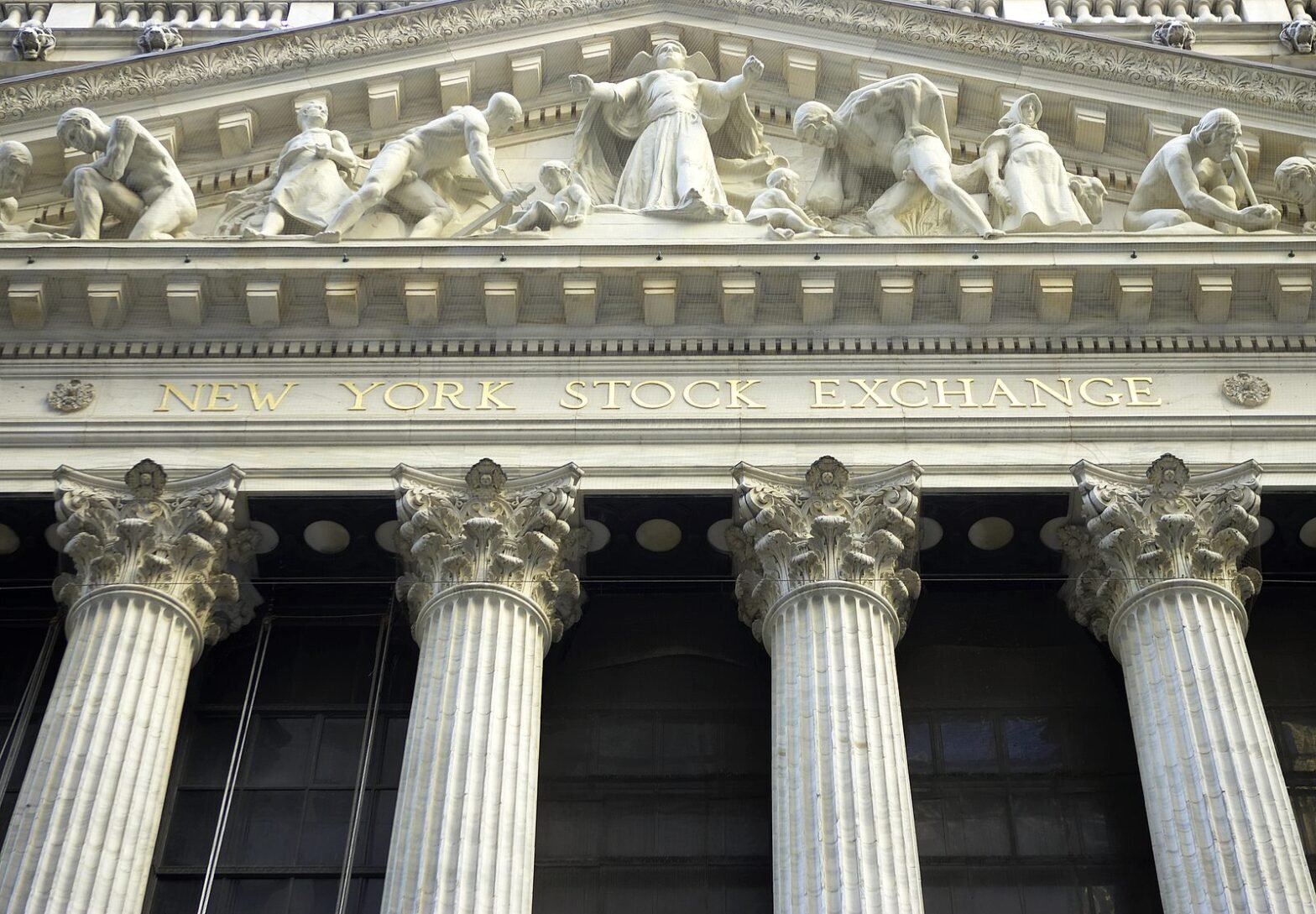
NEW YORK – September 24, 2026 (STL.News) U.S. stocks ended a volatile Thursday session nearly unchanged as investors weighed sharply higher oil prices, rising Treasury yields and expectations for additional Federal Reserve tightening against reports of discussions that could provide a path toward reducing the U.S.-Iran conflict.
The S&P 500 slipped 1.90 points, or 0.02%, to close at 7,704.13. The Dow Jones Industrial Average fell 161.61 points, or 0.31%, to 51,349.98.
The Nasdaq Composite managed a fractional gain, rising 3.34 points, or 0.01%, to 26,939.37.
Small-cap stocks also finished slightly lower. The Russell 2000 declined 3.09 points, or about 0.11%, to 2,835.57.
Those modest closing changes masked a turbulent trading session in which stocks moved between gains and losses as developments involving Iran, crude oil, Treasury yields and Federal Reserve policy competed for investors’ attention.
Major U.S. indexes at the close
The major indexes finished Thursday as follows:
- S&P 500: 7,704.13, down 1.90 points, or 0.02%
- Dow Jones Industrial Average: 51,349.98, down 161.61 points, or 0.31%
- Nasdaq Composite: 26,939.37, up 3.34 points, or 0.01%
- Russell 2000: 2,835.57, down 3.09 points, or about 0.11%
The Dow’s decline marked its third consecutive losing session.
The market’s nearly unchanged finish did not accurately convey the weakness beneath the major indexes. Eight of the S&P 500’s 11 sectors finished lower, while declining S&P 500 stocks outnumbered advancing stocks by approximately 1.9 to 1.
Materials led the sector declines, falling about 1.18%, while consumer staples dropped approximately 0.96%.
Oil prices jump on Middle East concerns
Crude oil was one of Thursday’s most important market drivers.
Brent crude futures settled at $106.60 a barrel, up $3.52, or 3.4%.
U.S. West Texas Intermediate crude settled at $94.61 a barrel, gaining $2.45, or 2.7%.
Both benchmarks rose about 5% to session highs before retreating.
The increase followed a Houthi missile attack on Saudi Arabia that renewed concerns about potential disruptions to global oil supplies.
Oil prices later retreated from their session highs following reports that U.S. and Iranian negotiators were discussing a possible phased approach that could include reopening the Strait of Hormuz.
The combination of geopolitical uncertainty and already elevated energy prices has become increasingly important for financial markets because higher oil prices can add to inflation pressures.
That, in turn, can influence expectations for Federal Reserve monetary policy and push Treasury yields higher.
Treasury yields add pressure to stocks
The bond market was another major source of pressure Thursday.
Official U.S. Treasury daily yield-curve data showed the 10-year Treasury rate at 5.18% on Sept. 24, compared with 5.11% on Sept. 23.
The 30-year Treasury rate reached 5.53%, up from 5.45% the previous day.
The 30-year rate was at levels not seen since 2004, while the 10-year yield was around levels last seen in 2007.
The rise in Treasury yields matters for stocks for several reasons.
Higher government bond yields provide investors with greater potential returns from assets generally considered less risky than equities. Higher market rates also increase borrowing costs for companies and consumers.
They can additionally place pressure on stock valuations, particularly those of growth-oriented companies whose valuations depend heavily on expectations for earnings well into the future.
The pressure from higher yields has become increasingly important as the S&P 500 trades near historically elevated levels.
Fed officials signal additional tightening may be needed
Federal Reserve policy added another layer of uncertainty Thursday.
Philadelphia Federal Reserve President Anna Paulson said inflation remained “stubbornly elevated” and indicated that additional monetary tightening could be necessary.
Paulson said that if economic conditions evolve as she expects, “some modest further tightening may be warranted.”
Her comments followed the Federal Reserve’s decision last week to increase its benchmark federal funds rate by 25 basis points to a target range of 3.75% to 4.00%.
New York Federal Reserve President John Williams also said Thursday that another rate increase before the end of 2026 would be reasonable, while emphasizing that policymakers will continue evaluating incoming economic data.
Market expectations consequently remained focused on the possibility of another rate increase at the Fed’s next meeting.
The combination of higher oil prices, persistent inflation and relatively resilient economic data has strengthened expectations that monetary policy could remain restrictive.
Economic data show continued resilience
Thursday’s economic reports provided additional evidence that parts of the U.S. economy remain resilient.
Initial unemployment claims fell to 197,000 for the week ended Sept. 19 from an upwardly revised 198,000 the previous week.
The four-week moving average declined to 202,250.
New-home sales also exceeded expectations, rising to a seasonally adjusted annual rate of 684,000 in August, up from an upwardly revised 643,000 in July.
The Kansas City Federal Reserve’s monthly manufacturing index increased to 14 in September from 10 in August.
Stronger economic data can boost corporate earnings and economic growth. In the current environment, however, strength can also reinforce expectations that the Federal Reserve has room to maintain restrictive monetary policy while concentrating on inflation.
U.S.-Iran reports trigger market rebound
Geopolitical developments contributed to one of the most important reversals of Thursday’s trading session.
The S&P 500 and Nasdaq recovered from their session lows after Reuters reported that U.S. and Iranian negotiators were exploring a phased path out of the conflict.
According to that report, discussions included the possibility of Tehran reopening the Strait of Hormuz and Washington lifting its economic blockade of Iran.
Those discussions should not be confused with a completed peace agreement.
No final agreement was announced Thursday, and substantial uncertainty remains over whether negotiations will result in a deal or whether any potential agreement could be successfully implemented.
Nevertheless, financial markets responded quickly to the possibility of de-escalation.
The reaction underscored the Strait of Hormuz’s importance to current market conditions.
Developments affecting the waterway can influence expectations for global energy supplies, which can move crude-oil prices. Oil prices can affect inflation expectations, which can influence Treasury yields and Federal Reserve policy.
That relationship has made geopolitical developments unusually important to U.S. financial markets.
Large technology stocks produced mixed results Thursday.
Meta Platforms climbed approximately 4.5%, one day after the company unveiled a small handheld device designed for use with its recently launched artificial-intelligence assistant.
Advanced Micro Devices gained approximately 2.4%.
Microsoft fell about 0.5%, while Broadcom fell about 1.3%.
Nvidia slipped approximately 0.4%.
Mixed performance among major technology companies helped explain why the Nasdaq Composite finished essentially unchanged despite weakness across much of the broader market.
Oracle and MGM suffer sharp declines
Oracle declined about 3.5% after reporting that it sent a force-majeure notice related to a planned New Mexico data-center project.
Blue Owl Capital, whose unit is developing the project, also declined sharply.
MGM Resorts International was another major loser, dropping approximately 11% after People Inc. withdrew its proposal to acquire the casino operator.
Darden Restaurants fell approximately 3% after reporting fiscal first-quarter results. The restaurant company maintained its full-year outlook.
Those company-specific declines contributed to broader weakness that was more significant than the virtually unchanged S&P 500 closing level might initially suggest.
Market breadth shows underlying weakness
Market breadth was clearly negative Thursday.
Declining stocks outnumbered advancing stocks in the S&P 500 by approximately 1.9 to 1.
The S&P 500 recorded 14 new highs and 41 new lows, while the Nasdaq recorded 53 new highs and 238 new lows.
Approximately 16.8 billion shares changed hands on U.S. exchanges, compared with an average of roughly 16.7 billion shares during the previous 20 sessions.
Those figures show that Thursday was not simply an uneventful flat session.
Instead, significant weakness across many individual stocks was offset by strength in selected large-cap companies, allowing the major capitalization-weighted indexes to finish close to unchanged.
Oil, bonds and Iran remain central to markets
Thursday’s trading highlighted an increasingly important relationship among geopolitics, energy markets, inflation and interest rates.
The chain is relatively straightforward.
Escalation in the Middle East can threaten oil supplies and push crude prices higher.
Higher energy prices can increase inflation pressures.
Persistent inflation can increase the likelihood that the Federal Reserve will raise interest rates or keep monetary policy restrictive for longer.
Higher interest-rate expectations can then push Treasury yields upward, raising borrowing costs and creating additional competition for stocks.
Thursday provided evidence of virtually every part of that chain.
Oil prices rose sharply following renewed concerns about Saudi Arabia and regional energy supplies. Treasury yields moved higher. Federal Reserve officials discussed the possibility of additional monetary tightening.
Stocks initially struggled under those pressures.
Then reports of possible progress between the United States and Iran changed market sentiment enough to help the S&P 500 and Nasdaq recover from their session lows.
What investors are watching next
The market now enters Friday’s session with several major variables unresolved.
First is the U.S.-Iran conflict and whether discussions about the Strait of Hormuz develop into substantive negotiations.
The second is oil.
Brent crude settling above $106 a barrel means energy prices remain high enough to command significant attention from investors and Federal Reserve policymakers.
The third is the Treasury market.
The official 10-year Treasury rate at 5.18% and 30-year rate at 5.53% represent borrowing-cost levels substantially higher than those investors became accustomed to during the extended low-interest-rate period following the global financial crisis.
Finally, investors will continue assessing whether incoming inflation and economic data strengthen or weaken the case for another Federal Reserve rate increase.
Thursday’s closing numbers may suggest that little happened on Wall Street.
The trading beneath those numbers tells a different story.
Stocks endured significant volatility, oil prices climbed sharply, Treasury yields moved higher, Federal Reserve officials kept additional tightening on the table, and reports involving the United States and Iran produced a substantial intraday recovery.
The S&P 500 ultimately finished only 0.02% lower.
But the forces currently driving the market — war, oil, inflation and interest rates — remain very much in motion.
Disclaimer: This article is for informational purposes only and does not constitute investment, financial, or trading advice. Market prices can change rapidly, and investors should conduct independent research and consider their individual financial circumstances before making investment decisions.
Read Business News at STL.News