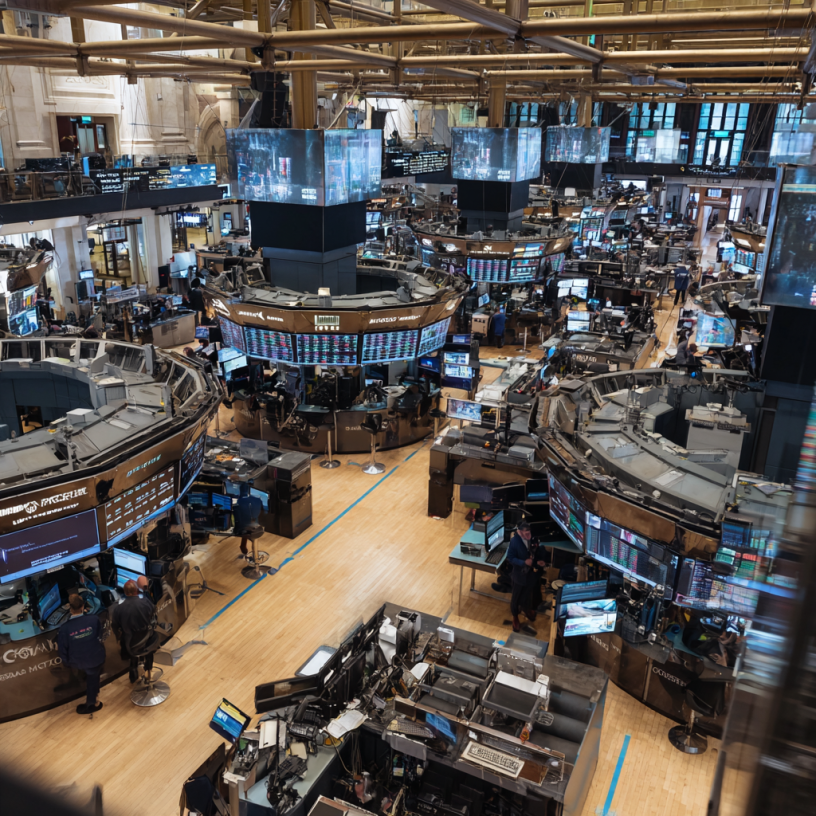
The S&P 500 reached a record high driven by AI enthusiasm, low Treasury yields, and stabilizing interest rate expectations, encouraging broader market optimism.
By William Collins, consultant in stock markets – Eurasia Business News, August 13, 2026. Article no 3084

The S&P 500 closed at a new all-time high on August 13, as investor enthusiasm for artificial intelligence and easing expectations of a near-term Federal Reserve rate hike supported US equities. Lower Treasury yields helped technology stocks outperform, lifting the Nasdaq Composite and pushing the broader market higher.
The S&P 500 gained 0.7%, while the Nasdaq Composite advanced 0.8%. The Dow Jones Industrial Average added 0.1%, reflecting a more selective rally concentrated in technology, semiconductor and AI-related companies.
S&P 500 Reaches New Record
The new S&P 500 record highlights the market’s confidence that US economic growth can remain resilient even as inflation continues to slow. Investors responded positively to the view that the Federal Reserve is becoming less likely to raise interest rates again in the near term.
The rally followed recent inflation data showing that the US Consumer Price Index increased 3.4% year on year in July, down from 3.5% in June. Monthly CPI growth was 0.1%, matching economists’ forecasts.
The slower pace of inflation has encouraged investors to reduce bets on further monetary tightening. Markets increasingly expect the Federal Reserve to hold rates steady at its next meeting, rather than raise borrowing costs again.
That shift is important for equities. Higher interest rates increase corporate financing costs, pressure consumer spending and reduce the present value of future earnings. Conversely, a stable or less restrictive rate outlook can support valuations, especially in growth-oriented sectors.
Nasdaq Gains on AI Enthusiasm
The Nasdaq Composite’s 0.8% gain reflected continuing optimism about artificial intelligence. Investors remain focused on the companies expected to benefit from rising spending on AI chips, cloud computing, data centres, networking equipment, memory products and enterprise software.
The AI trade has expanded beyond a small group of semiconductor designers. Technology hardware companies, data-centre operators, server manufacturers, cloud-service providers and infrastructure suppliers have all attracted stronger investor interest as global companies increase AI-related capital expenditure.
Read also : Tax Management strategies for Digital Nomads
The broader technology rally has also been supported by lower Treasury yields. Growth companies often derive a greater share of their valuation from earnings expected in future years. When yields decline, those future cash flows become more valuable in present-value terms.
The positive market reaction suggests that investors still believe AI investment will generate durable revenue growth. However, high valuations leave technology shares vulnerable to any evidence of slower demand, weaker profitability or rising inflation.
Dow Jones Lags Broader Market
The Dow Jones Industrial Average gained only 0.1%, lagging the S&P 500 and Nasdaq. The Dow’s more modest performance reflects its composition, which includes mature industrial, financial, healthcare, consumer and energy companies rather than a heavy concentration of high-growth technology stocks.
Industrials and banks may benefit from a stable economy, but they are also more exposed to changes in manufacturing activity, consumer demand, loan growth and commodity prices. The narrow Dow gain therefore showed that Thursday’s market rally was not equally broad across all sectors.
Treasury Yields Retreat
US Treasury yields moved lower as investors reassessed the interest-rate outlook. The decline in yields followed the July inflation data and supported risk appetite across equity markets.
A lower yield environment can ease pressure on borrowing costs for businesses and households. It can also improve conditions for real estate, utilities, smaller companies and other interest-rate-sensitive sectors.
However, Treasury yields remain elevated compared with recent years. Investors continue to monitor federal borrowing needs, inflation risks, labour-market data and the Producer Price Index for clues about the Federal Reserve’s next policy move.
Oil Price Falls
Oil prices were slightly lower on August 13. Brent crude traded below $88 per barrel after a six-day rally, as traders saw few new developments in the Iran war likely to change the near-term supply outlook.
West Texas Intermediate crude traded near the low-$80s per barrel. The easing in oil prices modestly reduced inflation concerns, particularly for transport, manufacturing and household fuel costs.
However, oil markets remain exposed to geopolitical risk. Any disruption to production, shipping lanes or regional supply routes could reverse the decline and quickly lift global energy prices.
Gold Price in US Dollars
Gold traded near $4,384 per ounce on August 13, down around 0.55% on the day. The metal traded within an intraday range of approximately $4,363 to $4,450 per ounce.
Read also : Gold : Build Your Wealth and Freedom
Despite the daily decline, gold remained up 3.24% over seven days and 30.96% over one year. Its strength reflects demand for protection against geopolitical uncertainty, currency volatility, fiscal risks and potential inflation surprises.
Market Outlook
The S&P 500’s record close demonstrates the market’s belief that slowing inflation and a stable Federal Reserve could extend the equity rally. AI optimism remains the dominant growth theme, while lower yields provide additional support.
The next test will come from incoming inflation, employment and corporate-earnings data. Continued evidence of moderating price pressures could sustain the rally, while any renewed inflation surprise may challenge the market’s confidence in a prolonged Federal Reserve pause.
Our community already has nearly 300,000 readers!
Subscribe to our Telegram channel
Follow us on Telegram, Facebook and Twitter
© Copyright 2026 – Eurasia Business News. Article no. 3084