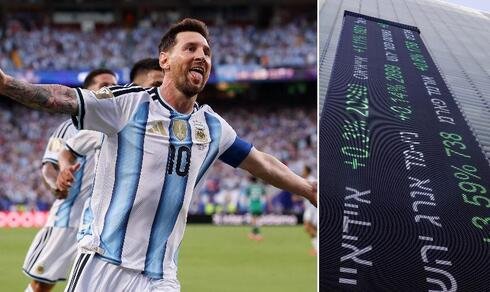
An IBI study found Israeli retail trading activity fell by an average of 21% during the tournament’s biggest matches, reinforcing academic evidence that major sporting events temporarily reshape investor behavior.
The World Cup knockout stage not only boosted television ratings, it also pulled retail investors away from the stock market. According to a study by Israeli investment house IBI, trading activity among private investors fell by an average of 21% during World Cup quarter-final and semi-final matches, which coincided with the final hour of trading on Wall Street, typically one of the busiest periods of the trading day.
The study examined the three World Cup quarter-final and semi-final matches played on trading days between July 9 and July 15, all of which were broadcast from 10:00 p.m. to midnight Israel time. To isolate the impact of the matches, IBI adjusted for differences in overall daily trading volumes and compared activity during the two-hour match window with a control group of 30 comparable trading days that fell on the same weekdays between May and July. The selected period was intended to eliminate seasonal biases in trading patterns, including those related to daylight saving time differences between Israel and the United States.
1 View gallery
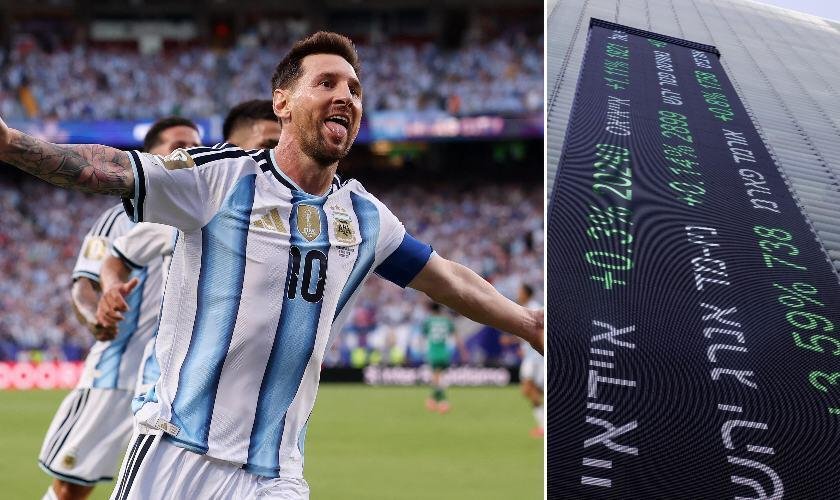
Leo Messi at the World Cup and the Tel Aviv Stock Exchange building
(Charlotte Wilson/Getty Images,Bloomberg)
On a typical trading evening between 10:00 p.m. and 11:00 p.m., roughly 10% of IBI’s retail trading activity takes place during that hour. During the quarter-final between Spain and Belgium and the semi-final between Argentina and England, that figure fell to approximately 7%. During the semi-final between Spain and France, it stood at around 8%.
Overall, retail trading activity declined by between 12% and 26% during the matches, with an average drop of about 21%. The study was conducted by Liron Cherna, a BI developer at IBI.
“When the World Cup is on the screen, the stock market feels it,” IBI said. “With a client base that is predominantly male, the biggest World Cup matches appear to be among the few events capable of pulling Israeli retail traders away from their screens during the final trading hour on Wall Street.”
A survey conducted by Calcalist among competing investment houses suggests the phenomenon is widely recognized across the industry.
“It is well known that independent trading activity declines during the World Cup,” said a source at one investment house. “Traders are focused on something else and get their dose of dopamine from a different source. However, during this tournament the decline was relatively moderate, mainly because the matches were played later in the evening.”
The IBI findings are consistent with a growing body of academic research linking major sporting events to changes in investor behavior.
One of the best-known studies, by Michael Ehrmann and David-Jan Jansen, published in the Journal of Money, Credit and Banking, analyzed trading activity in 15 countries during the 2010 FIFA World Cup in South Africa. It found that during national team matches, the number of trades fell by roughly 45%, while trading volumes declined by between 48% and 55%. Activity dropped even further immediately after goals were scored, suggesting that the most dramatic moments of a match have an instant effect on investor attention.
The researchers also found that during national team matches, the correlation between local stock markets and global markets weakened by more than 20%. In other words, local markets became less responsive to international developments because many investors simply stopped following trading in real time.
A separate study published in 2023 by Philip Drummond in the Journal of Financial Markets, which analyzed 95 matches across 24 countries, reached similar conclusions. It found that trading activity typically increases in the hours leading up to kickoff before dropping significantly once the match begins.