A little-known French semiconductor company has become one of Europe’s biggest artificial intelligence stock market winners in 2026, thanks to a technology few competitors can produce.
Shares in Soitec SA have risen almost sevenfold this year, from about €23 at the start of January to roughly €154 on Monday afternoon in Paris.
Yet the company reported a 34% decline in annual revenue last year.
Now, Bank of America believes the stock could nearly double again.
On Friday, the US bank upgraded Soitec from Neutral to Buy and raised its price target from €152 to €300, implying more than 90% upside.
So what is driving this rally, and how much of it rests on a single product?
Soitec shares have risen almost sevenfold in 2026
The French company behind a critical AI technology
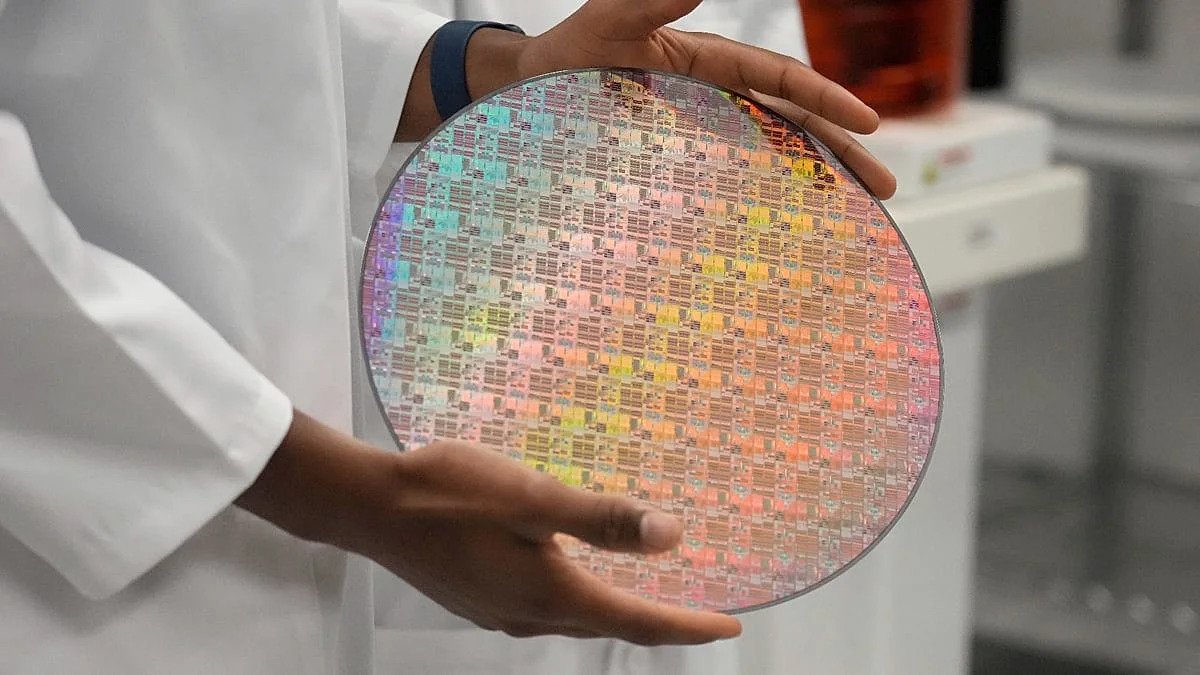
Soitec does not make the processors that train artificial intelligence models. It makes the engineered silicon wafers on which other semiconductor companies build their chips.
Based in Bernin, near Grenoble, the company was spun out of French research institute CEA-Leti in 1992.
It employs more than 2,000 people and holds more than 4,700 patents.
Earlier this month, Euronews journalist Valérie Gauriat visited Soitec’s production facilities for the Made in Europe series.
Inside its clean rooms, silicon wafers undergo dozens of manufacturing stages, allowing the company to manipulate incredibly thin layers of material.
“Our job is to run faster than the competition,” Chief Technology Officer Christophe Maleville told Euronews.
That expertise is becoming increasingly valuable as AI data centres need to transfer enormous amounts of information between processors.
Silicon photonics offers a faster, more energy-efficient alternative to traditional copper connections by using light instead of electrical signals.
Soitec supplies the specialised silicon wafers used to manufacture these optical chips, giving it a critical role in the expanding AI infrastructure market.
Why Bank of America sees a near monopoly in AI photonics
“We estimate that Soitec currently holds ~95% market share in supplying Photonics-SOI wafers,” Bank of America analyst Oliver Wong and his colleagues said.
Rivals, including Taiwan’s GlobalWafers, are attempting to enter the market.
However, the bank expects Soitec’s technological expertise and decades of manufacturing experience to protect its dominant position.
That advantage could become increasingly valuable as AI data centres grow larger and require more optical connections between processors.
Bank of America estimates that the total wafer area required for photonic chips will expand by approximately 60% annually between 2026 and 2030.