Synopsis
The Federal Reserve’s latest report identifies the Iran conflict and resulting oil price shock as the primary threats to financial stability, surpassing other macroeconomic risks. Concerns are high that prolonged geopolitical tensions could reignite inflation and slow global economic growth, potentially forcing tighter monetary policy.
 ETMarkets.com
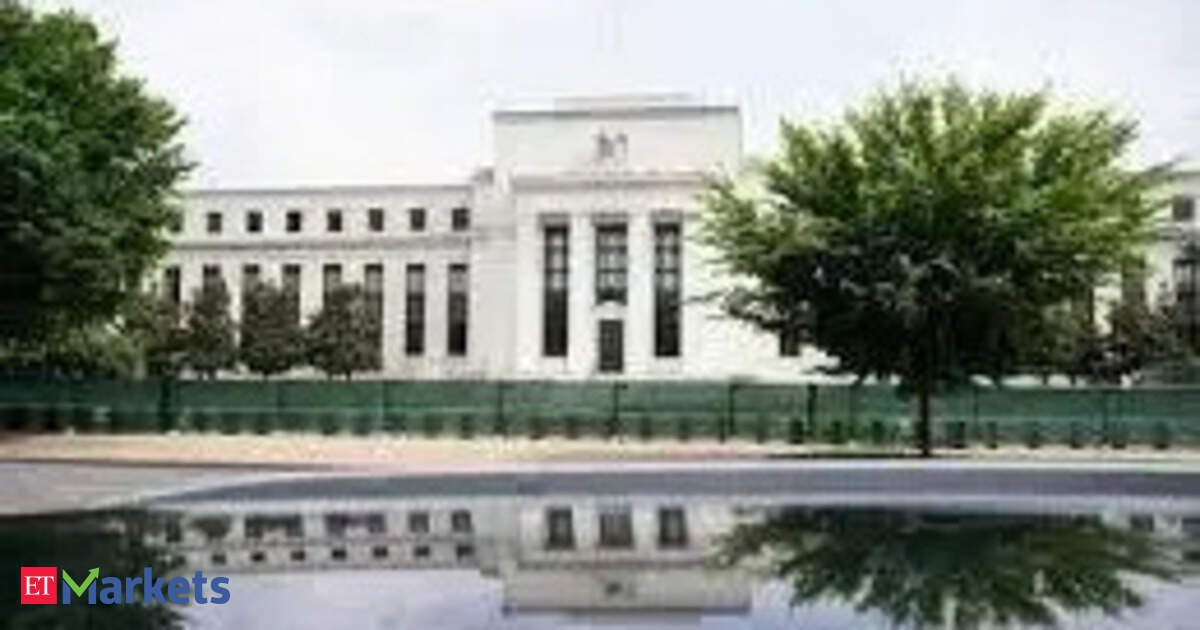
The ongoing war involving Iran and the resulting shock to global oil prices and supplies have emerged as the biggest threats to financial stability, according to the latest semi-annual report released by the Federal Reserve on Friday.
The U.S. central bank’s Financial Stability Report showed that geopolitical tensions and the spike in oil prices have overtaken other macroeconomic risks in the minds of market participants. Around three-fourths of survey respondents identified geopolitical risks as their top concern, while nearly 70% flagged the oil shock stemming from the conflict as a major threat to the financial system, according to a report by Reuters.
The report highlighted fears that a prolonged conflict in the Middle East, especially if accompanied by disruptions to commodity supplies and supply chains, could reignite inflationary pressures and weaken economic growth globally. It also warned that sharp swings in energy prices and related financial instruments could create broader stress across financial markets.
According to Reuters, several respondents said the renewed surge in oil prices could force central banks to keep monetary policy tighter for longer, even as economic growth slows. The report noted that elevated inflation and higher borrowing costs could weigh on financial markets and trigger declines in asset prices.
The concerns mirror recent commentary from Federal Reserve officials, many of whom have indicated that interest rate hikes cannot be ruled out if inflation continues to accelerate. The Fed kept benchmark interest rates unchanged at its latest policy meeting last week.
Global crude oil prices have surged more than 50% since the start of the U.S.-Israeli attacks on Iran on February 28, with benchmark prices remaining above $100 per barrel amid uncertainty over a potential peace agreement. Notably, the “oil shock” did not feature at all in the Fed’s previous financial stability survey released last fall, but has now become the second-largest concern.
The rise in oil prices has also pushed U.S. gasoline prices to their highest levels since July 2022, contributing to a resurgence in inflation. Inflation in the United States is now estimated to be roughly one percentage point above the Federal Reserve’s 2% target. Policymakers remain concerned that persistently high energy costs could spread into a broader range of goods and services.
Apart from geopolitical and energy-related risks, the report also identified artificial intelligence and private credit markets as growing sources of financial vulnerability.
Around half of the respondents expressed concerns that the rapid expansion of AI-related investments is increasingly being financed through debt, raising leverage levels across the financial system. Some respondents also warned that widespread adoption of AI could weaken labor market conditions over time.
The report presented a mixed assessment of the private credit sector. While it acknowledged rising investor redemptions and negative market sentiment, the Fed said the risks currently appear manageable. The 10 largest perpetual business development companies, which account for nearly 80% of private credit assets, currently hold sufficient bank credit lines and cash reserves to meet most redemption requests under existing stress assumptions.
The Federal Reserve cautioned that prolonged redemptions and deteriorating sentiment in private credit markets could eventually reduce credit availability for riskier borrowers, potentially amplifying financial vulnerabilities across the economy.
(What’s moving Sensex and Nifty Track latest market news, stock tips, Budget 2025, Share Market on Budget 2025 and expert advice, on ETMarkets. Also, ETMarkets.com is now on Telegram. For fastest news alerts on financial markets, investment strategies and stocks alerts, subscribe to our Telegram feeds .)
Subscribe to ET Prime and read the Economic Times ePaper Online.and Sensex Today.
Top Trending Stocks: SBI Share Price, Axis Bank Share Price, HDFC Bank Share Price, Infosys Share Price, Wipro Share Price, NTPC Share Price
…moreless
(You can now subscribe to our ETMarkets WhatsApp channel)
(What’s moving Sensex and Nifty Track latest market news, stock tips, Budget 2025, Share Market on Budget 2025 and expert advice, on ETMarkets. Also, ETMarkets.com is now on Telegram. For fastest news alerts on financial markets, investment strategies and stocks alerts, subscribe to our Telegram feeds .)
Subscribe to ET Prime and read the Economic Times ePaper Online.and Sensex Today.
Top Trending Stocks: SBI Share Price, Axis Bank Share Price, HDFC Bank Share Price, Infosys Share Price, Wipro Share Price, NTPC Share Price
…moreless