But on Wall Street, optimism prevails, even if investors are occasionally rattled by presidential policy blunders such as undermining the Federal Reserve or alienating close allies with punitive tariffs.
Stocks are near record highs on the view that conflicts at home and abroad won’t derail the economy or erode US hegemony.
That view hinges on the durability of American exceptionalism — that the US economy and markets are uniquely resistant to long-term decline.
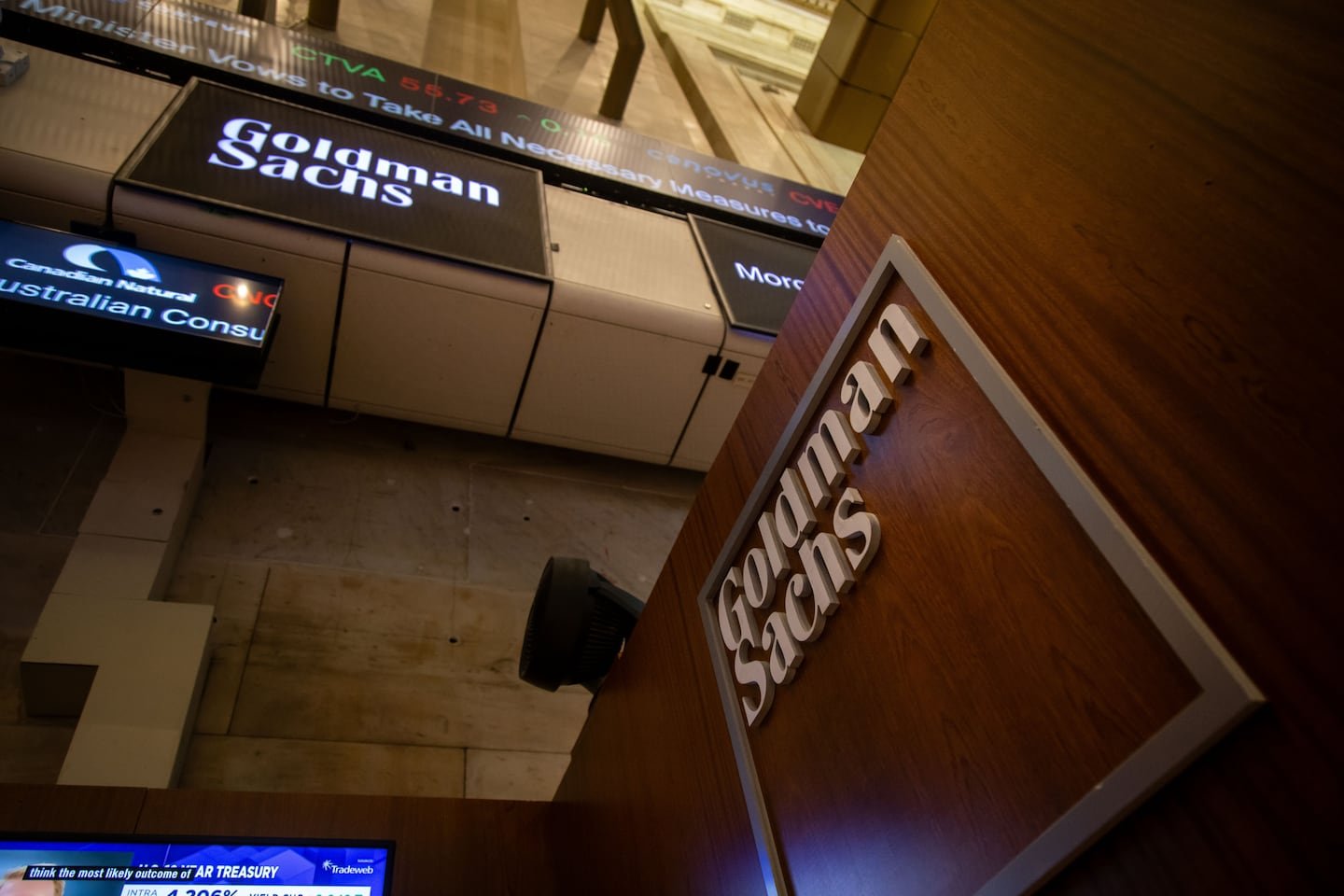
America will remain on top due to the country’s “unparalleled economic, human capital, and financial market strengths,” Goldman Sachs’s investment strategy group wrote in its recently released 2026 market outlook. Those traits, the authors said, are reinforced by “a system of checks and balances” and “a remarkable resilience.”
Why it matters: Goldman, is one of the savviest financial firms in the world, and its annual market outlooks are closely watched by institutional investors managing trillions of dollars.
The firm says it’s offering a clear-eyed, nonpartisan assessment of the country’s economic and market prospects. Of course, Goldman and the rest of Wall Street make more money when their clients are bullish.
Still, understanding the reasons why money keeps flowing into stocks even as the world seems increasingly destabilized can help you make sense of the markets.
Step back: Fifty-six percent of registered voters believe the country is moving in the wrong direction, according to a New York Times/Siena poll released last week. Just 29 percent of respondents said the economy was in excellent or good shape.
Yet the Standard & Poor’s 500 on Friday was just 1 percent shy of its Jan. 12 record high. The index has climbed 15 percent since President Trump returned to the White House a year ago.
Goldman’s strategists acknowledge that after 2025’s chaos — tariff wars, a brief 21 percent market meltdown, and the longest government shutdown in history — some clients are asking whether it’s time to cut their US stock holdings.
No, they wrote, pointing to six previous periods since World War II when predictions of American decline proved wrong: after Sputnik in 1957, Vietnam and Watergate in the 1970s, Japan’s rise in the 1980s, the 2008-2009 financial crisis, and COVID in 2020.
It’s a fair point, though one could note that past recoveries don’t guarantee future ones.
The macro case: US preeminence will continue thanks to structural advantages that no presidential term can dismantle, according to Goldman.
America spends $940 billion annually on R&D — double China’s outlays, Goldman says. US labor productivity leads the world. The country has the deepest capital markets, the most Nobel laureates, and a culture that funds risk-taking without penalizing failure.
Moreover, the report argues the constitutional system is working — slowly, as designed — despite Trump’s efforts to erode the rule of law.
Courts have ruled against the administration in 181 of 552 legal challenges, according to Goldman’s tally. The Senate rejected Trump’s preferred candidate for majority leader. And state elections went against Trump-endorsed candidates from New Jersey to Florida.
The fundamentals: Trends for the primary drivers of the stock market — corporate earnings, economic growth, and interest rates — are positive, Goldman believes.
US equities aren’t in a bubble because valuations haven’t significantly deviated from fundamental earnings, the report contends. Elevated price/earnings ratios are supported by profit growth.
Worries about the high concentration of tech giants in the S&P 500 are overblown, the strategists wrote, because their profits justify the prices.
Goldman expects US earnings growth to nearly double that of other developed markets through 2030. It sees the Fed cutting interest rates by 0.5 percentage point this year, and the economy growing by a solid 2.3 percent.
In the end, no other country rivals the US as an investment destination. That’s not just Goldman’s opinion, but a common tenet across the financial world.
To be sure: The US has real vulnerabilities, but Goldman argues they are manageable.
China has a chokehold on essential rare earth elements, but Western allies should be able to adapt within 24 months.
Rising government debt-to-GDP ratios must be monitored but aren’t at crisis levels.
Still, Goldman states plainly that “the greatest threat to US preeminence is an erosion of the country’s rule of law and system of checks and balances.”
After consulting constitutional scholars, Goldman’s analysts conclude both are holding — but the pace of executive orders (220-plus, triple that of any predecessor at this point in a term) is outstripping the speed at which courts and Congress can respond. The system works over months and years, not days.
Whether that lag creates lasting damage remains an open question.
Final thought: The market’s conventional wisdom is clear.
Tariff wars, foreign wars, and marauding Immigration and Customs Enforcement agents are bad. So is the ballooning federal deficit and Trump’s campaign to erode the country’s rule of law.
But, as Goldman argues, the center will hold and US exceptionalism will live on.
It’s an encouraging opinion. I hope it’s right.
Larry Edelman can be reached at larry.edelman@globe.com.