This is CNBC’s Morning Squawk newsletter. Subscribe here to receive future editions in your inbox.
Happy Thursday. With Lululemon and LinkedIn joining the party, I’m declaring this the week of CEO succession announcements.
Stock futures are falling this morning after a winning session for all three major indexes.
Here are five key things investors need to know to start the trading day:
1. Back to the top
n this handout photo provided by U.S. Central Command, U.S. forces patrol the Arabian Sea near M/V Touska on April 20, 2026, after firing upon the Iranian-flagged vessel that the U.S. accused of attempting to violate the U.S. naval blockade of Iranian ports near the Strait of Hormuz.
U.S. Navy | Getty Images
The S&P 500 and Nasdaq Composite jumped back to record highs yesterday after President Donald Trump extended the U.S. ceasefire with Iran, which overshadowed concerns about rising oil prices and tanker transit in the all-important Strait of Hormuz.
Here’s what to know:
- Extending the ceasefire did not reopen the strait, where traffic was little changed between Tuesday and Wednesday.
- Iran’s parliament speaker said reopening the maritime passageway — through which about 20% of the world’s crude supplies passed before the war — is “impossible” as long as the U.S. continues its naval blockade of Tehran’s ports.
- Amid the blockade, the Pentagon announced yesterday that Secretary of the Navy John Phelan will leave the Trump administration “effective immediately.”
- The head of the International Energy Agency Fatih Birol told CNBC in an interview this morning that “We are facing the biggest energy security threat in history.”
- Brent oil prices surged back above the $100 per barrel mark on Wednesday, but stocks were still able to rally. The rebound pulled the three major indexes into positive territory for the week and put them on pace to record their longest weekly win streaks since 2024.
- Follow live markets updates here.
2. Low charge
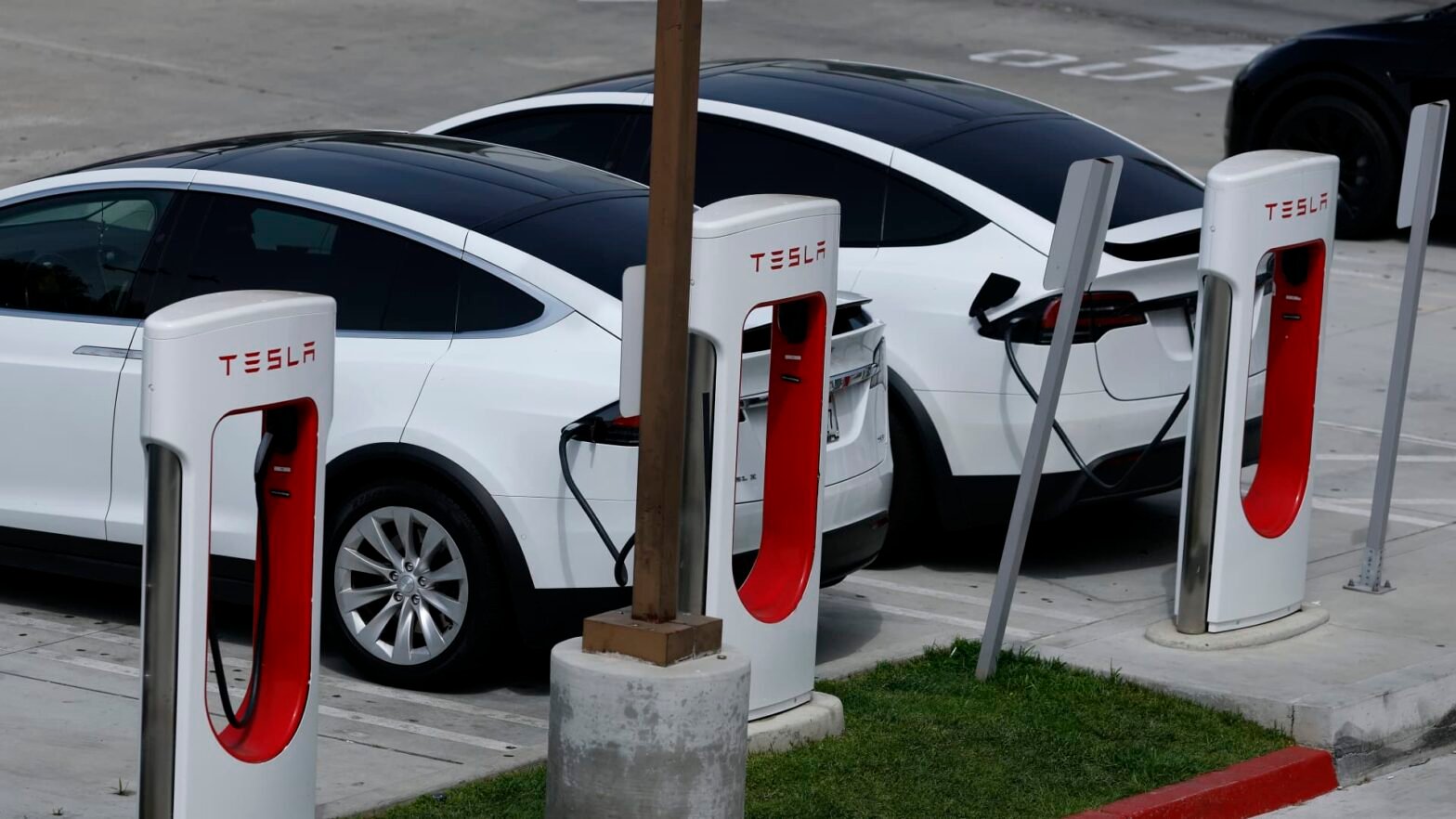
Tesla cars charge at a Tesla Supercharger station in Pasadena, California, March 30, 2026.
Justin Sullivan | Getty Images
Tesla reported stronger-than-expected earnings for the first quarter yesterday, but its revenue for the period came in under analysts’ estimates. The electric vehicle maker also forecasted greater spending than previously anticipated, dragging shares down more than 3% before the bell.
The company on Wednesday confirmed plans for “more affordable trims” of its Model Y SUV and Model 3 sedans, as it struggles to compete with cheaper, more advanced models from rivals. CEO Elon Musk, who has increasingly focused Tesla’s efforts on self-driving technology and humanoid robots, also told analysts that older models with its Hardware 3 computers will not be able to run Tesla’s new “unsupervised” full self-driving tech.
Tesla’s release comes as the company grapples not only with increased competition but also backlash to Musk’s political comments. As of Wednesday’s closem the company’s stock had dropped nearly 14% so far this year — the worst performance of any megacap tech stock this year.
3. Trimming down
Kevin Warsh, U.S. President Donald Trump’s nominee for Chair of the Federal Reserve, testifies during his Senate Committee on Banking, Housing, and Urban Affairs confirmation hearing in the Dirksen Senate Office Building on April 21, 2026 in Washington, DC.
Andrew Harnik | Getty Images
Kevin Warsh told senators this week that he would prefer the Federal Reserve use “trimmed averages” to measure inflation, rather than the core price index for personal consumption expenditures. But Bank of America warned yesterday that this could backfire.
Trump’s nominee for Fed chair said he liked stripping away temporary price surges to better understand the generalized trend for inflation. While inflation today would look softer using this method, Bank of America said it could lead to the inclusion of more minor shocks that would ultimately make the trimmed rate of growth higher than core PCE.
This isn’t unheard of, the bank said. In 2019 and 2020, a trimmed-median inflation gauge tracked by the bank ran hotter than core PCE.
Get Morning Squawk directly in your inbox
4. Ballots are out
The Warner Bros. logo is displayed on the water tower at Warner Bros. Studio on Feb. 27, 2026 in Burbank, California.
Mario Tama | Getty Images
Warner Bros. Discovery shareholders will vote today on Paramount Skydance‘s proposed acquisition of the entertainment giant. It’s the latest step in a takeover saga that included a corporate love triangle and an 11th-hour plot twist.
Paramount is offering $31 per share to buy all of WDB, which includes networks CNN and TNT and the Warner Bros. film studio. That proposal beat out competing offers from Netflix and Comcast.
Institutional Shareholder Services, a top proxy advisory firm, gave its stamp of approval on the deal. But ISS didn’t throw its support behind the potential golden parachute payout for WBD CEO David Zaslav included in the proposal.
5. Spirits up
A Spirit Airlines airplane at Fort Lauderdale-Hollywood International Airport (FLL) in Fort Lauderdale, Florida, US, on Wednesday, April 22, 2026.
Eva Marie Uzcategui | Bloomberg | Getty Images
Uncle Sam has taken an interest in Spirit Airlines. The White House is in advanced talks for a financing package to rescue the budget air carrier, people familiar with the matter told CNBC yesterday.
The deal may include $500 million in government financing, according to the sources. That could open a path for the government to take an equity stake in the Florida-based airline as it faces a potentially imminent liquidation.
Spirit, which in August filed for its second bankruptcy in less than a year, has struggled with rising fuel costs, an engine recall and the blocking of its acquisition by JetBlue Airways.
The Daily Dividend
Boeing CEO Kelly Ortberg told CNBC’s Phil LeBeau yesterday that “all systems are go” to up production of its well-known 737 Max aircraft, a move that could help curb the plane maker’s losses. Watch the full interview:
— CNBC’s Sean Conlon, Spencer Kimball, Sam Meredith, Kevin Breuninger, Holly Ellyatt, Lora Kolodny, Lillian Rizzo, Leslie Josephs and Phil LeBeau contributed to this report.
Davis Giangiulio assisted in the production of this newsletter. Josephine Rozzelle edited this edition.